Content last revised on September 10, 2026
Optimized Thermal Management: A Technical Evaluation of the CM300HA-28H Single IGBT Module
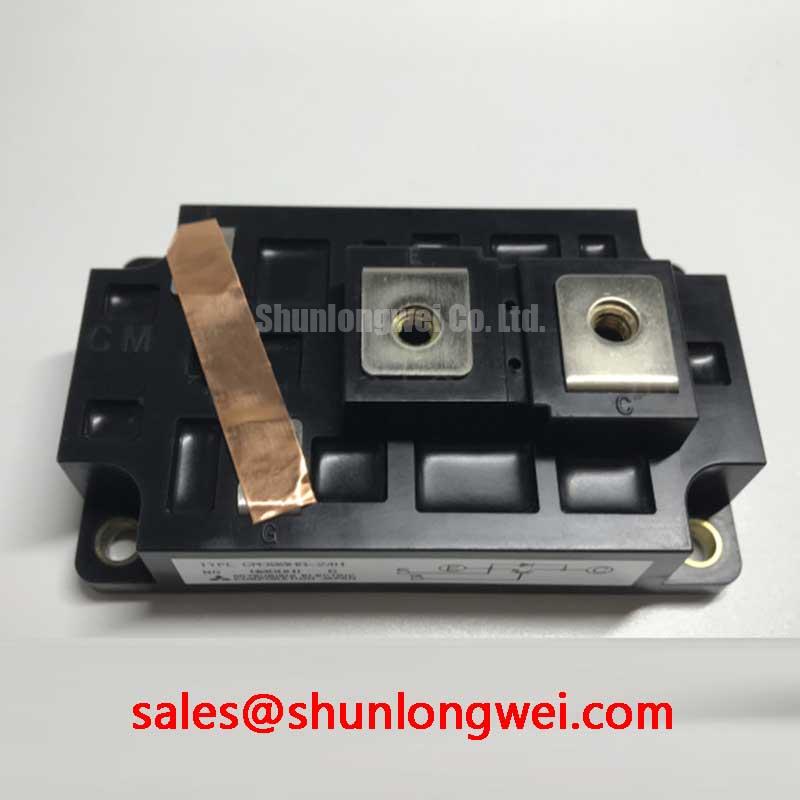
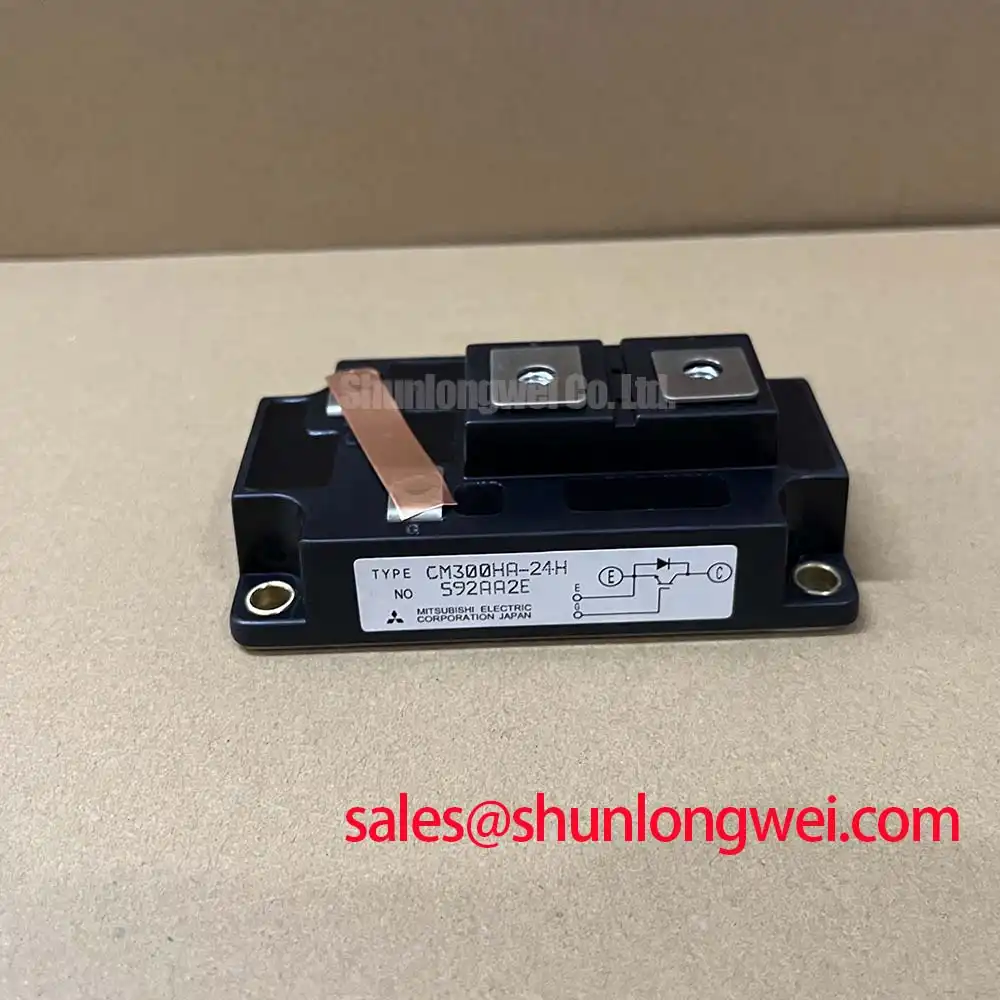
The CM300HA-28H is a single-configuration power module designed by Mitsubishi to handle high-power switching up to 1400V and 300A with a maximum power dissipation of 2100W. What is the primary benefit of the isolated baseplate? It simplifies system assembly and optimizes thermal dissipation. Utilizing a robust H-series design, it provides excellent electrical isolation while delivering low switching losses. For 1400V industrial applications demanding tight thermal dissipation margins, this 300A single module delivers the ideal cooling path.
Application Scenarios & Value
Optimizing Motor Drive and Power Supply Reliability
Engineers often face severe junction temperature spikes when deploying heavy-duty AC motor drives, motion control systems, or high-frequency induction welding supplies. A single-module setup minimizes layout clutter and allows localized thermal management. High-power systems like traction converters and grid-tied inverters benefit significantly from single-switch configurations. By housing only one IGBT per module, engineers gain physical design flexibility, separating heat sources across different heatsink zones.
While this module is ideal for mid-power setups, for systems requiring higher current handling, the related CM600HA-28H offers a Vces of 1400V at 600A. Additionally, for standard lower voltage grid configurations, the CM300HA-24H serves as a baseline 1200V alternative. Using these options helps designers scale their inverters seamlessly without redesigning the entire physical layout.
Technical Deep Dive
Mitigating Thermal Resistance to Prevent Silicon Overheating
Thermal performance is the key to preventing catastrophic failures in high-power converters. The module features an exceptionally low junction-to-case Thermal Resistance (Rth(j-c)) of 0.06°C/W for the IGBT. How does the low junction-to-case thermal resistance help? It minimizes thermal stress and prevents hot spots during operation.
This low thermal resistance acts like a high-speed thermal highway, letting heat escape to the heatsink. This dynamic keeps the device operating well below its peak limit. Designers can reference an in-depth analysis of IGBT modules to examine the physics behind isolated baseplates. Understanding the overall thermal performance of IGBTs is vital for long-term system life. The free-wheel diode (FWDi) has a separate Rth(j-c) of 0.12°C/W, ensuring both switching paths are thermally optimized. The isolated copper baseplate enables direct mounting without additional ceramic isolators, further lowering interface thermal resistance.
Key Parameter Overview
Specifications and Value Interpretation for Power Designers
Below are the key electrical and mechanical specifications of the module, highlighting the practical engineering value of each parameter.
| Parameter | Symbol | Value | Engineering Value & Interpretation |
|---|---|---|---|
| Collector-Emitter Voltage | VCES | 1400V | Ensures sufficient voltage headroom for industrial grid transients. |
| Continuous Collector Current | IC | 300A | Delivers stable current output for heavy-duty motor controllers. |
| Peak Collector Current | ICM | 600A | Accommodates inductive motor start-up surges without damage. |
| Max Power Dissipation | PC | 2100W | Maintains safe operation under high-stress duty cycles. |
| Isolation Voltage | Viso | 2500Vrms | Protects control circuitry from primary side high voltages. |
Download the CM300HA-28H datasheet for detailed specifications and performance curves.
Frequently Asked Questions
Addressing Common Integration and Thermal Design Queries
Here are some of the most common technical questions regarding this high-power single module.
How does the single-configuration layout of the CM300HA-28H compare to a dual half-bridge module?
The single-switch layout provides one isolated IGBT per case, which allows engineers to customize phase leg layouts and place heat sources further apart for enhanced cooling.
What is the significance of the 1400V collector-emitter voltage rating?
A 1400V rating provides vital safety headroom for 400V to 480V AC motor drives, protecting the system from high-voltage grid transients.
How does the Rth(j-c) of 0.06°C/W directly impact heatsink selection and overall system power density?
This low thermal resistance allows designers to use smaller heatsinks while maintaining junction temperatures safely below the 150°C limit.
What is the typical turn-off delay time for this module under inductive loads?
According to the official specs, typical switching times are optimized to minimize dynamic losses during high-frequency operations between 20 kHz and 25 kHz.
Does the module require external gate drive protection against high dv/dt transients?
Yes, utilizing a negative gate bias and proper snubber circuits is highly recommended to suppress noise and prevent parasitic turn-on.
Achieving peak system reliability requires meticulous attention to assembly parameters. When mounting this module to a heatsink, engineers must apply thermal paste uniformly and adhere to the specified mounting torque of 26 in-lb for the M6 main terminals. This ensures optimal thermal contact and prevents stress-induced package degradation over years of service.