Content last revised on September 10, 2026
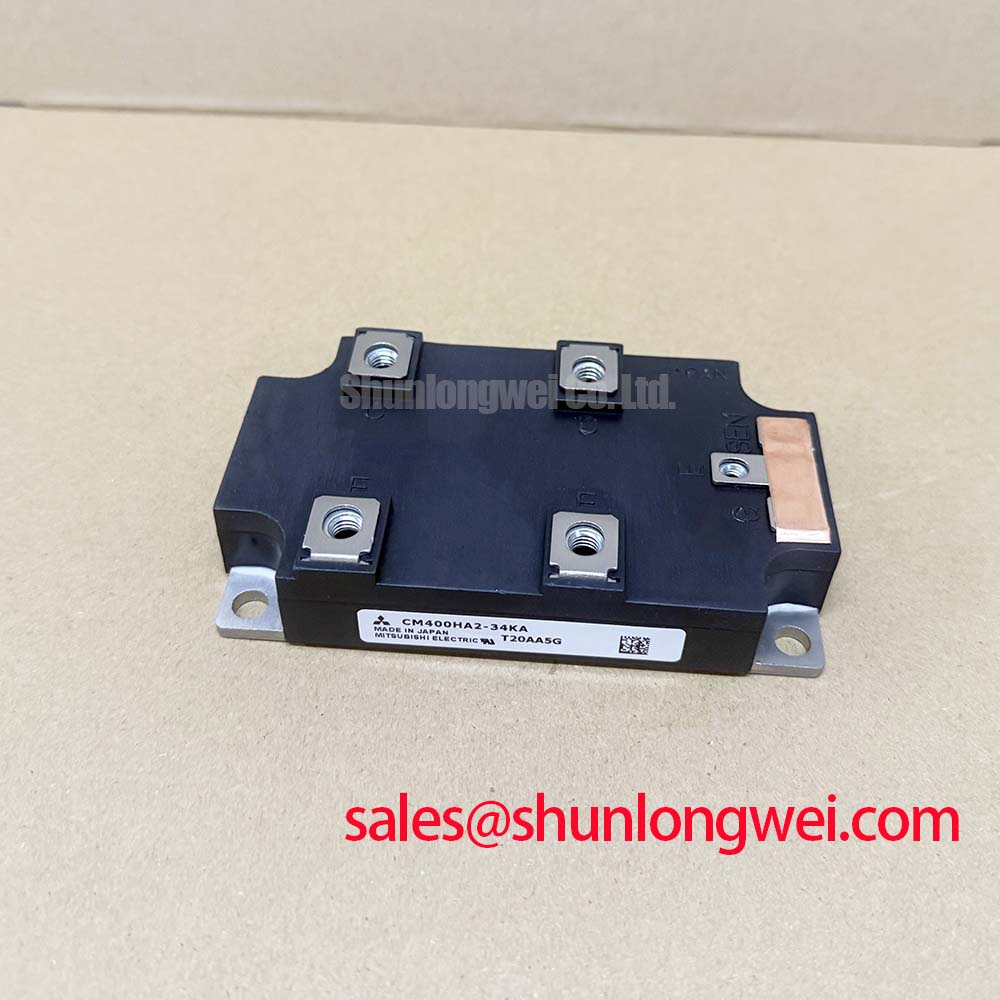
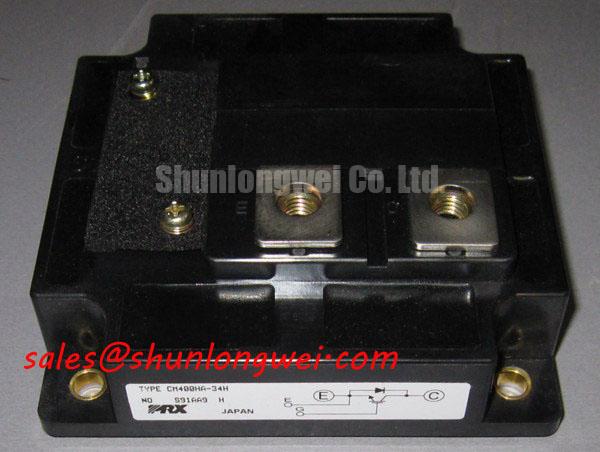
CM400HA-34H Mitsubishi 1700V 400A Single IGBT Module
The CM400HA-34H provides unmatched thermal reliability in industrial high-voltage systems through an optimized low-thermal-resistance isolated design. Engineered for high-power applications, this module boasts key specifications including a collector-emitter voltage of 1700V, a continuous collector current of 400A, and a low junction-to-case thermal resistance of 0.030°C/W. Designed to fit auxiliary traction inverters and heavy motor control applications, it features an isolated baseplate for easy heatsink mounting while preventing electrical breakdown under stress. For 1000V DC bus drives prioritizing thermal margin, this 1700V module is the optimal choice.
Application Scenarios & Value
Achieving System-Level Thermal Integrity in Traction and Heavy Industry
Engineers often face the daunting task of designing power converters for auxiliary traction or heavy industrial motor control where localized heat build-up can lead to catastrophic module failure. In these systems, handling high surge currents requires robust power switching modules that do not compromise isolation. The CM400HA-34H integrates a single IGBT switch with an anti-parallel free-wheel diode to handle heavy-duty loads. What voltage safety margin does this module provide? A 1700V rating safeguards systems from high-voltage transients.
In high-capacity AC motor drives, rapid startup cycles draw extreme surge currents. The CM400HA-34H, with its 1700V collector-emitter rating and a peak collector current of 800A, handles these transient events without overstressing the semiconductor junction. By combining this capability with an isolated baseplate rated for 4000Vrms, designers can mount the device directly onto a shared heatsink. This structure optimizes the cooling path and prevents damage to surrounding low-voltage gate drives.
While this 1700V single module fits high-voltage industrial setups, for lower voltage applications, the related CM400HA-24H offers a 1200V alternative. Using this family of modules allows design consistency across different power classes, simplifying thermal management designs in welding power supplies and uninterruptible power systems.
Technical & Design Deep Dive
Decoding Heat Dissipation and Switch Performance
The internal architecture of the CM400HA-34H is tailored to limit thermal fatigue over long operation periods. In high-power electronics, managing thermal resistance is critical to maintaining a safe junction temperature. Think of thermal resistance as a highway's traffic bottleneck. A lower thermal resistance of 0.030°C/W is akin to adding multiple lanes, allowing heat to flow effortlessly from the silicon junction to the case, preventing thermal traffic jams that cause thermal runaway. What is the key benefit of low thermal resistance? It prevents rapid junction temperature rise under cyclic heavy loads.
The collector-emitter saturation voltage (typical value of 2.7V) represents the electrical resistance of the module when fully turned on. Think of it like a valve in a high-pressure water pipe. A low-resistance valve ensures minimal water pressure drops as current flows. By maintaining a typical value of 2.7V at 400A, the module limits conduction heating, ensuring system efficiency.
This efficiency is supported by a discrete super-fast recovery free-wheel diode that clamps inductive switching spikes. The integration of high-speed switching features demands strict layout rules to avoid parasitic inductance. Detailed layout strategies can be found in this engineering guide to IGBT modules, which details how to mitigate voltage ringing during high di/dt switching transitions. More technical aspects of thermal grease application and heatsink layout are explored in our thermal resistance analysis.
Key Parameter Overview
Standard Specifications for Thermal Integration
| Parameter | Symbol | Rating / Value | Unit | Highlight Status |
|---|---|---|---|---|
| Collector-Emitter Voltage | VCES | 1700 | V | CRITICAL RATING |
| Collector Current (TC = 25°C) | IC | 400 | A | CRITICAL RATING |
| Peak Collector Current | ICP | 800 | A | Transient Limit |
| Collector Dissipation (TC = 25°C) | PC | 4100 | W | HIGH POWER |
| Junction Temperature Range | Tj | -20 to +150 | °C | Standard |
| Collector-Emitter Saturation Voltage (Typ.) | VCE(sat) | 2.7 | V | Performance |
| Thermal Resistance (Junction-to-Case, IGBT) | Rth(j-c) | 0.030 | °C/W | THERMAL INTEGRITY |
| Isolation Voltage (AC, 1 minute) | Viso | 4000 | Vrms | Safety Rating |
Download the CM400HA-34H datasheet for detailed specifications and performance curves.
FAQ
Addressing Design Concerns and Testing Protocols
How does the Rth(j-c) of 0.030°C/W impact the design of the cooling system for the CM400HA-34H?
A lower thermal resistance means the silicon junction can transfer heat to the heatsink much more efficiently. This minimizes junction temperature rise during heavy load periods, allowing for smaller heatsinks or higher current density operation without thermal runaway.
Why is the 1700V VCES rating beneficial for 1000V DC link applications?
Operating at higher DC bus voltages requires adequate headroom to survive transient voltage spikes. The 1700V rating provides a robust safety margin, preventing overvoltage breakdown in noisy industrial environments without requiring heavy snubber circuits.
How can field technicians check the functionality of a CM400HA-34H module using a standard multimeter?
Technicians can verify basic gate-emitter isolation and collector-emitter diode health by measuring forward bias drops. For a complete testing procedure, consult this guide to testing IGBT modules.
Strategic Advantages in Power Infrastructure
Securing Long-Term Asset Viability and Grid Stability
Adopting high-voltage single IGBTs like the CM400HA-34H is a strategic move for enterprises scaling up renewable energy integration and industrial motor drives. High-reliability switches reduce downtime and total cost of ownership by ensuring long-term thermal integrity. By selecting components with validated performance margins, engineering teams future-proof their designs against changing grid standards and extreme operational environments.