

Content last revised on September 10, 2026
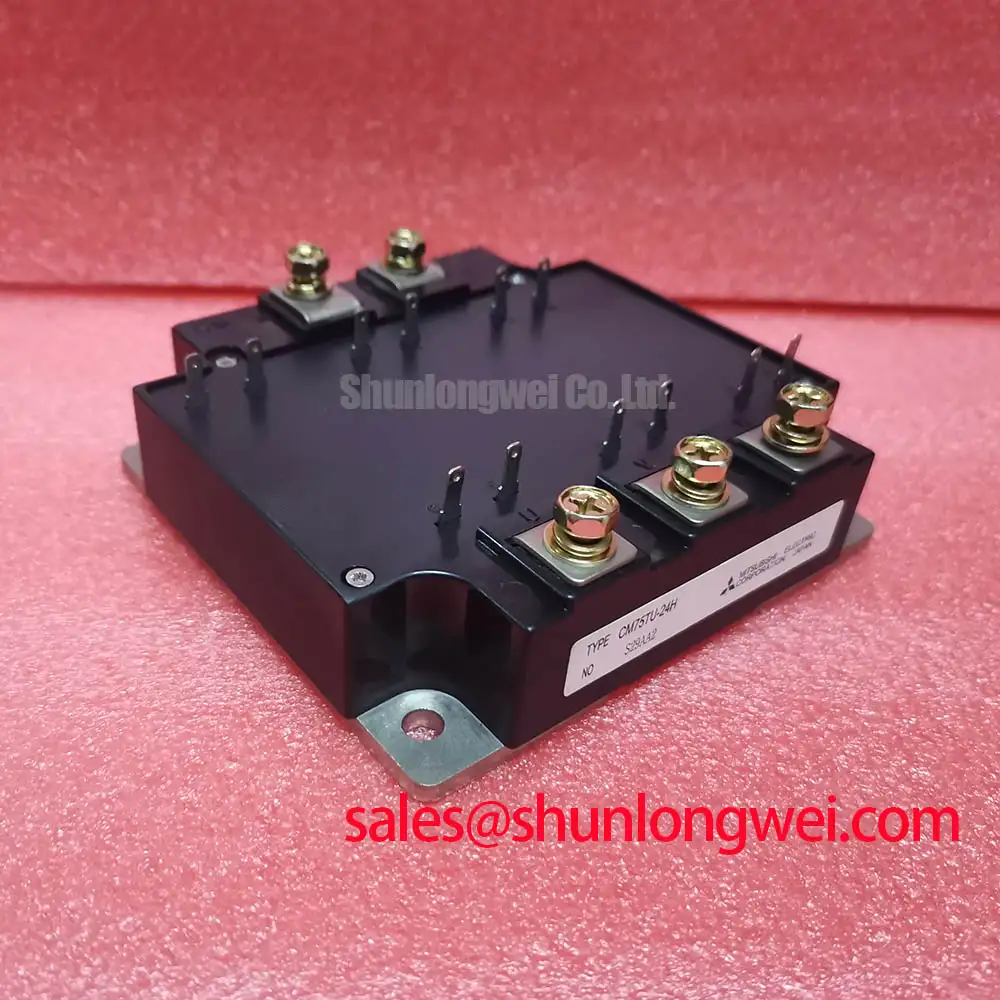
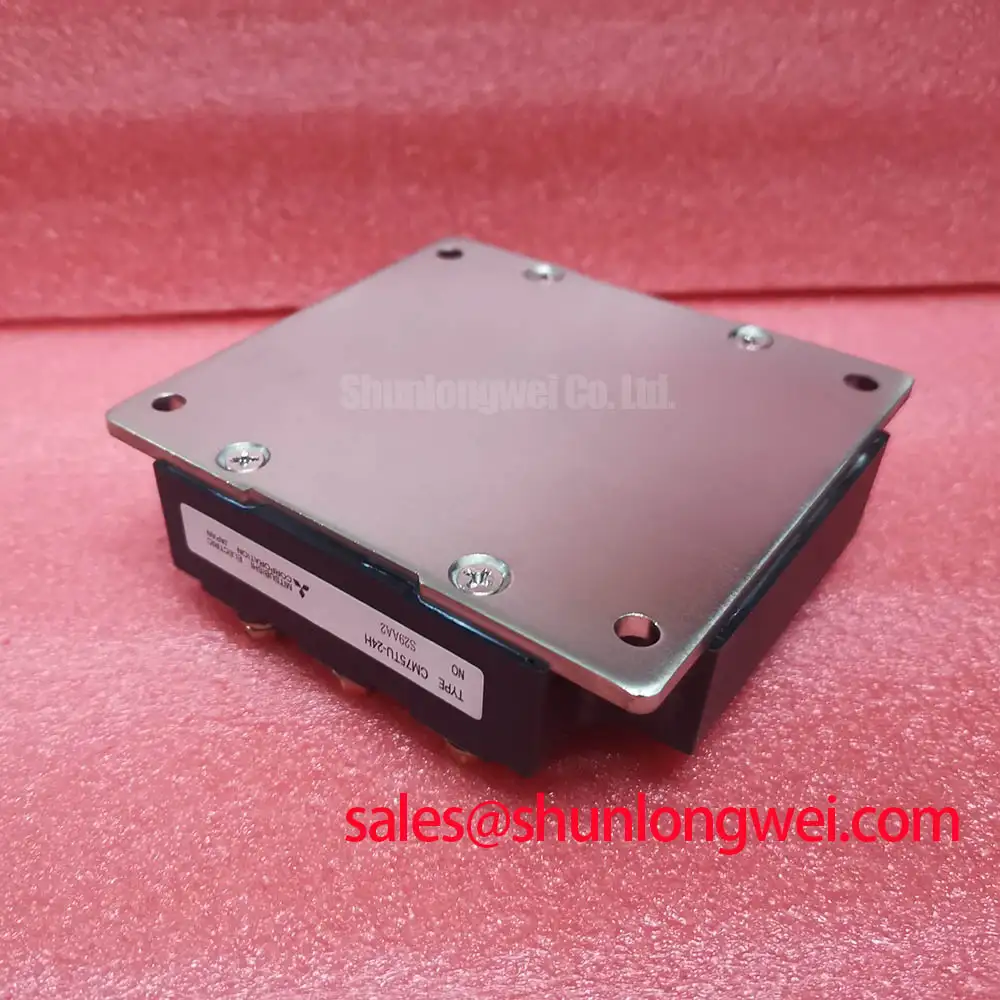
CM75TU-24H: Mitsubishi 1200V / 75A Six-IGBT Module for High-Frequency Power Systems
Engineering Overview & Key Specifications
Optimized for High-Speed Switching in Demanding Power Conversion Applications
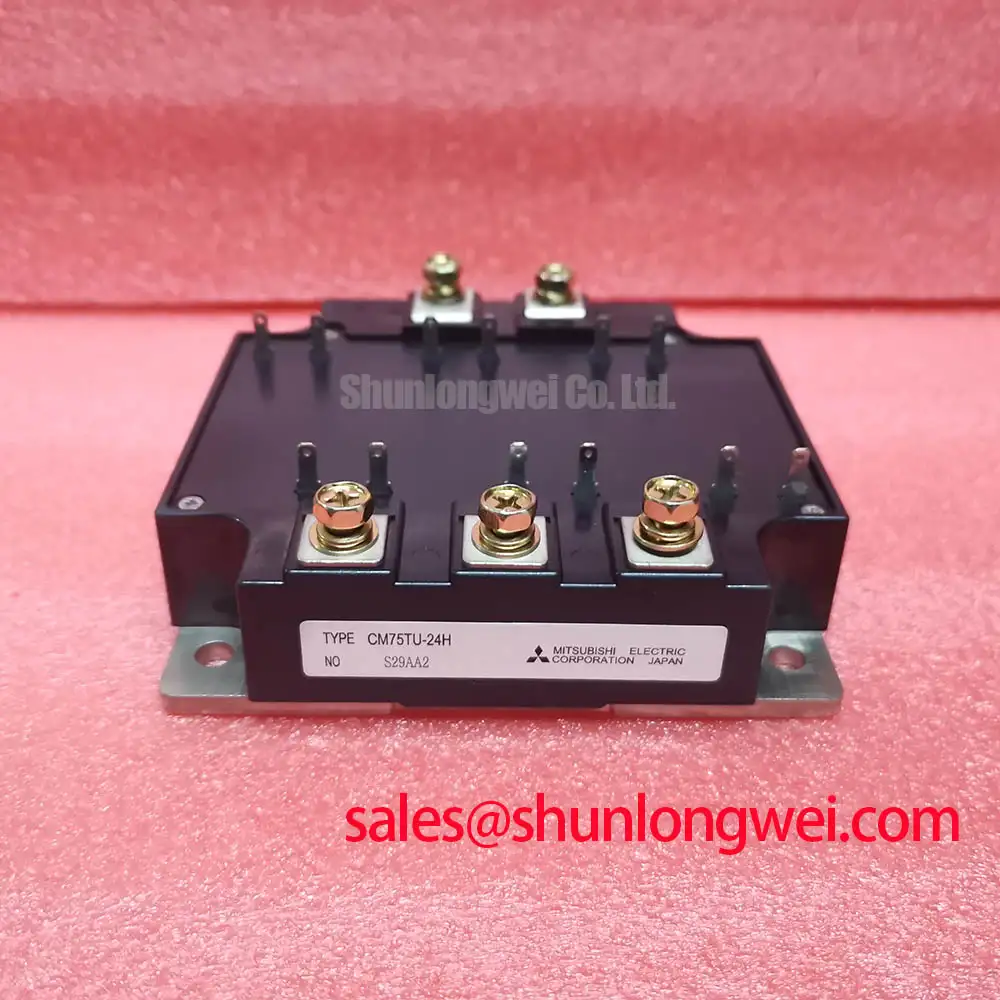
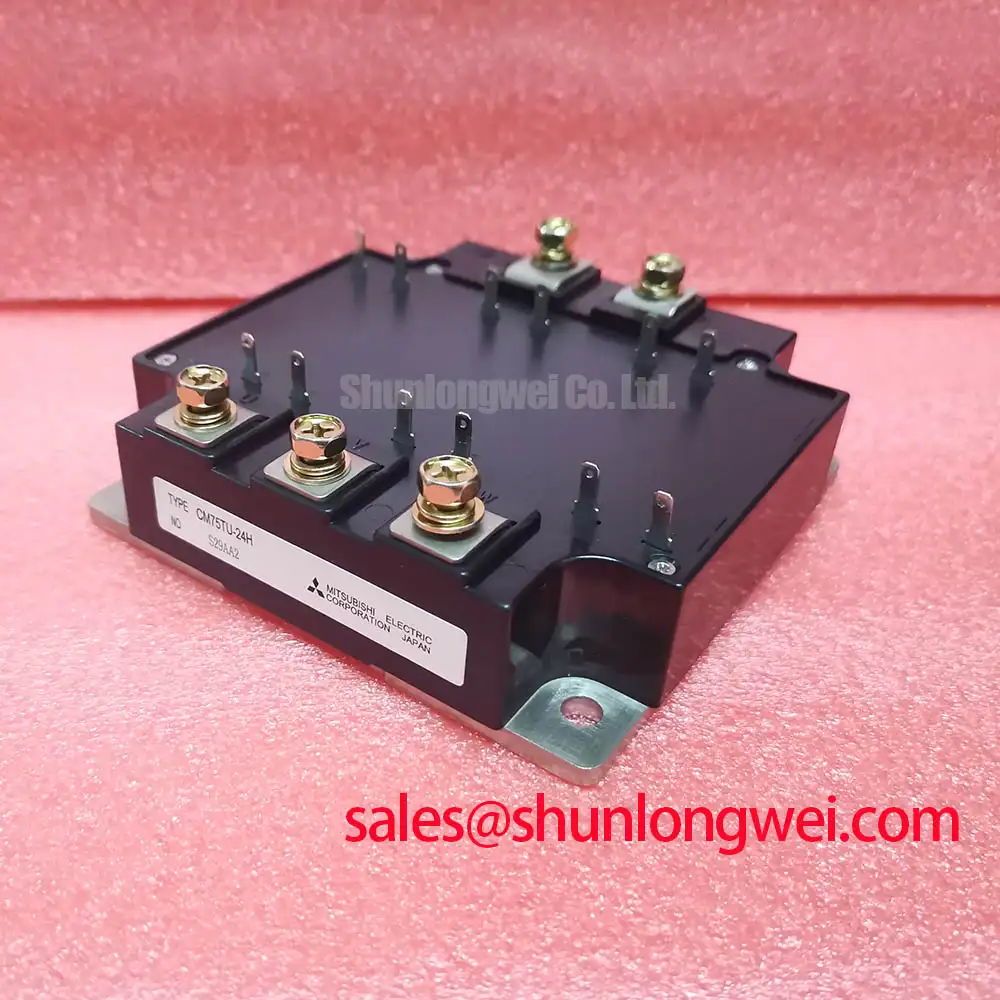
The Mitsubishi CM75TU-24H is a 1200V, 75A IGBT module engineered for high-frequency power conversion systems where efficiency and thermal stability are critical design parameters. This module integrates six IGBTs in a full three-phase bridge configuration, each paired with a super-fast recovery free-wheel diode, into a single, electrically isolated package. Key specifications include: 1200V | 75A | VCE(sat) of 2.7V (max). Its primary benefits are low switching losses and simplified thermal management. The module's design directly addresses the need for robust performance in variable frequency drives by providing a well-balanced profile of switching speed and conduction losses. For systems requiring robust performance in high-frequency motor control or UPS applications, the CM75TU-24H offers a compelling combination of efficiency and integrated design.
Key Parameter Overview
Decoding the Specs for Efficient Power Stage Design
The technical specifications of the CM75TU-24H are tailored for high-power, high-frequency applications. The parameters below detail its electrical and thermal performance, crucial for accurate system modeling and design validation. Understanding these values is the first step in leveraging the module's full capabilities for reliable and efficient operation.
| Parameter | Symbol | Conditions | Value | Unit |
|---|---|---|---|---|
| Absolute Maximum Ratings (Tj = 25°C) | ||||
| Collector-Emitter Voltage | VCES | G-E Short | 1200 | V |
| Gate-Emitter Voltage | VGES | C-E Short | ±20 | V |
| Collector Current (DC) | IC | TC = 25°C | 75 | A |
| Peak Collector Current | ICM | Tj ≤ 150°C | 150 | A |
| Maximum Collector Dissipation | Pc | Tj < 150°C, per IGBT | 600 | W |
| Operating Junction Temperature | Tj | - | -40 to +150 | °C |
| Electrical Characteristics (Tj = 25°C / 125°C) | ||||
| Collector-Emitter Saturation Voltage | VCE(sat) | IC = 75A, VGE = 15V | 2.2 (Typ) / 2.7 (Max) | V |
| Gate-Emitter Threshold Voltage | VGE(th) | IC = 7.5mA, VCE = 10V | 5.5 (Typ) | V |
| Turn-on Time | ton | IC=75A, Vcc=600V, VGE=15V, RG=15Ω | 0.20 (Typ) | µs |
| Turn-off Time | toff | IC=75A, Vcc=600V, VGE=15V, RG=15Ω | 0.50 (Typ) | µs |
| Thermal Characteristics | ||||
| Thermal Resistance (Junction to Case) | Rth(j-c) | IGBT part | 0.21 (Max) | °C/W |
| Thermal Resistance (Junction to Case) | Rth(j-c) | FWD part | 0.33 (Max) | °C/W |
Download the CM75TU-24H datasheet for detailed specifications and performance curves.
Application Scenarios & Value
System-Level Benefits in AC Motor and Servo Control
The CM75TU-24H is specifically engineered for power conversion systems where dynamic loads and high switching frequencies are standard. Its primary applications include AC motor controls, Servo Drive systems, and Uninterruptible Power Supplies (UPS). In these environments, the module's key value is its ability to minimize switching losses—a critical factor in overall system efficiency. Consider an industrial servo drive for a CNC machine; it requires rapid acceleration and deceleration, translating to high-frequency switching cycles for the IGBTs. The fast turn-on (0.20 µs) and turn-off (0.50 µs) times of the CM75TU-24H directly reduce the energy dissipated during each switching event. This is analogous to a light switch; a faster flip minimizes the time spent in the high-resistance, energy-wasting intermediate state. Over millions of cycles, this reduction in Switching Loss leads to lower operating temperatures, allowing for smaller heatsinks and contributing to a more compact and cost-effective system design. While this module is well-suited for 75A applications, for lower power requirements, the related CM50DY-24H offers a similar 1200V rating in a 50A package. Conversely, for systems demanding higher output, the CM100DY-24H provides a 100A solution within the same product family.
Frequently Asked Questions (FAQ)
What is the primary benefit of the three-phase bridge configuration in the CM75TU-24H?
The integrated six-pack or three-phase bridge configuration significantly simplifies system design. It combines all the necessary switches for a 3-phase inverter into a single component, reducing assembly time, minimizing stray inductance between components, and simplifying the connection to the control board and motor terminals. This level of integration is crucial for creating compact and reliable motor drives.
How does the VCE(sat) of 2.7V (max) impact the thermal design of my application?
The Collector-Emitter Saturation Voltage, VCE(sat), is the voltage drop across the IGBT when it is fully on. A lower VCE(sat) means less power is converted into heat during the conduction phase. With a maximum VCE(sat) of 2.7V at its nominal 75A current, engineers can more accurately calculate conduction losses (P_cond = VCE(sat) * IC). This predictable thermal load simplifies heatsink selection and helps ensure the junction temperature remains within the safe operating area, enhancing long-term reliability. For further reading on this topic, see our guide on decoding IGBT datasheets.
Technical Deep Dive
An Analysis of Switching Characteristics and Thermal Performance
A closer look at the datasheet reveals a design optimized for a balance between conduction and switching performance. The typical VCE(sat) of 2.2V indicates efficient power transfer when the device is static, but the real engineering value is evident in its dynamic characteristics. The total switching time (ton + toff) of approximately 0.70 µs is a key enabler for operating frequencies in the range of 10-20 kHz, common in modern AC drives. This speed is critical; slower switching would increase power loss, akin to slipping a clutch in a car, generating excessive heat and wasting energy. Furthermore, the module's thermal resistance (Rth(j-c)) of 0.21 °C/W for the IGBT is a direct measure of how efficiently heat can be transferred from the silicon chip to the module's baseplate. A lower Rth(j-c) value means better heat extraction, providing a larger thermal margin for the designer or allowing for higher power density without exceeding the maximum junction temperature of 150°C. This robust thermal pathway is fundamental to the module's reliability under heavy load cycles.
Strategic Component Selection
For engineering teams developing next-generation motor drives and power supplies, the CM75TU-24H provides a proven, reliable foundation. Its integration level and balanced electrical characteristics offer a streamlined path to achieving system-level targets for efficiency, power density, and reliability. By leveraging this module, designers can focus on optimizing control algorithms and system features, confident in the performance of the core power stage. To explore more about the manufacturer's technology, visit the Mitsubishi Electric power module portfolio.