
Content last revised on September 10, 2026
DSEI2X61-10B: Enhancing Switching Efficiency with IXYS Dual FRED Technology
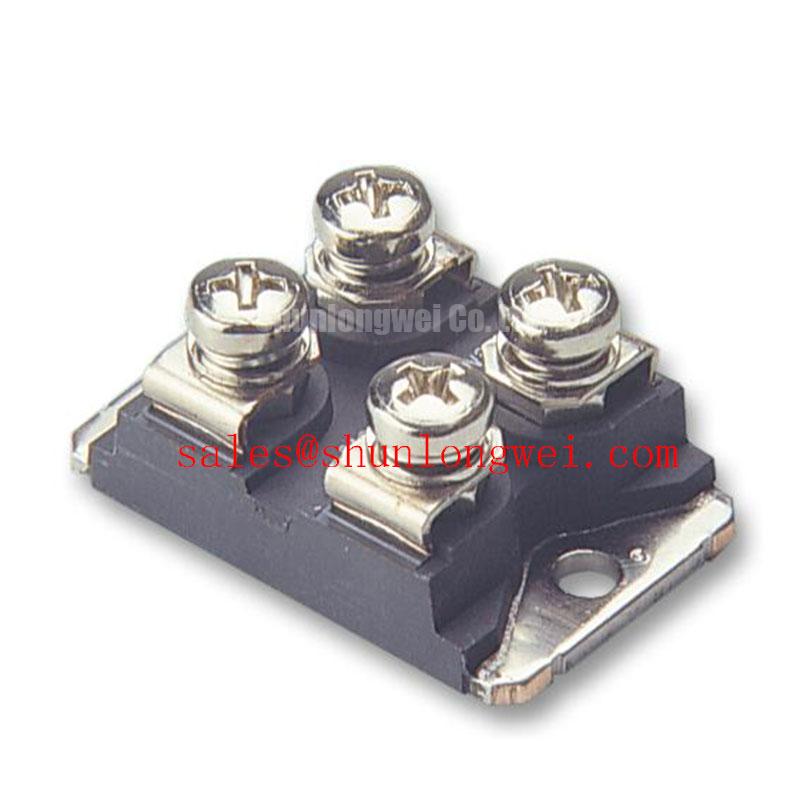
The DSEI2X61-10B dual Fast Recovery Epitaxial Diode (FRED) module is constructed to minimize dynamic switching losses and suppress voltage transients in high-frequency power conversion systems. Operating at a peak reverse voltage of 1000V and delivering an average forward current of 60A per diode, this Littelfuse (IXYS) component excels in demanding inductive load applications. It minimizes radiated EMI and fundamentally simplifies the thermal layout. What is the primary benefit of its soft recovery behavior? It prevents inductive overvoltage spikes, protecting parallel switches without bulky snubber networks. For 1000V industrial induction heating setups prioritizing low switching loss, this SOT-227B dual diode is the optimal choice.
Application Scenarios & Value
Achieving System-Level Benefits in High-Frequency Power Conversion
Engineers often face the challenge of managing aggressive voltage spikes and excessive EMI when designing high-frequency switching stages. The DSEI2X61-10B directly addresses these bottlenecks in applications like welding power supplies, ultrasonic cleaners, and induction heating equipment. Serving as a crucial freewheeling diode, its remarkably fast trr of 100ns pairs seamlessly with high-speed semiconductor switches. For instance, in a phase-leg inverter driving a high-current inductive load, the diode's soft recovery behavior suppresses the high dv/dt transients that typically induce failure in companion IGBTs. This targeted suppression translates to enhanced operational reliability and a more streamlined snubberless design. While this dual diode module excels in high-speed freewheeling tasks, for the main switching stage in robust inverter architectures, a complementary IGBT such as the CM100DY-24A provides aligned high-speed switching capabilities.
Technical Deep Dive
Detailed Analysis of Soft Recovery and SOT-227B Packaging
The DSEI2X61-10B distinguishes itself through its planar passivated chip architecture, yielding an extremely low reverse recovery current. During the turn-off phase, standard fast diodes abruptly snap off the current flow, triggering massive voltage overshoots due to stray inductance within the circuit. Think of a standard diode's turn-off like slamming a heavy door shut in a windstorm—the sudden halt causes a violent, destructive shudder. In contrast, the soft recovery characteristic of this FRED module acts like a hydraulic door closer, smoothly decelerating the electrical current to zero. This "softness" decisively limits inductive overvoltages, easing the stress on parallel IGBTs and reducing radiated EMI emissions.
Furthermore, the physical SOT-227B (miniBLOC) package plays a pivotal role in system-level thermal management. Featuring a highly efficient thermal resistance junction-to-case (RthJC) of 0.7 K/W, it provides robust heat dissipation. The isolated baseplate functions much like a non-conductive thermal bridge: it allows intense heat to pass efficiently to the heatsink while completely blocking electrical current. This 2500V internal isolation simplifies mechanical assembly, meaning multiple power modules can be mounted directly onto a common cooling plate without the risk of electrical shorting or the need for complex, failure-prone mica insulators.
Key Parameter Overview
Decoding the Specs for Enhanced Thermal Reliability
The following table categorizes the core specifications of the DSEI2X61-10B to assist in evaluating electrical limits and thermal scaling.
| Category | Parameter | Value |
|---|---|---|
| Electrical Ratings | Repetitive Peak Reverse Voltage (V_RRM) | 1000V |
| Electrical Ratings | Average Forward Current (I_FAV) | 60A (per diode) |
| Electrical Ratings | Forward Surge Current (I_FSM) | 500A |
| Switching Dynamics | Reverse Recovery Time (trr) typical | 100ns |
| Switching Dynamics | Forward Voltage Max (V_F) | 2.3V |
| Thermal & Mechanical | Thermal Resistance Junction-to-Case (RthJC) | 0.7 K/W |
| Thermal & Mechanical | Package Style | SOT-227B (miniBLOC) |
Download the DSEI2X61-10B datasheet for detailed specifications and performance curves.
Frequently Asked Questions on Field Implementation
Addressing Operational Limits and Reliability
- How does the soft recovery behavior of the DSEI2X61-10B compare to standard fast recovery diodes?
While standard fast recovery diodes focus purely on minimizing recovery time, they often exhibit a snappy turn-off that generates high-frequency EMI and damaging voltage spikes. The DSEI2X61-10B balances a very short trr of 100ns with a gradual tail current decay, significantly reducing voltage overshoots and shielding the primary switches from avalanche breakdown. - What makes the SOT-227B miniBLOC package advantageous for induction heating power supplies?
The SOT-227B provides a high electrical isolation voltage and a dedicated RthJC of 0.7 K/W. This architecture permits engineers to safely mount the dual diode module directly onto the main system cooling plate alongside other components, reducing both spatial volume and assembly complexity in densely packed inductive chassis. - Can this module handle high surge currents during motor drive startups?
Yes, despite its steady-state rating of 60A per diode, it features a robust forward surge current capacity of 500A. This exceptional overload headroom protects the semiconductor junctions during temporary fault conditions or aggressive initial charging phases in high-power conversion circuitry.
Evaluate your high-frequency inverter requirements against the exact thermal and electrical tolerances of the DSEI2X61-10B to secure long-term system stability.