

Content last revised on September 10, 2026
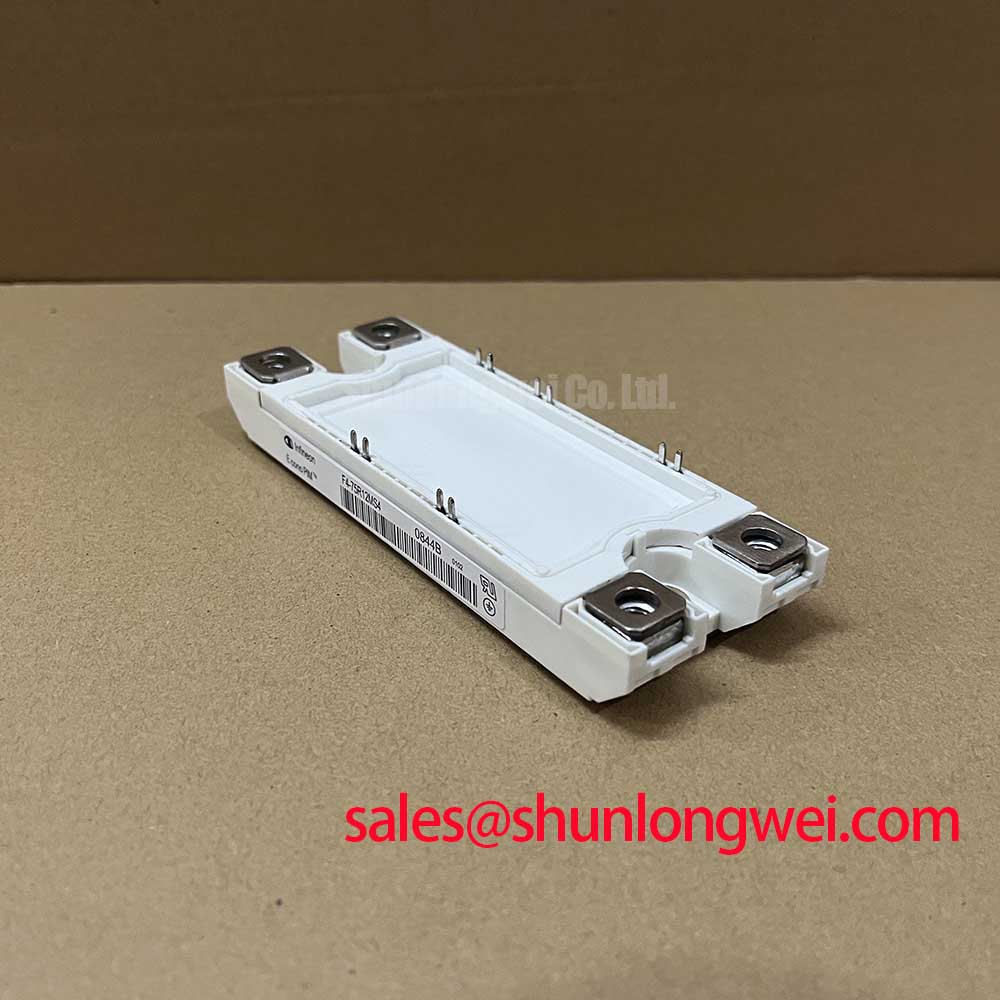
F4-75R12KS4: 1200V, 75A H-Bridge IGBT Module for High-Frequency Switching Applications
Product Overview
Optimized for Efficiency in Demanding Power Conversion Systems
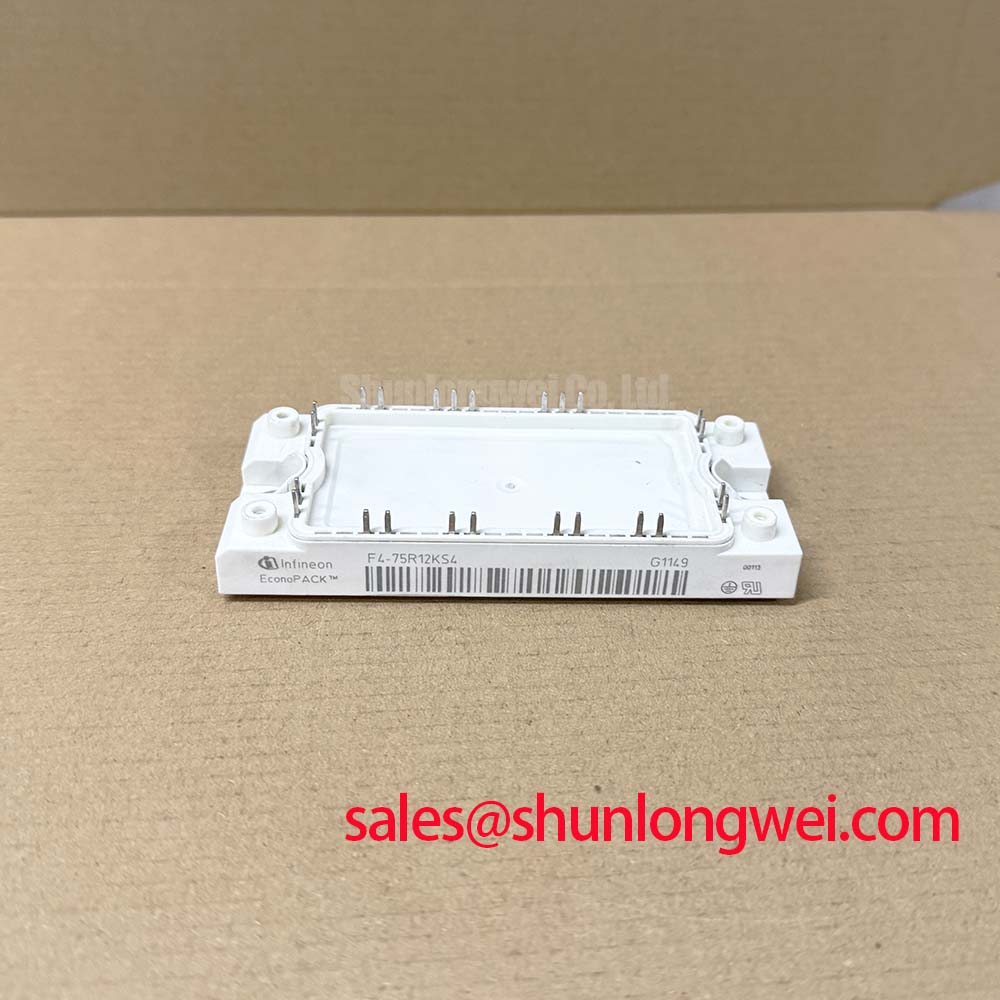
This 1200V, 75A EconoPACK™ 2 module from Infineon enables superior efficiency in high-frequency power converters through its integrated Fast IGBT2 technology. It combines a full H-bridge topology with low-loss IGBTs, directly addressing the need for compact and efficient power stages in applications like inductive heating and uninterruptible power supplies. Key specifications include: 1200V Collector-Emitter Voltage | 75A Nominal Collector Current | 3.2V VCE(sat) (typ.). The design delivers two primary engineering benefits: significantly reduced switching losses and a simplified, more compact H-bridge implementation. For high-frequency UPS and welding systems requiring a balance of efficiency and power density, the F4-75R12KS4's integrated design is a compelling solution.
Key Parameter Overview
Decoding Key Specifications for High-Frequency Performance
The technical specifications of the F4-75R12KS4 are tailored for robust performance in high-frequency industrial applications. The module's parameters are grouped below to provide a clear overview for system design and evaluation. Understanding these values is the first step in leveraging the module's full potential, as detailed in resources like the practical guide to decoding IGBT datasheets.
| Parameter | Symbol | Value | Conditions |
|---|---|---|---|
| Inverter IGBT Characteristics | |||
| Collector-Emitter Voltage | VCES | 1200 V | Tvj = 25°C |
| Continuous DC Collector Current | IC | 100 A | TC = 25°C |
| Nominal Collector Current | IC nom | 75 A | |
| Collector-Emitter Saturation Voltage | VCE sat | 3.20 V (typ.) | IC = 75 A, VGE = 15 V, Tvj = 25°C |
| Gate Threshold Voltage | VGE(th) | 5.5 V | IC = 3.0 mA, Tvj = 25°C |
| Thermal & Mechanical Characteristics | |||
| Total Power Dissipation | Ptot | 500 W | TC = 25°C |
| Operating Junction Temperature | Tvj op | -40 to +150 °C | |
| Housing | - | EconoPACK™ 2 | |
This table presents a selection of key parameters. For comprehensive data, including characteristic curves and detailed thermal information, please refer to the official documentation.
Application Scenarios & Value
System-Level Advantages in Industrial Power Conversion
The F4-75R12KS4 is engineered for power conversion systems where switching frequency and efficiency are critical design constraints. Its integrated H-bridge (Fourpack) configuration makes it a natural fit for applications requiring bidirectional power flow or full-bridge control, such as UPS (Uninterruptible Power Supply) systems, solar inverters, and industrial motor drives.
A primary application is in high-frequency inductive heating and welding equipment. In these systems, a significant engineering challenge is managing the trade-off between switching speed and thermal losses. The module's Fast IGBT2 technology directly addresses this by minimizing total switching energy (Ets). This allows designers to operate at higher frequencies—reducing the size of expensive magnetic components—without incurring excessive heat that would necessitate larger, more complex cooling solutions. What is the main advantage of the Fourpack topology? It simplifies inverter design by integrating a full H-bridge into one module, reducing PCB complexity and assembly time.
While the F4-75R12KS4 is engineered for 75A nominal loads, systems with lower power requirements might consider the pin-compatible F4-50R12KS4. For applications demanding higher current handling in the same package, the F4-100R12KS4 provides an upward migration path.
Frequently Asked Questions (FAQ)
Engineering Questions on the F4-75R12KS4
What are the primary benefits of the PressFIT mounting technology in the F4-75R12KS4?
PressFIT technology provides a solder-free electrical connection between the module pins and the PCB. This offers two significant engineering advantages. First, it enhances long-term reliability by eliminating solder joints, which can be a common point of failure under prolonged thermal cycling. Second, it simplifies and accelerates the manufacturing process, potentially lowering assembly costs and improving production throughput.
How does the integrated Fourpack (H-Bridge) configuration impact system design compared to using two separate half-bridge modules?
Using a single Fourpack module like the F4-75R12KS4 consolidates the entire H-bridge into one component. This simplifies the PCB layout, reduces the overall component count, and typically results in shorter, more symmetrical power connections. These factors can lead to a more compact final design and may improve electromagnetic compatibility (EMC) by minimizing stray inductance in the power loops.
The datasheet mentions 'low switching losses.' How does this translate to tangible benefits in a UPS application?
In a double-conversion UPS, the inverter stage is almost always active, making efficiency paramount. Low switching losses, a core feature of the Fast IGBT2 technology, directly reduce the heat generated during operation. This translates to higher system efficiency, lower energy consumption, and reduced cooling requirements. Ultimately, it allows for the design of a more compact, reliable, and cost-effective UPS with a lower total cost of ownership.
Technical Deep Dive
Analysis of the Fast IGBT2 and PressFIT Technology
The performance of the F4-75R12KS4 is fundamentally shaped by two design choices: the use of Fast IGBT2 silicon and the implementation of PressFIT mechanical connections. Why is Fast IGBT2 technology important? It minimizes switching losses for greater high-frequency efficiency. This technology is optimized to reduce both the turn-on (Eon) and turn-off (Eoff) energy, which is critical as switching frequencies increase. Think of this switching energy as a fixed "cost" for every cycle; at higher frequencies, this cost is paid more often, so a lower cost per transaction becomes essential for overall efficiency.
Complementing the electrical performance is the module's mechanical design. The PressFIT pins provide a robust, compliant connection to the circuit board. This cold-weld process creates a highly reliable, gas-tight interface that is less susceptible to the mechanical stresses and micro-fractures that can affect soldered joints over thousands of thermal cycles. The PressFIT pins act like a high-quality mechanical watch movement, where precisely engineered parts fit together perfectly without solder, ensuring a reliable connection that withstands the constant 'ticking' of thermal cycles.
Industry Insights & Strategic Advantage
Meeting Modern Demands for Efficiency and Power Density
The F4-75R12KS4 is well-aligned with key trends in the power electronics industry, primarily the concurrent demands for higher energy efficiency and increased power density. Stricter energy efficiency standards for industrial equipment, such as uninterruptible power supplies and motor drives, necessitate power stages that minimize both conduction and switching losses. The module's Fast IGBT2 technology directly contributes to meeting these standards by reducing wasted energy, which in turn lowers operating costs.
Furthermore, the drive for more compact systems requires components that offer greater functional integration in a smaller footprint. By housing a complete 1200V, 75A H-bridge in a standard EconoPACK™ 2 module, the F4-75R12KS4 allows engineers to design smaller, lighter, and more power-dense inverters. This integration simplifies not only the hardware design but also the thermal management, as heat sources are consolidated into a single, well-characterized package with an integrated NTC for precise temperature monitoring.
For a complete understanding of how to select and implement such modules, engineers often refer to guides on mastering 1200V IGBTs in industrial inverters, which delve deeper into the critical parameters for achieving optimal efficiency.
To assess the suitability of the F4-75R12KS4 for a specific application, review the official datasheet and consider the system-level trade-offs between switching frequency, thermal performance, and overall power density.