Content last revised on September 10, 2026
FF300R17KE4 IGBT Module: A Technical Review for High-Voltage Industrial Drives
An Engineering Analysis of the 1700V EconoPACK™ 4 Module
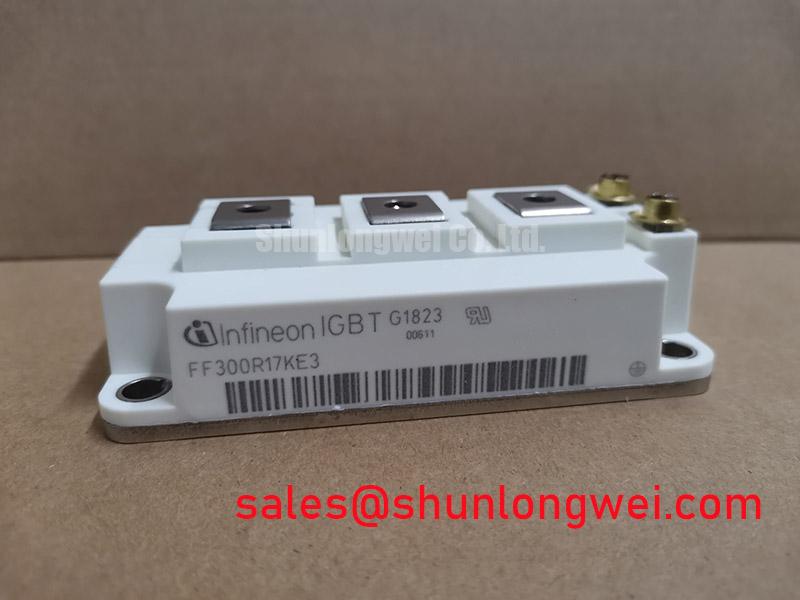
The FF300R17KE4 is a 1700V IGBT module engineered for robust thermal performance and long-term reliability in high-voltage industrial power conversion systems. Integrating six IGBTs in a half-bridge configuration, this module delivers core specifications of 1700V | 300A | 150°C Tvj op. Its primary engineering benefits are enhanced thermal headroom for demanding load cycles and a significant design margin for high-voltage applications. By leveraging the industry-standard EconoPACK™ 4 housing and proven TRENCHSTOP™ IGBT4 technology, it provides consistent performance under severe thermal and electrical stress. For industrial drives operating on 690V AC lines that require high reliability, the FF300R17KE4's 1700V rating provides a critical safety margin.
Application Scenarios & Value
System-Level Benefits in Demanding Industrial Power Conversion
The FF300R17KE4 is strategically designed for high-power, three-phase inverter applications where operational robustness is a primary design criterion. Its high-voltage capability makes it an excellent component for systems connected to 690V AC mains, which are common in heavy industrial settings.
- Variable Frequency Drives (VFDs): In large motor control systems, managing the DC-link voltage is critical, especially during regenerative braking where voltage levels can surge. The 1700V blocking voltage of the FF300R17KE4 provides the necessary headroom to absorb these transients without risking device failure, enhancing the overall reliability of the drive.
- Uninterruptible Power Supplies (UPS): For large-scale commercial and industrial UPS systems, maintaining power quality and ensuring uptime is paramount. This module's robust thermal design and reliable performance support the construction of high-capacity inverters that can handle demanding load profiles without derating.
- Renewable Energy Systems: In central solar inverters and wind turbine converters, power electronics must withstand harsh environmental conditions and fluctuating power generation. The module's proven design ensures a long service life, contributing to a lower total cost of ownership for the renewable energy installation.
While the FF300R17KE4 is well-suited for 300A nominal current applications, for systems requiring higher current handling within the same voltage class, the FF450R17ME4 offers an increased 450A capability.
Key Parameter Overview
Decoding the Datasheet for Thermal Performance and Electrical Stability
The performance of the FF300R17KE4 is defined by key electrical and thermal parameters that directly influence system design and reliability. A thorough understanding of these specifications is crucial for engineers to maximize the module's capabilities. For a comprehensive guide, see our article on decoding IGBT datasheets.
| Parameter | Value | Engineering Significance |
|---|---|---|
| Voltage & Current Ratings | ||
| Collector-Emitter Voltage (Vces) | 1700 V | Provides a substantial safety margin for inverters on 690V AC lines, protecting against voltage overshoots. |
| Continuous Collector Current (Ic) @ 80°C | 300 A | Defines the nominal current handling capability under typical operating conditions. |
| Thermal Characteristics | ||
| Max. Operating Junction Temperature (Tvj op) | 150 °C | Offers significant thermal headroom, allowing for more compact cooling solutions or operation in high ambient temperatures. |
| Thermal Resistance, Junction-to-Case (Rth(j-c)) per IGBT | 0.080 K/W | Indicates highly efficient heat transfer from the silicon chip to the heatsink, a critical factor in preventing thermal runaway. For more on this, explore our guide to mastering IGBT thermal management. |
| Switching & Conduction Parameters | ||
| Collector-Emitter Saturation Voltage (VCE(sat)) @ 300A, 125°C | 2.40 V (Typ.) | Represents the conduction losses. This typical value reflects the efficiency of the TRENCHSTOP™ IGBT4 technology, balancing on-state losses with switching performance. |
Download the FF300R17KE4 datasheet for detailed specifications and performance curves.
Technical Deep Dive
A Closer Look at TRENCHSTOP™ IGBT4 and EconoPACK™ 4 Construction
Two core design elements define the FF300R17KE4: its semiconductor technology and its physical package. The TRENCHSTOP™ IGBT4 chip technology is optimized for the moderate switching frequencies typically found in industrial motor drives and UPS systems (e.g., 2 kHz to 15 kHz). It strikes a deliberate balance, providing low VCE(sat) to minimize conduction losses during on-state, while managing switching losses (Eon and Eoff) to maintain overall system efficiency.
This advanced silicon is housed in the industry-standard EconoPACK™ 4 package. This housing is valued for its reliability and simplified manufacturing integration. Its flat copper baseplate ensures a low thermal resistance path to the heatsink, which is fundamental to effective cooling. What is the primary benefit of its low thermal resistance? It enables faster heat dissipation, keeping the IGBT junction temperature lower and extending the module's operational life. The layout of the power and auxiliary terminals is designed to facilitate straightforward busbar and PCB connections, reducing assembly complexity in large-scale production environments.
Frequently Asked Questions
Engineering Questions on Implementation and Reliability
How does the 1700V collector-emitter voltage rating benefit my design?
A 1700V rating provides a critical safety margin, particularly in three-phase systems running on a 690V AC line, where the nominal DC bus voltage can be around 930V. During dynamic conditions like motor braking or grid fluctuations, significant voltage overshoots can occur. The 1700V Vces ensures the module can withstand these transients without entering an avalanche condition, preventing catastrophic failure and greatly improving system robustness in harsh electrical environments.
What is the significance of the maximum operating junction temperature (Tvj op) of 150°C?
The high Tvj op of 150°C provides engineers with greater design flexibility. It means the module can sustain reliable operation at higher internal temperatures, which translates into two key benefits. First, it can handle higher power throughput or unexpected load surges without exceeding its thermal limits. Second, it may allow for the design of a smaller, more cost-effective heatsink, which reduces the overall size, weight, and cost of the final power conversion unit.
System Integration Considerations
For systems where high reliability is a primary objective, the FF300R17KE4 serves as a foundational building block. Its specifications are well-aligned with the demands of modern industrial automation and energy infrastructure. To discuss the technical requirements for your specific application, please contact our engineering support team for a detailed component evaluation.