Content last revised on October 24, 2026
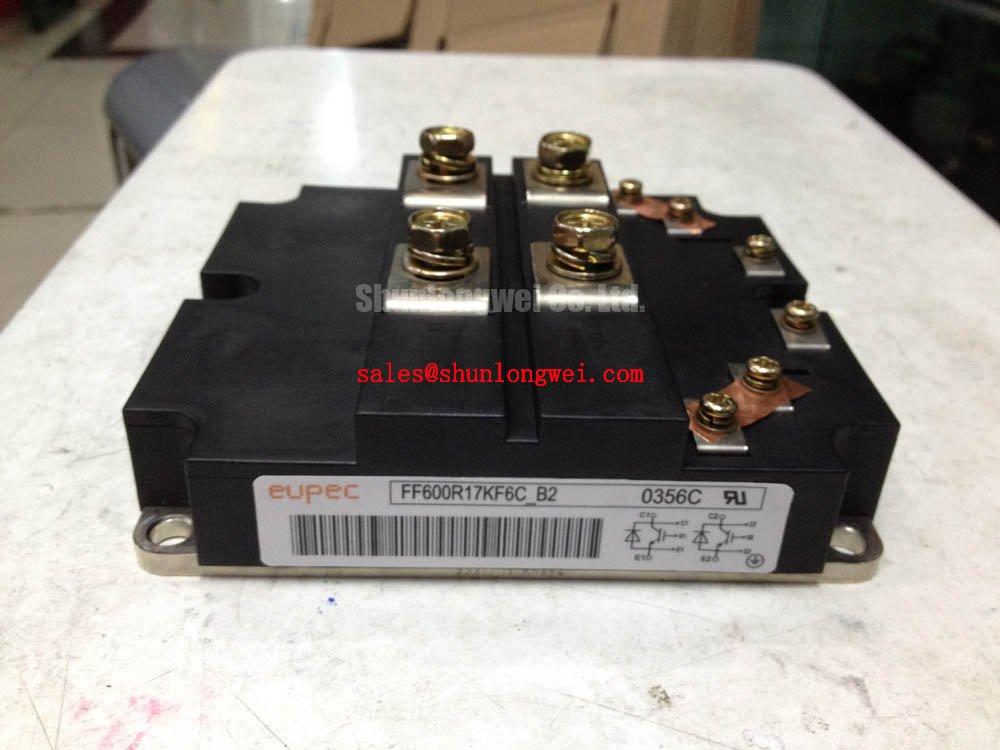
With the DC link isolated and its discharge verified, compare collector–emitter and gate–emitter readings across the disconnected power stage before reconnecting the driver board. Record meter polarity and allow capacitive readings to settle; parallel paths through the driver, snubbers, and bus connections can otherwise obscure the result. The FF600R17KE3 from Infineon carries an official collector–emitter voltage rating of 1700 V at a junction temperature of 25°C and an official continuous collector current rating of 600 A under the stated case-temperature and junction-temperature conditions.
The supplied current-rating condition specifies case temperature 100°C and maximum junction temperature 175°C, while the stated operating junction-temperature range is −40 to +150°C. Keep those entries distinct when assessing an existing cooling arrangement: the current-rating condition does not authorize continuous operation beyond the specified operating range. Cold measurements provide an initial screen; returning the assembly to service also requires checking driver behavior, protection response, and thermal contact.
Transient Dynamics & Electrical Design: Driver Power Stage Start-Up Inrush Mitigation on FF600R17KE3
As a Design Consideration, establish the driver auxiliary supplies and verify their undervoltage-lockout behavior before enabling the DC-link contactor. Observe gate–emitter voltage during auxiliary-supply startup, controller reset, and supply collapse. The off-state command should remain controlled throughout these transitions; any negative gate bias must follow the approved driver design and the module’s gate-voltage limits, rather than an assumed universal setting.
Distinguish driver-supply startup from DC-link capacitor charging. A disturbance on the auxiliary rail can interrupt gate control, whereas excessive bus charging current belongs to the precharge circuit assessment. Capture auxiliary voltage, driver-ready status, gate voltage, and contactor commands on a common time reference. This identifies whether an unexpected pulse coincides with supply recovery, an enable transition, or a controller reset without assigning every startup trip to the module.
The official typical gate–emitter threshold voltage is 5.8 V, measured at collector current 24.0 mA, collector–emitter voltage equal to gate–emitter voltage, and junction temperature 25°C. This low-current threshold is unsuitable as a fully enhanced gate-drive target. The official typical collector–emitter saturation voltage is 2.15 V at 600 A, gate–emitter voltage 15 V, and junction temperature 25°C; retain those conditions when comparing measurements.
The official short-circuit withstand time is 10 µs under gate–emitter voltage no greater than 15 V, junction temperature no greater than 150°C, and supply voltage 1000 V. As an Engineering Recommendation, assess detection delay, driver propagation, and controlled turn-off together against that conditional limit. Infineon’s CIPOS™ intelligent power module portfolio provides context for products with integrated drive and protection functions; those functions must be assessed separately in the FF600R17KE3 assembly.
Assembly Integrity & Layout Architecture: Implementing Active Miller Clamp for FF600R17KE3
As a Design Consideration, place an active Miller clamp so its discharge path between gate and the appropriate emitter reference remains short and low in impedance. During switching of the opposite device, observe the inactive gate with a suitable differential measurement arrangement. Correlate any gate excursion with collector-voltage slew and current behavior before deciding whether the clamp, gate return, or driver supply needs attention.
A clamp must engage at the intended point in the driver’s turn-off sequence. Inspect connector continuity and the routing of the clamp return, especially where repairs have changed wire length or board position. Negative gate bias, where specified by the existing design, complements this work; its magnitude requires validation against gate limits and measured transients. Creepage and clearance should follow the equipment’s insulation requirements, working voltage, and installation environment.
Where the existing high-side driver uses a bootstrap supply, an Engineering Calculation can estimate minimum capacitance by dividing total charge demand by allowable supply droop. That demand includes gate charge, driver quiescent consumption over the longest interval without replenishment, and leakage. Evaluate effective capacitance under applied bias and temperature, then verify the result with the actual switching pattern. Recharge opportunity, capacitor ripple capability, diode recovery, and charging-path impedance all affect supply integrity.
Mechanical assembly also needs its own check. As a Design Consideration, inspect mating-surface cleanliness, flatness, thermal-interface coverage, and the specified tightening sequence. Use the approved interface thickness and mounting torque for the assembly rather than transferring values from a visually similar module. Field Alert: Tighten the baseplate and power terminals to their respective specified torques, and apply the thermal interface material according to the approved assembly procedure.
When comparing the FF650R17IE4P with this module, review terminal geometry, mounting details, gate requirements, switching characteristics, and cooling compatibility individually. A neighboring rating or similar designation does not establish interchangeability. Infineon’s article on enhanced module design and IGBT5 performance offers background on package and switching interactions, rather than FF600R17KE3-specific acceptance values.
Preventing Spurious Faults: High-Voltage Guidelines for Calculating Failures-in-Time Rates for FF600R17KE3
For a Design Consideration involving altitude or cosmic-ray exposure, obtain manufacturer reliability guidance applicable to the device technology, blocking-voltage profile, temperature, and installation location before assigning a failure rate. An equipment alarm record does not establish single-event burnout, and a component voltage rating alone cannot supply a defensible failures-in-time value.
Separate an intermittent protection trip from a permanently damaged power path. Preserve event logs, bus-voltage records, temperature history, and protection timing before changing settings. Inspect the measurement chain and driver supply for disturbances that coincide with the event. Escalate suspected radiation-related failure through a failure-analysis process supported by relevant manufacturer data; altitude by itself is insufficient evidence for a diagnosis or a numerical derating rule.
For compatibility evaluation in a utility-scale 1500 V central solar photovoltaic inverter, designers should establish the voltage actually blocked by each device in the intended topology, including startup and switching transients. The system’s voltage designation does not establish suitability for this module. Map the complete conversion chain before treating another power module, such as the FZ400R65KF1, as a complementary stage; its circuit role and interfaces require separate assessment.
Reliability comparisons should also preserve technology boundaries. The Wide Bandgap Revolution article provides background for evaluating GaN and SiC integration challenges. It does not establish FF600R17KE3 lifetime, radiation tolerance, or replacement compatibility. Keep acceptance criteria tied to the actual module and equipment qualification requirements.
FF600R17KE3 Circuit Protection & Reliability: Calibrating Multi-Module Parallel Current Sharing
As a Design Consideration, compare individual branch currents under steady load and during switching rather than relying on total output current. A positive saturation-voltage temperature coefficient can assist static sharing where the relevant output curves establish that behavior; its usefulness depends on the operating region and cannot be inferred from a single typical saturation-voltage value.
The official junction-to-case thermal resistance is 0.040 K/W per IGBT under DC conditions. Assess each branch’s thermal path through its interface and heatsink alongside electrical measurements. Uneven interface coverage or cooling can alter branch temperature even when gate commands match. A temperature difference warrants investigation of losses, contact quality, and cooling distribution rather than an immediate conclusion that one module is defective.
For dynamic balance, an Engineering Recommendation is to match gate-loop routing, driver timing, and power-path impedance across parallel branches. Compare turn-on and turn-off currents separately, using consistent probe placement and timing references. Adjustments to gate resistance or driver timing should follow measured branch behavior while preserving protection coordination and acceptable switching stress.
Where the equipment includes regenerative braking, inspect the braking chopper and resistor circuit as part of DC-link overvoltage troubleshooting. Verify chopper commands, resistor continuity, thermal protection, and the specified energy-duty limits against the equipment documentation. An open resistor connection or inhibited chopper can contribute to rising bus voltage; confirm the event sequence before attributing the trip to the FF600R17KE3. Complete the repair assessment with branch-current and temperature measurements under the equipment’s approved loading procedure.