


Content last revised on March 12, 2026
FS400R12A2T4: Technical Deep Dive on a 1200V, 400A EconoDUAL™ 3 IGBT Module
An Engineering-Focused Analysis for High-Power Systems
The FS400R12A2T4 is a 1200V, 400A dual IGBT module engineered for exceptional thermal efficiency and long-term reliability in high-power conversion systems. Featuring key specifications of 1200V | 400A | Rth(j-c) 0.075 K/W, this module provides significant engineering benefits, including superior thermal management and increased power density. Its design directly addresses the challenge of dissipating heat effectively in compact industrial drives and inverters. For high-duty-cycle motor drives requiring robust thermal margins, the FS400R12A2T4's low thermal resistance makes it a strategically sound design choice.
Application Scenarios & Value
Achieving System-Level Benefits in Industrial Power Conversion
The FS400R12A2T4 is engineered for applications where thermal performance and operational endurance are critical design criteria. Its primary value is demonstrated in systems like industrial Variable Frequency Drives (VFDs), central solar inverters, and high-capacity Uninterruptible Power Supplies (UPS). In a high-fidelity engineering scenario, consider the design of a VFD for a heavy-duty conveyor system operating in a warm factory environment. The critical challenge is maintaining the IGBT junction temperature within safe limits to prevent premature failure. The FS400R12A2T4's low junction-to-case thermal resistance (Rth(j-c)) of just 0.075 K/W acts like a wide-open channel for heat to escape the semiconductor. This allows engineers to specify smaller, more cost-effective heatsinks or to increase the system's output power without compromising its power cycling capability, directly contributing to a lower total cost of ownership and enhanced reliability.
While this module is optimized for 400A applications, for systems demanding even higher current handling, a related device like the CM600DX-24T provides a path for upward scalability within a similar voltage class.
Key Parameter Overview
Decoding the Specs for Enhanced Thermal Performance
The technical specifications of the FS400R12A2T4 are foundational to its performance in demanding power electronics. The parameters below have been selected to provide engineers with a clear view of its capabilities for system design and simulation.
| Absolute Maximum Ratings (Tvj = 25°C unless otherwise specified) | |
| Collector-Emitter Voltage (VCES) | 1200 V |
| Continuous Collector Current (IC nom) | 400 A |
| Repetitive Peak Collector Current (ICRM) | 800 A |
| Maximum Operating Junction Temperature (Tvj op) | 150°C |
| IGBT, Inverter Characteristics (Tvj = 25°C / 150°C) | |
| Collector-Emitter Saturation Voltage (VCE sat) at IC=400A, VGE=15V | 1.90 V (typ. at 25°C) / 2.15 V (typ. at 150°C) |
| Gate-Emitter Threshold Voltage (VGE(th)) | 5.8 V (5.0 - 6.5 V) |
| Turn-on Switching Energy (Eon) | 44 mJ (typ. at 150°C) |
| Turn-off Switching Energy (Eoff) | 41 mJ (typ. at 150°C) |
| Thermal Characteristics | |
| Thermal Resistance, Junction-to-Case (Rth(j-c)) per IGBT | 0.075 K/W |
| Thermal Resistance, Case-to-Heatsink (Rth(c-h)) | 0.019 K/W (typ., with thermal grease) |
This table presents a selection of key parameters. It is not exhaustive.
Download the FS400R12A2T4 datasheet for detailed specifications and performance curves.
Frequently Asked Questions (FAQ) for FS400R12A2T4
Engineering Insights for Practical Application
How does the low VCE(sat) of the FS400R12A2T4 benefit my design?
The typical collector-emitter saturation voltage (VCE(sat)) of 1.90V at nominal current directly translates to lower conduction losses. Lower losses mean less waste heat is generated during operation, which simplifies thermal management, improves overall inverter efficiency, and can lead to reduced operational costs over the system's lifetime.
What is the significance of the maximum operating junction temperature (Tvj op) of 150°C?
A Tvj op of 150°C provides a substantial thermal safety margin for applications in harsh industrial environments with high ambient temperatures. This robustness allows the module to handle transient thermal overloads without degradation, contributing to a more resilient and reliable end-product. What is the primary benefit of its high Tvj op? It enhances system reliability in thermally challenging conditions.
Is paralleling the FS400R12A2T4 module feasible for higher current output?
Yes, paralleling is a common strategy for achieving higher current ratings. However, successful implementation requires careful attention to the gate drive design and symmetrical busbar layout to ensure balanced current sharing. For a detailed guide on this topic, exploring resources on achieving balanced current sharing is highly recommended to prevent premature module failure.
Technical Deep Dive
Inside the EconoDUAL™ 3 Package: A Foundation for Reliability
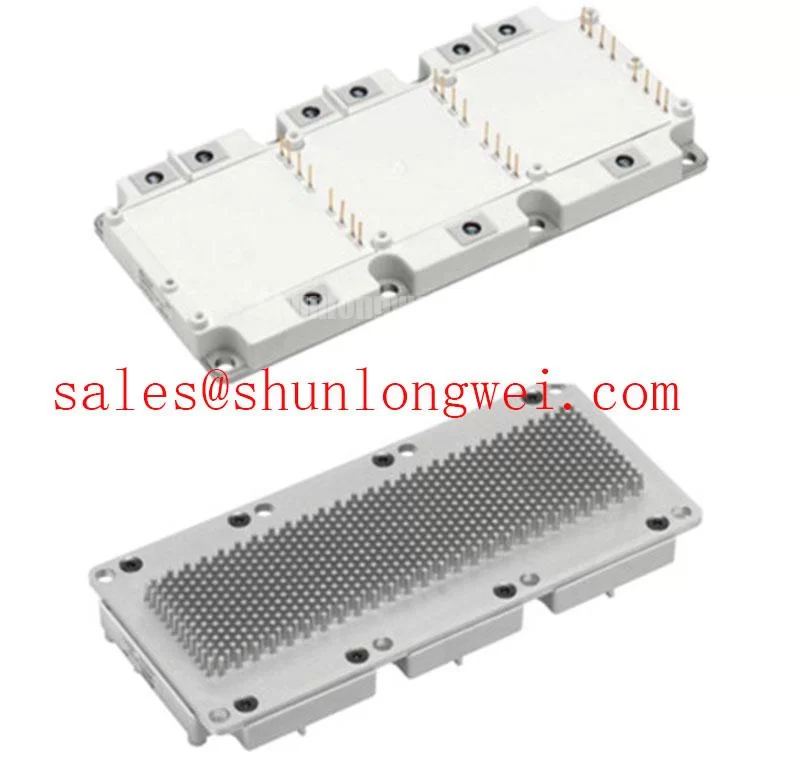
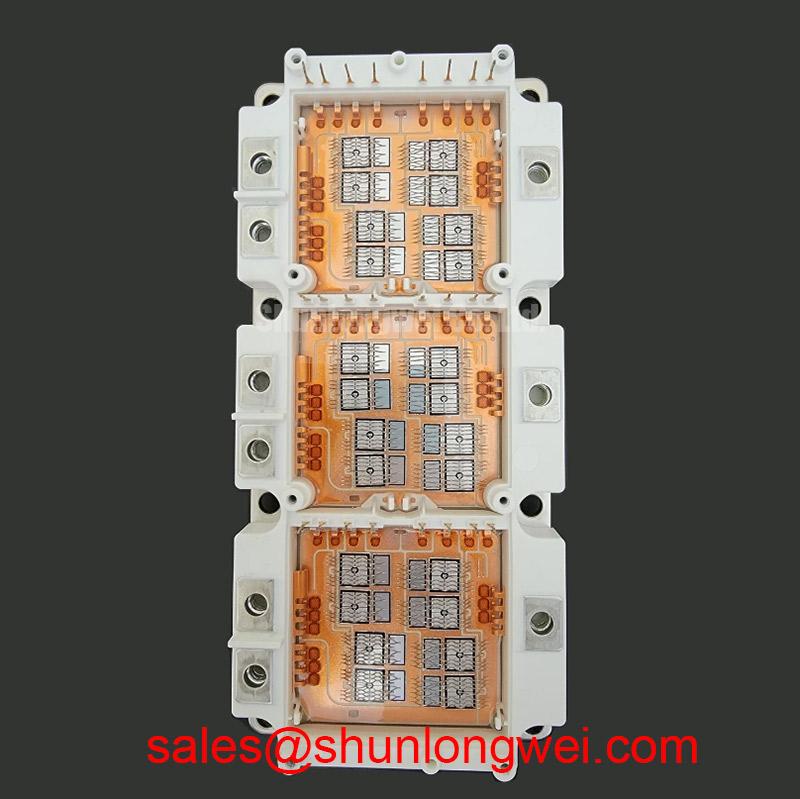
The performance of the FS400R12A2T4 is not solely defined by its silicon; the EconoDUAL™ 3 package plays a pivotal role in its overall reliability and ease of integration. This industry-standard housing is optimized for manufacturing and thermal performance. The integrated copper baseplate provides a large, flat surface for optimal contact with a heatsink. This is analogous to creating a perfectly smooth highway for heat to travel away from the active components, in contrast to the "off-road" path in packages with less uniform surfaces. The screw-on main terminals facilitate secure, low-inductance connections to the DC-link busbar, which is crucial for minimizing voltage overshoot during high-speed switching events. This design choice simplifies assembly and maintenance compared to press-fit or complex soldering procedures, making it a practical choice for industrial system integrators.
For more information on the underlying silicon technology, you can explore the official Infineon website.
For engineering teams evaluating the FS400R12A2T4 for new designs or system upgrades, we encourage a thorough review of the official datasheet. To discuss your specific application requirements, please contact our technical support team for further information.