
Content last revised on September 10, 2026
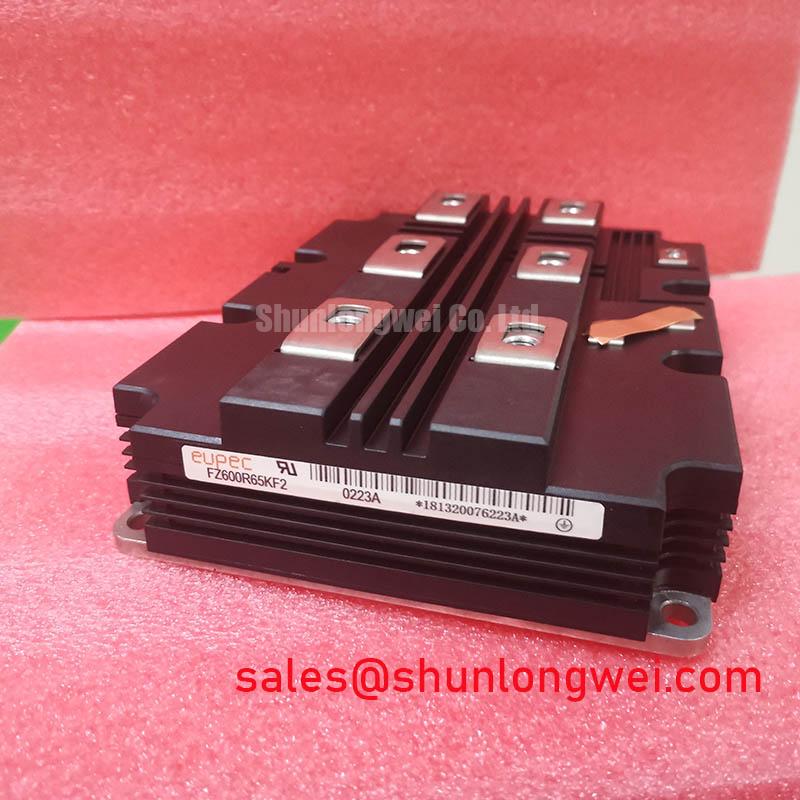
FZ600R65KF1 6500V 600A Single IGBT Module: High-Reliability Power Switching with Pressure Contact Technology
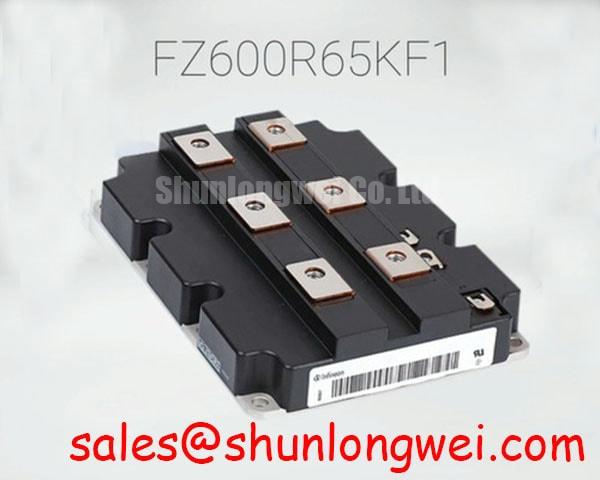
The FZ600R65KF1 is a high-power single IGBT module engineered for exceptional durability in the most demanding power conversion applications. It leverages robust pressure contact technology to deliver unparalleled reliability and extended operational life. With a formidable blocking voltage of 6500V and a nominal collector current of 600A, this module provides the performance foundation for next-generation medium-voltage systems. Key benefits include superior thermal cycling capability and the elimination of solder and bond-wire fatigue, common failure points in conventional modules. What is the primary benefit of its pressure-contact design? Enhanced long-term reliability by eliminating solder fatigue. For medium-voltage converters demanding maximum operational uptime, this 6500V pressure contact module is the definitive choice.
Key Parameter Overview
Decoding the Specs for Enhanced Thermal Reliability
The technical specifications of the FZ600R65KF1 are tailored for high-power, high-reliability systems. The parameters below highlight its capacity to manage significant electrical and thermal stresses, which is critical for applications in industrial and traction environments.
| Parameter | Value | Conditions |
| Collector-Emitter Voltage (V_CES) | 6500 V | T_vj = 25°C |
| Continuous Collector Current (I_C) | 600 A | T_C = 80°C, T_vj max = 125°C |
| Collector-Emitter Saturation Voltage (V_CEsat) | 3.8 V (typ.) / 4.8 V (max.) | I_C = 600 A, V_GE = 15 V, T_vj = 125°C |
| Gate-Emitter Threshold Voltage (V_GE(th)) | 5.0 V (min.) / 6.5 V (max.) | I_C = 24.0 mA, V_CE = V_GE, T_vj = 25°C |
| Short Circuit Withstand Time (t_psc) | 10 µs | V_GE ≤ 15 V, V_CC = 3600 V, T_vj max = 125°C |
| Thermal Resistance, Junction to Case (R_thJC) | max. 13 K/kW | per IGBT |
| Maximum Junction Temperature (T_vj max) | 125°C |
Download the FZ600R65KF1 datasheet for detailed specifications and performance curves.
Application Scenarios & Value
System-Level Benefits in Medium-Voltage Power Conversion
The FZ600R65KF1 is purpose-built for high-power applications where reliability is not just a feature, but a fundamental requirement. Its primary value is demonstrated in systems where operational continuity is paramount and maintenance opportunities are scarce.
A prime engineering scenario is in Medium-Voltage Converters for industrial motor drives, renewable energy systems (like wind turbine converters), and auxiliary power units in traction vehicles. In these systems, frequent and significant load variations induce thermal cycles that place immense thermomechanical stress on power modules. Conventional soldered modules are susceptible to solder-layer fatigue and bond-wire lift-off under these conditions, leading to degradation and eventual failure. The FZ600R65KF1's Pressure Contact Technology fundamentally solves this challenge by eliminating these wear-out mechanisms. This design choice translates directly into a longer service life, reduced total cost of ownership, and significantly higher system availability. Furthermore, the module's 6500V blocking voltage enables more straightforward and robust inverter designs for systems operating on 3.3 kV AC lines, often reducing the need for complex series connection of lower-voltage devices. For applications requiring different voltage or current ratings, related offerings include the lower-voltage FZ900R12KE4 for 1200V systems.
Technical Deep Dive
A Closer Look at Pressure Contact Design for Long-Term Reliability
The core innovation of the FZ600R65KF1 lies in its internal construction. Unlike modules that rely on soldered connections to join the semiconductor die to the substrate and the substrate to the baseplate, this device uses a precisely engineered mechanical clamp system. This pressure contact approach provides a stable and robust electrical and thermal interface that is highly resistant to degradation from thermal cycling.
To understand the benefit, consider an analogy. A standard soldered module is like a stack of different materials glued together. As they heat and cool, they expand and contract at different rates, causing the "glue" (solder) to crack and weaken over time. The FZ600R65KF1, with its Pressure Contact Technology, is more like a stack of materials held together by a powerful, spring-loaded mechanical press. This force maintains a consistent, high-integrity connection, ensuring that thermal resistance remains low and stable throughout the module's life. This method effectively eliminates the two most common failure modes in high-power modules: baseplate solder fatigue and bond wire lift-off, making it an inherently more reliable solution for mission-critical power infrastructure.
Frequently Asked Questions (FAQ)
How does Pressure Contact Technology in the FZ600R65KF1 enhance system reliability compared to standard soldered modules?
It eliminates the primary wear-out mechanisms found in conventional modules—solder fatigue and bond wire lift-off. By using a mechanical force to maintain connections, it provides a stable electrical and thermal path that is not susceptible to degradation from thermal cycling, resulting in a significantly longer operational lifetime and predictable end-of-life behavior.
What is the significance of the 6500V V_CES rating for system-level design?
The 6500V rating is crucial for Medium-Voltage Converter applications, particularly those connected to 3.3kV or 4.16kV AC grids. It provides the necessary voltage margin for safe operation and allows designers to implement simpler, more efficient two-level or three-level inverter topologies, reducing the complexity and potential failure points associated with series-connecting multiple lower-voltage IGBTs.
Can the FZ600R65KF1 be connected in series, and what are the benefits?
Yes, modules with pressure contact technology are well-suited for series connection. A key benefit is their "fail-short" characteristic. In the event of a failure, the chip is likely to form a stable short circuit, which allows the rest of the series-connected stack to remain operational temporarily, enabling a controlled system shutdown. This contrasts with the "fail-open" mode of some technologies, which can lead to catastrophic overvoltage on the remaining devices.
How does the V_CEsat of 3.8V impact the thermal design for a 600A application?
A lower V_CEsat directly reduces conduction losses (Power Loss = V_CEsat × Current). At 600A, the typical V_CEsat of 3.8V minimizes the amount of heat generated during operation. This translates to lower junction temperatures, reduced stress on the device, and allows for a more compact and cost-effective cooling system (e.g., smaller heatsink), ultimately enabling higher overall system power density and efficiency.
The strategic implementation of the FZ600R65KF1 enables the development of highly reliable and power-dense converters, providing a critical building block for modernizing industrial infrastructure and advancing renewable energy systems.