Content last revised on September 10, 2026
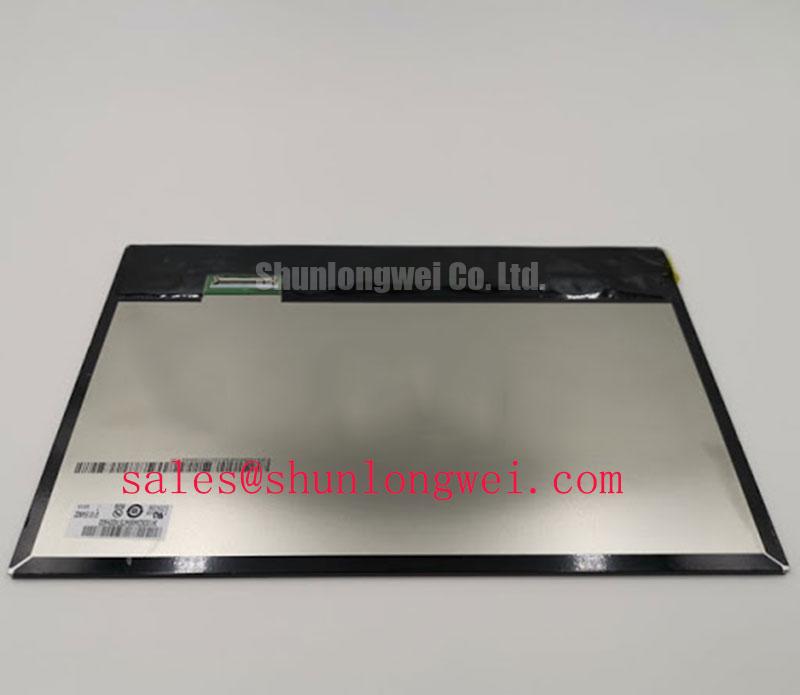
G101EAN01.0 AUO 10.1-Inch WXGA AHVA LCD Display Panel
How do design engineers prevent optical degradation and display flicker in portable medical devices subject to constant movement? The integration of specialized flat-panel display units must balance visual fidelity with electrical noise. The G101EAN01.0 by AUO represents a high-stability portrait-oriented display designed to maintain optical clarity and optimize electromagnetic compatibility (EMC) in medical and industrial control interfaces. This 10.1-inch 800×1280 WXGA panel utilizing a MIPI (4 data lanes) interface delivers a typical brightness of 350 cd/m². Key benefits include wide viewing angles via AHVA technology and reduced electromagnetic emissions. What is the main benefit of the AHVA technology? It eliminates color shifting and grayscale inversion at wide viewing angles. What interface does this display panel support? It natively supports high-speed MIPI with four data lanes. For compact industrial HMIs requiring true 170-degree symmetric readability, this 10.1-inch 800×1280 display offers the optimal integration path.
Frequently Asked Questions
Addressing Common Design and Electrical Integration Inquiries
How does the native portrait orientation of the AUO G101EAN01.0 prevent color shifting?
Unlike standard TN displays that wash out at off-angles, this module uses AHVA technology. The liquid crystals remain parallel to the substrate, providing symmetric 85°/85°/85°/85° viewing angles that prevent color shifting across both axes.
Can the G101EAN01.0 be driven directly via a standard LVDS interface?
No, this display uses a high-speed MIPI (4 data lanes) interface via a 39-pin connector. Systems utilizing traditional LVDS-based processors require an external active bridge converter chip.
What are the power supply requirements for the logic and interface pins?
The display logic runs on a dual-rail power configuration: a typical VDD of 3.3V for the main power and a typical VDDIO of 1.8V for the interface input/output logic level voltage.
Does this display module feature an onboard LED backlight driver?
No, the G101EAN01.0 lacks an internal backlight driver circuit. System designers must provision an external constant-current driver to power the WLED backlight array.
Key Parameter Overview
Decoding the Specs for Enhanced Optical Reliability
| Specification Parameter | Value / Rating | Engineering Significance |
|---|---|---|
| Model Number | G101EAN01.0 | Manufacturer: AUO (AU Optronics) |
| Screen Size | 10.1 inches | Compact visual surface area for compact control systems |
| Resolution | 800(RGB) × 1280 (WXGA) | 150 PPI density for clear technical graphics and text |
| Display Mode | AHVA (Normally Black) | Ensures true-to-life color rendering and wide viewing cones |
| Luminance | 350 cd/m² (Typical) | Standard brightness for controlled indoor environments |
| Contrast Ratio | 1000:1 (Typical) | Deep black levels for improved readability in dim ambient light |
| Viewing Angle | 85°/85°/85°/85° (L/R/U/D) | Enables portrait reading without color inversion |
| Signal Interface | MIPI (4 data lanes), 39 pins | High-speed differential signaling with minimized EMI footprint |
| Logic Voltages | VDD: 3.3V / VDDIO: 1.8V | Separated logic-core and interface IO power paths |
| Operating Temp | 0 °C to 50 °C | Operational thermal window for standard indoor applications |
| Vibration Tolerance | 1.5G (14.7 m/s²) | Mechanical durability under light operational vibrations |
Download the G101EAN01.0 datasheet for detailed specifications and performance curves.
Technical & Design Deep Dive
Decoding the MIPI Interface and AHVA Electro-Optical Mechanics
To integrate displays in compact enclosures, engineers must evaluate electrical topology alongside optical performance. The transition from legacy LVDS architectures to the MIPI (4 data lanes) standard on the G101EAN01.0 allows for a cleaner board layout and improved signal integrity. By routing data over a high-speed serial bus, the trace count is reduced. This is analogous to replacing a cluttered, ten-lane surface highway with a direct, high-speed underground rail system. This configuration reduces spatial footprint on the PCB and eliminates high-frequency electromagnetic interference (EMI) that can corrupt sensitive analog circuitry when integrated into a medical HMI or diagnostic device utilizing an anti-glare polarizer.
From an optical standpoint, the AHVA technology employed in this panel prevents the typical pitfalls of standard twisted nematic (TN) cells. Traditional TN LCDs suffer from severe color distortion when viewed off-axis, particularly from below. This effect is similar to looking at a glossy photograph under a direct lamp; tilt it slightly, and the image washes out. The AHVA layout keeps the liquid crystals aligned parallel to the glass, acting like a high-quality matte painting in a gallery to ensure colors remain accurate and text stays sharp from any angle up to 170 degrees. Developers can explore the fundamentals of TFT-LCD technology and compare the physical differences between TN vs IPS display performance or standard IPS technology. Additionally, understanding grayscale inversion dynamics helps in configuring display orientations for varied user positions.
Application Scenarios & Value
Integrating the Portrait-Oriented Display in Low-Power Industrial Systems
Consider the design of a handheld diagnostic instrument used in field testing. These devices require portrait display panels that can handle physical handling and constant motion. The G101EAN01.0, with its native 800×1280 resolution, fits vertically without requiring software-based screen rotation that wastes GPU processing power when connected to an embedded controller. Its 1.5G vibration rating ensures that physical impacts do not misalign the internal backlight. Operating at a logic power of VDDIO = 1.8V and VDD = 3.3V, it minimizes battery draw, which is vital for portable equipment.
While this 10.1-inch module provides an optimal balance of pixel density and power conservation for smaller devices, applications requiring a larger viewing canvas may utilize the 12.1-inch G121EAN01.0. Conversely, projects requiring landscape orientation with onboard backlight drivers may find the G101EVN01.0 serves as a notable variant. By evaluating these specifications, design teams can configure their hardware platform to match exact user environments.