Content last revised on October 23, 2026
Suppressing Pixel Jitter & Horizontal White Lines Induced by Adjacent 400V Motor Drives
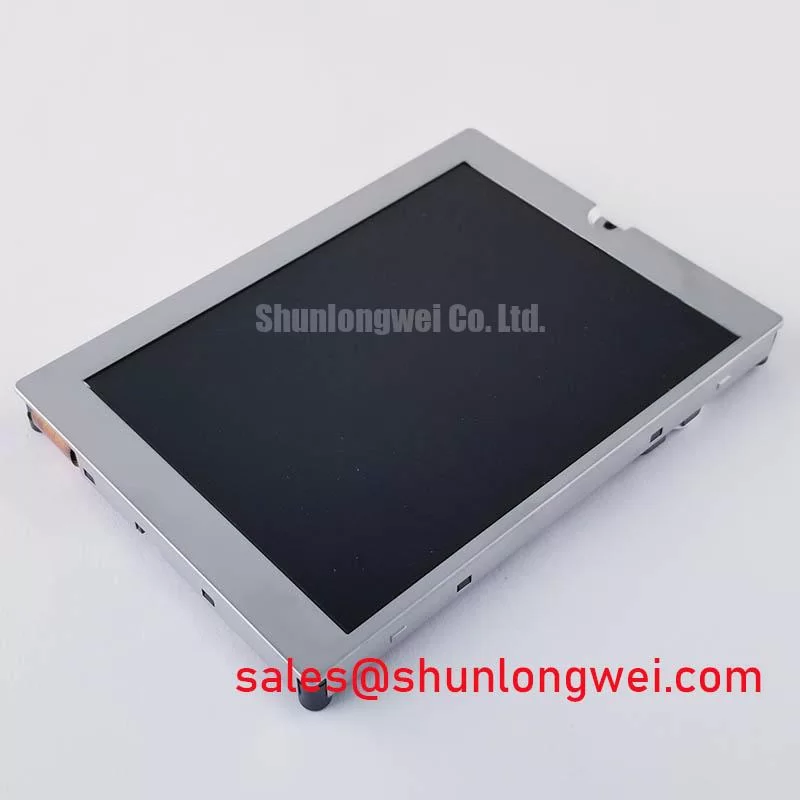
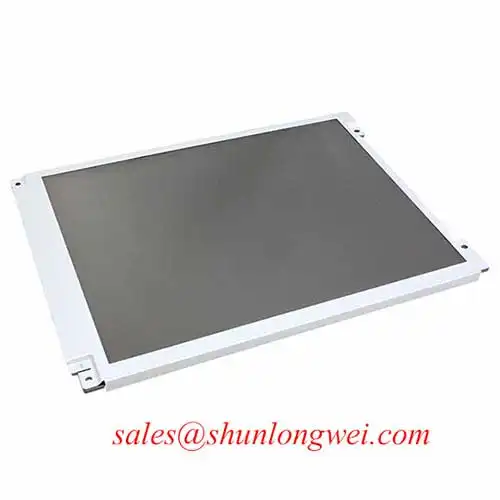
Display a uniform gray image and check whether horizontal bands change when the adjacent drive starts, stops, or changes load, keeping the display settings fixed throughout the comparison. The Kyocera KCG057QV1DB-G660 is a 5.7-inch color STN-LCD with 320 × 240 QVGA resolution and a CMOS single-channel, 4-bit interface—not a native LVDS panel.
Its specified optical characteristics are 400 cd/m² luminance and a 40:1 typical contrast ratio, with a white LED backlight incorporating constant-current control. The specified operating temperature range is −20°C to +70°C. These specifications do not establish sunlight readability, enclosure protection, or compatibility with a particular controller.
Compare the displayed pattern with the neighboring motor drive inactive and active before attributing pixel jitter to the panel. As a Design Consideration, correlate interference with drive switching, cable placement, and changes in display supply quality. A repeatable relationship helps locate the disturbance path, but horizontal lines alone do not identify its source.
Inspect the actual CMOS cable assembly, its return conductors, and connector retention. Route the display connection away from motor conductors where the equipment layout permits, then repeat the same image test. Where the machine uses a shielded harness, assess shield termination at the enclosure boundary against the equipment grounding design. Circumferential shield termination and common-mode suppression are system-level options, not standard accessories or guaranteed remedies for this panel.
Observe the clock, data, and supply at the receiving connection using suitable probing techniques. Compare captures during clean and disturbed operation rather than judging signal quality from an unloaded controller output. Any change to shielding or filtering should be checked for its effect on both interference and signal edges.
Keep optical acceptance separate from electrical noise testing. The specified typical contrast ratio does not establish direct-sunlight performance, and an anti-glare surface treatment is not established by the supplied specifications. For broader display terminology, Kyocera’s display technology information provides manufacturer context without replacing this model’s electrical and optical requirements.
VESA vs. JEIDA Data Mapping Alignment & Even/Odd Channel Signal Integrity
Check the controller’s parallel display output configuration before changing VESA or JEIDA settings: those LVDS mapping conventions do not describe the native CMOS single-channel, 4-bit interface of this module. If an intermediate converter exists, evaluate its input mapping and panel-side output separately. LVDS differential routing rules should not be applied to the panel’s CMOS conductors.
As an Engineering Recommendation, compare the controller configuration with the module’s pin assignment, data ordering, clock polarity, and synchronization requirements. A displaced image, incorrect colors, or repeated image segments can have several causes, including an unsuitable controller mode or an intermittent connection. Use recognizable test patterns to distinguish pixel ordering errors from unstable sampling.
At the replacement-approval stage, consult the model-specific datasheet for supply voltage, connector assignment, power sequencing, timing limits, mechanical dimensions, and supported dimming control. These details determine electrical and mechanical compatibility; the diagonal size and resolution alone do not.
The backlight’s constant-current function does not establish its conversion efficiency or guarantee a particular PWM input. Where the equipment provides dimming, check the actual control implementation and observe brightness through its usable range. Assess visible modulation, camera banding, and audible behavior under the intended operating conditions rather than prescribing an unsupported switching frequency.
The TCG070WVLPCANN-AN00 can be included in a broader display redesign comparison, but it should not be treated as a verified direct replacement for the KCG057QV1DB-G660. Compare interface, geometry, optical behavior, and controller support independently. Evaluation for a marine radar or navigation bridge console would also require enclosure-level sunlight, moisture, and salt-exposure assessment.
Full-Screen Primary Color AOI Screening: Stuck Sub-Pixels & Background Uniformity Audit
Run full-screen red, green, and blue patterns, then inspect white, black, and neutral gray backgrounds under repeatable viewing conditions. As an Engineering Recommendation, organize screening into pattern verification, defect-location recording, and repeat inspection after the display reaches a stable operating condition. Confirm that the controller generates the intended image before recording a panel defect.
Record persistent bright or dark points by screen position, along with the pattern on which they appear. Apply the purchasing agreement’s pixel acceptance criteria rather than inventing a universal rejection threshold. For automated optical inspection, keep camera position, focus, exposure, and ambient illumination consistent so that setup changes do not resemble product variation.
Compare center and peripheral brightness and white appearance without changing backlight settings. Instrumented measurements are preferable when luminance or color uniformity affects acceptance. The specified luminance does not define an allowable corner-to-center variation or a color-temperature tolerance.
An oblique inspection light can help reveal faint image content when the backlight is not illuminating the screen, but it cannot independently distinguish a driver connection problem from a controller, supply, or panel fault. Follow the observation with electrical checks. Likewise, a persistent line should not be labeled an internal fracture from appearance alone.
The 320 × 240 image has a conventional rectangular format; display aspect ratio and standard screen form factors help explain why scaling can distort circular indicators or text. For additional troubleshooting context, The Ultimate Guide to Industrial TFT LCD Technology is useful background, while this module remains a passive-matrix STN display.
Chassis Fastener Torque Verification to Reduce Optical Mura Defects
Compare a dark-gray image before and after securing the display in its chassis, looking for localized shading that appears with enclosure loading. As a Design Consideration, inspect bezel clearance, mounting alignment, cable strain, and contact with the display surface. A mounting-related change supports further mechanical investigation; it does not identify an internal material failure.
Select fastener size and tightening torque from the approved mounting drawing and chassis construction. A generic M3 torque range is not a Kyocera mounting specification for this model. Where the assembly procedure permits, tighten progressively and inspect the image during assembly, avoiding uneven loading and using the equipment’s validated retention method.
💡 Bench Tip: Disconnect power, use ESD protection, and seat the display cable squarely before closing its connector lock.
Check cold-start image formation and subsequent stabilization within the specified operating range. Passive-matrix response can vary with temperature, so evaluate actual text updates and transitions rather than assuming room-temperature behavior. Any controller compensation should follow the approved drive configuration.
During temperature testing, recheck CMOS timing at the panel connection and compare assembled image uniformity across the equipment’s operating conditions. Keep LED output maintenance separate from MTBF: the supplied specifications establish neither a backlight service-life figure nor a system reliability prediction. Record measured brightness, drive conditions, temperature, and mechanical configuration for a repeatable acceptance record.