

Content last revised on November 27, 2026
Transient Stress and Commutation-Failure Prevention in Control Applications for KP1000A1600V
Commutation reliability depends on the complete bridge, source impedance, firing sequence, inductive load path, and protection network rather than on the thyristor rating alone. In half-controlled and full-controlled rectifier bridges, an inductive load can maintain current after the conducting device is no longer forward-biased. The current must transfer through the intended freewheeling diode or bridge path without forcing excessive reverse voltage across the SCR.
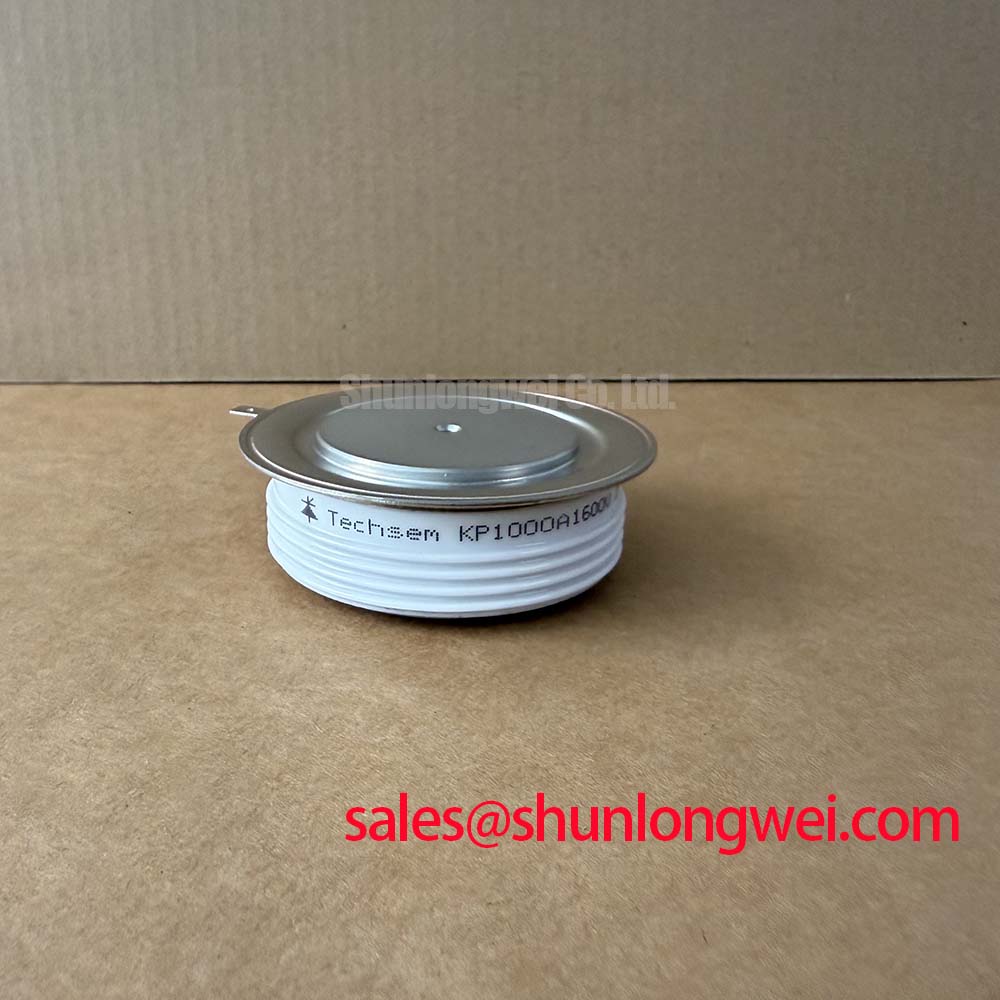
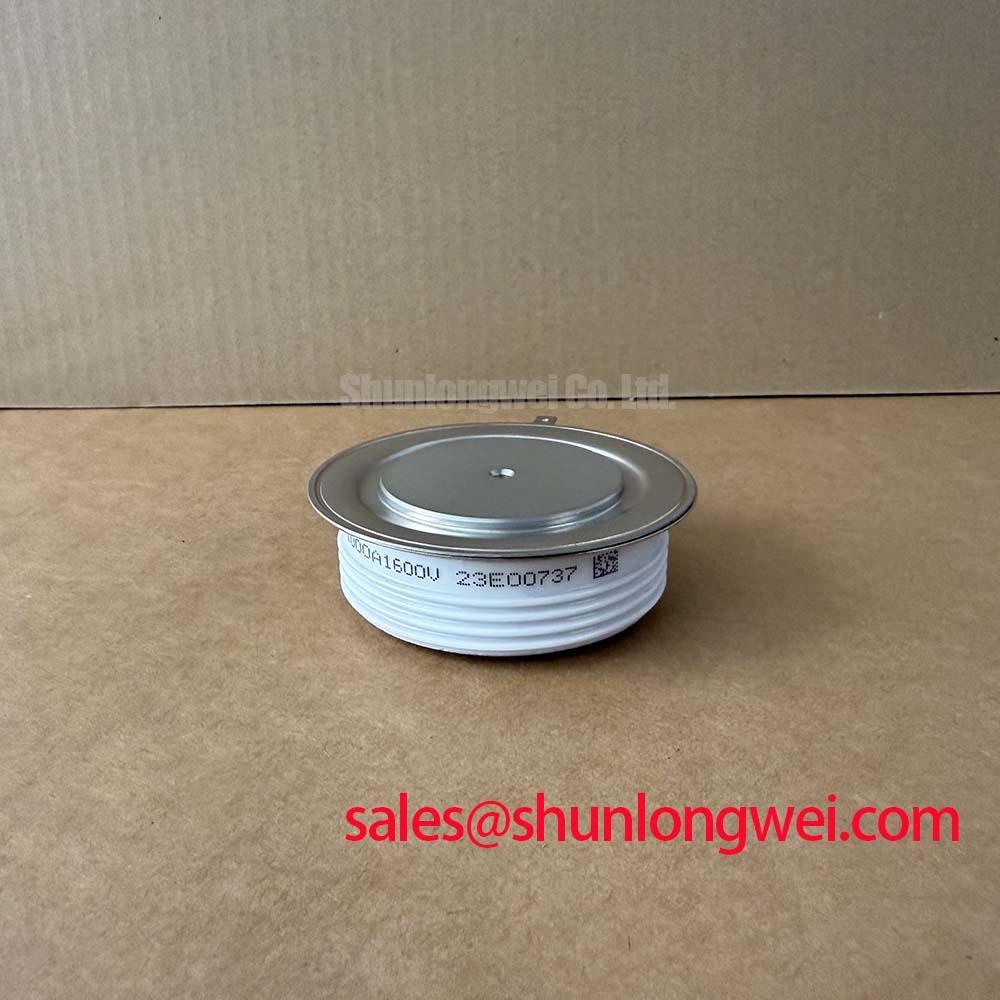
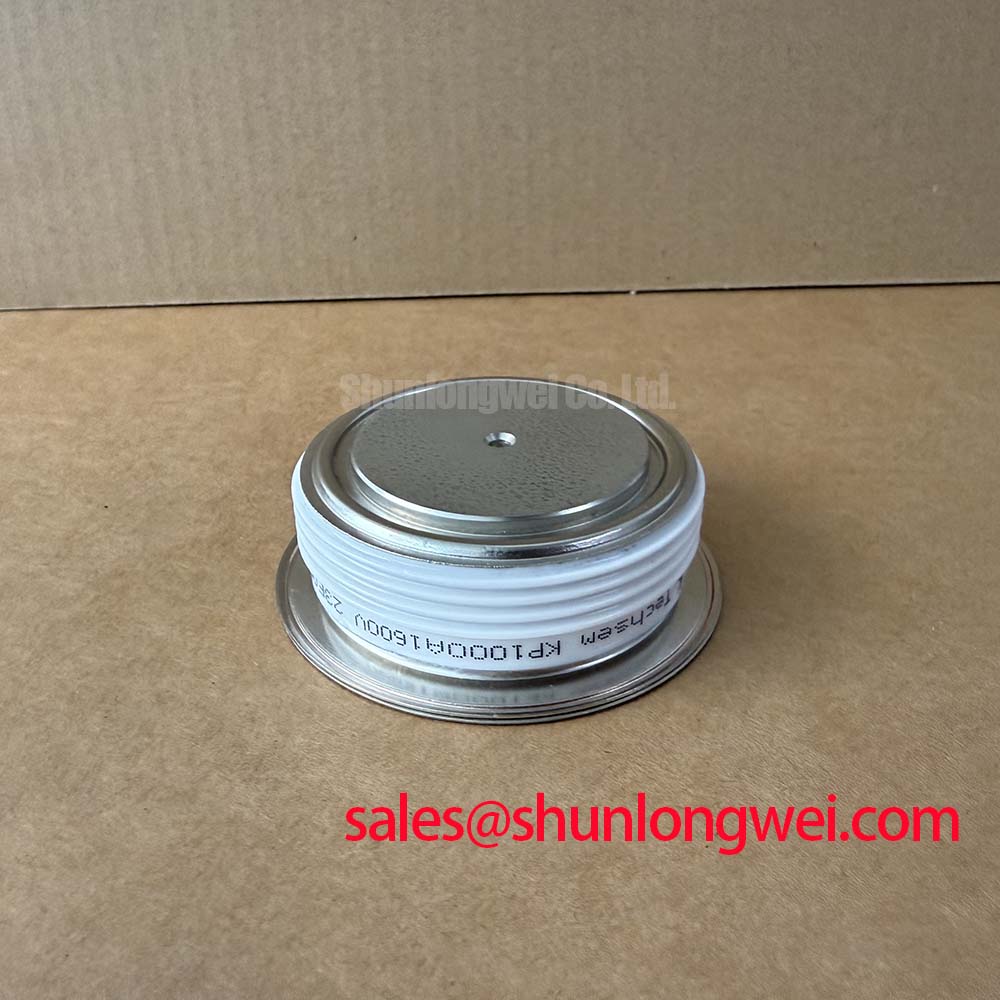
For the KP1000A1600V, the verified hardware limits are a Repetitive Peak Reverse Voltage (VRRM) of 1600.0 V and an Average On-State Current (IT(AV)) of 1000.0 A. These values should be checked against the actual line transient environment, transformer leakage, commutation overlap, and load current profile. They do not replace a system-level review of repetitive spikes or switching conditions.
RC snubber and commutation checks
An RC snubber can reduce dv/dt-related voltage rise and damp ringing created by wiring inductance, transformer leakage, and abrupt current transfer. Its resistor, capacitor, pulse energy, and voltage class must be selected from measured waveforms and the switching duty. The snubber circuit reference provides useful background, but the final network requires oscilloscope validation at the intended operating point.
Check whether the freewheeling route remains available during controller inhibit, gate-drive interruption, and abnormal firing. A blocked or delayed path can create a commutation failure even when average current remains below the nominal rating. Review the bridge fuses, gate timing, transformer phase relationship, and the physical loop formed by the SCR, diode, busbar, and snubber.
Thermal and mechanical inspection
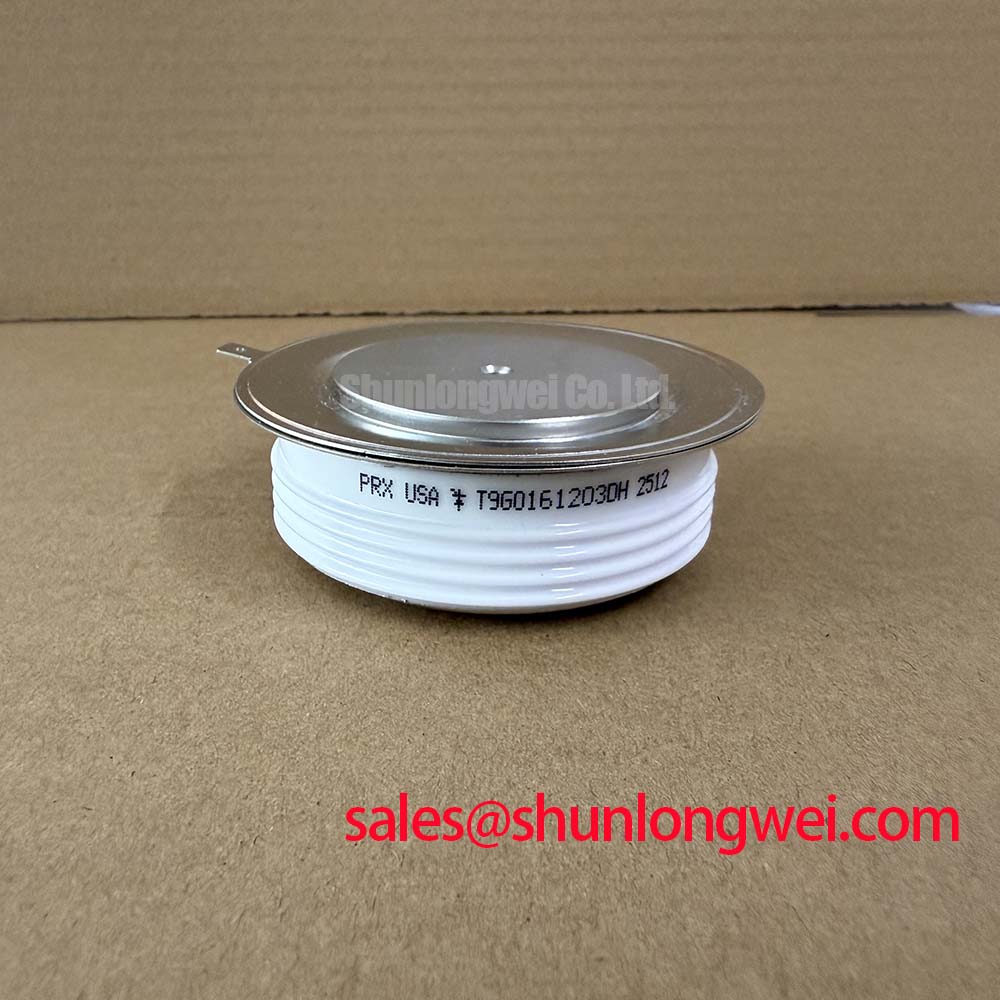
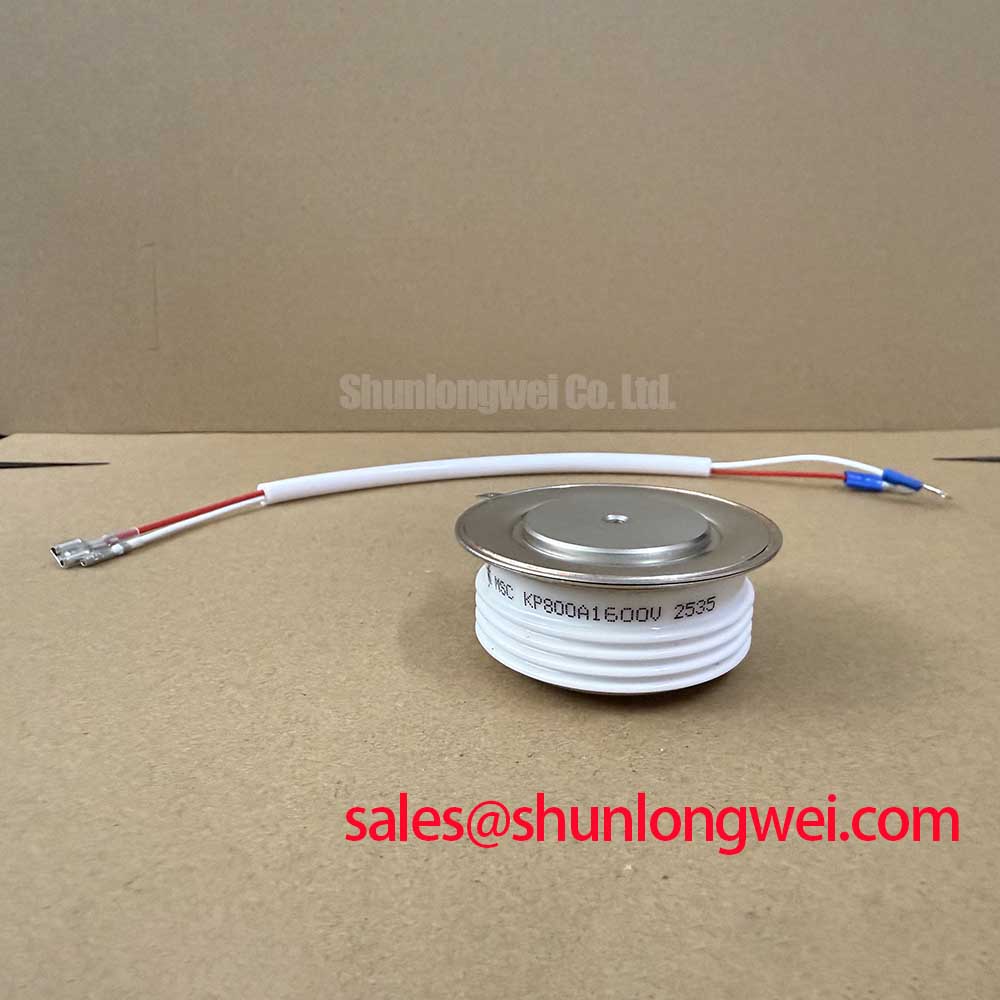
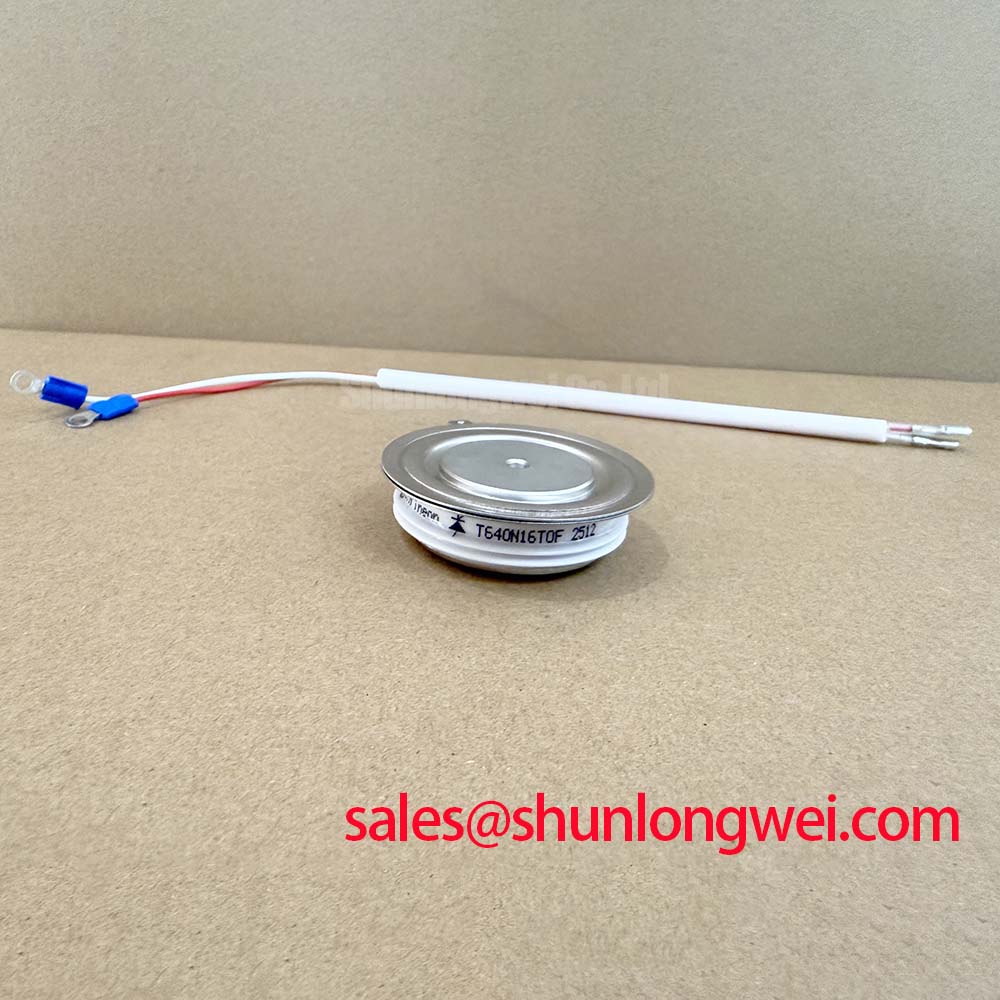
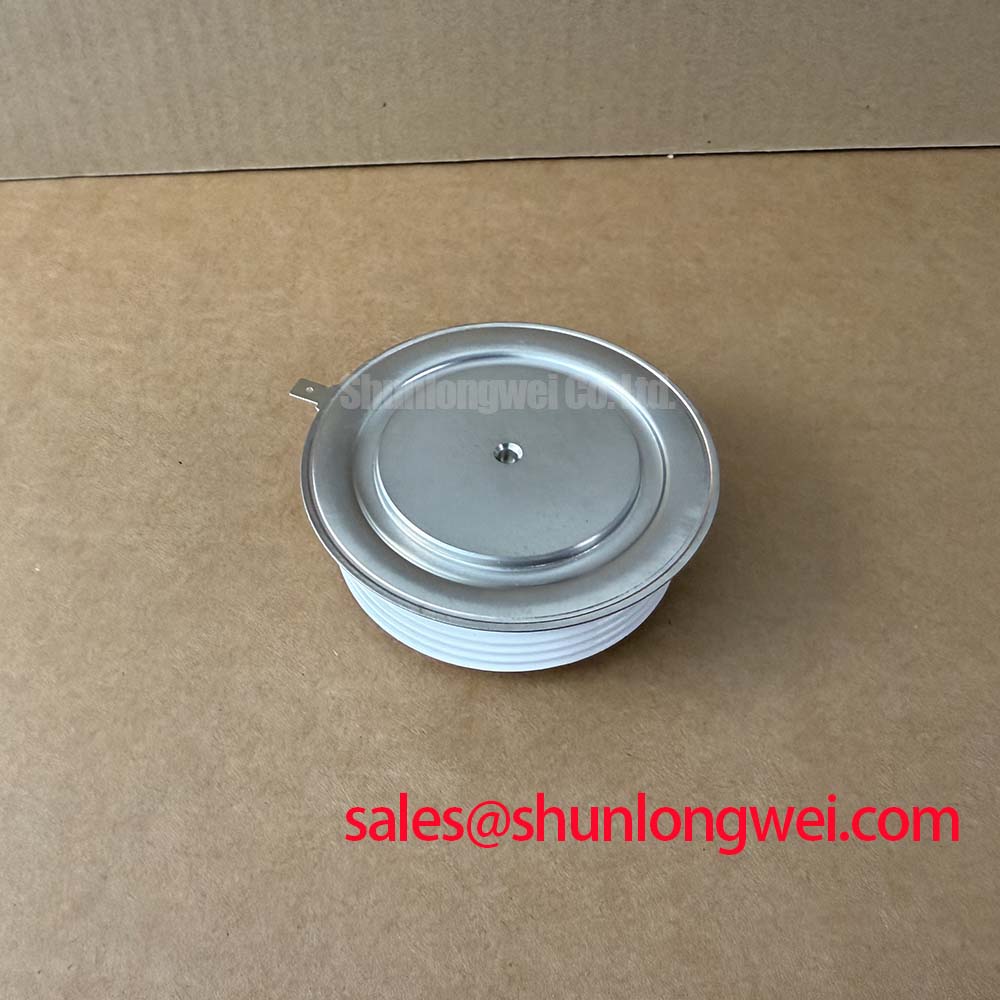
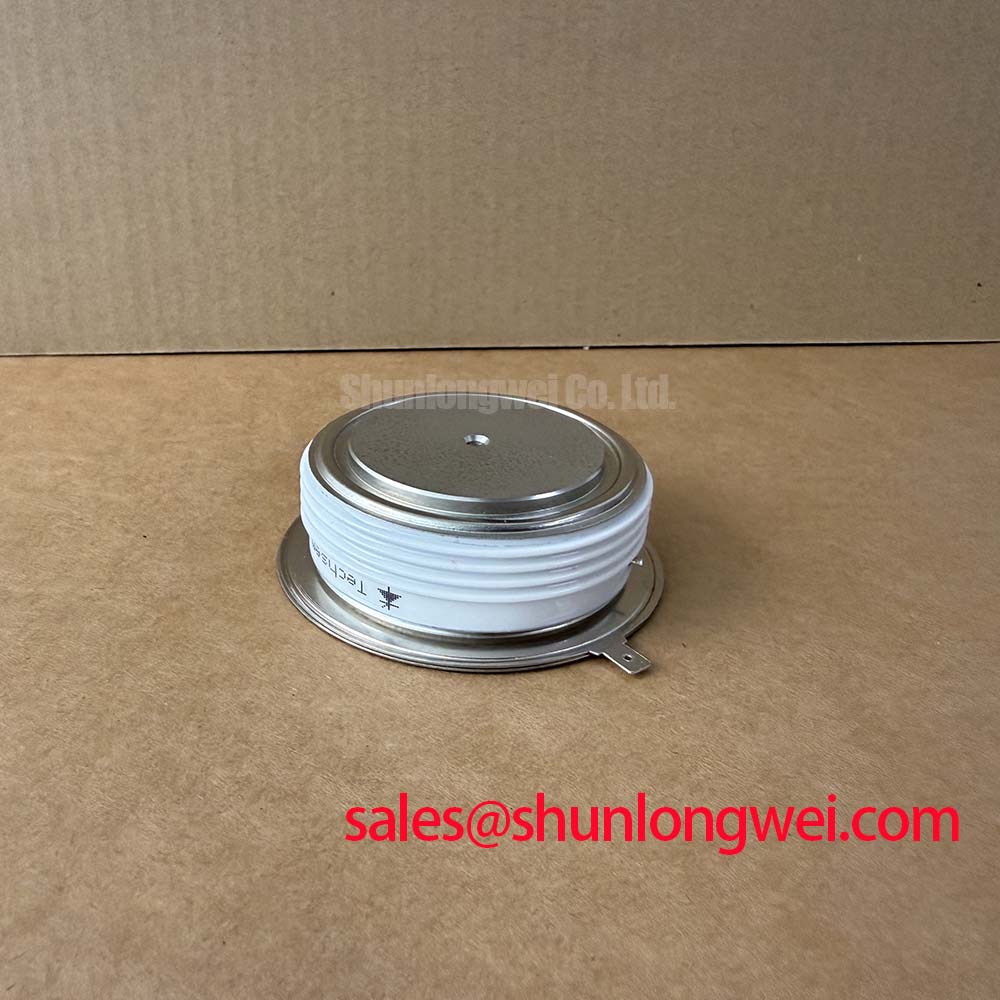
The press-pack interface requires clean, even contact across the mating heat-transfer surfaces. Use the equipment manufacturer’s specified mounting torque in Nm; do not substitute a generic torque value for the missing assembly instruction. Record the calibrated tool setting, tightening sequence, washer condition, and final terminal inspection. Uneven pressure can increase contact temperature and produce localized electrical stress.
Transient thermal impedance, or Zth, should be treated as a time-dependent network when evaluating short overloads, repeated firing pulses, and fault clearing. The available device data and measured case temperature must be used to establish peak junction-temperature margin. Do not infer a pulse rating from the 1000.0 A average on-state figure alone.
Maintenance Note: Monitor contact temperature during scheduled load checks and verify that heat-sink airflow remains unobstructed after cleaning.
Transient Stress and Semiconductor Protection Fuse Selection in Control for KP1000A1600V
Semiconductor fuse coordination is intended to limit fault energy before a short circuit can damage the thyristor, associated diode, busbar, or surrounding insulation. For a dead-short assessment, compare the selected fuse clearing I²t and peak let-through current with the applicable thyristor and diode withstand data from the factory documentation. A valid result requires both the fuse curve and the device fault limits at the same prospective-current conditions.
Do not treat the 1600.0 V VRRM rating as a short-circuit withstand value. It describes repetitive reverse-voltage capability under defined conditions. Fuse selection must also consider system voltage, available fault current, fault duration, coordination with upstream protection, and the actual mounting arrangement. The design objective is to prevent case rupture and secondary equipment damage, but that objective must be verified through the manufacturer’s limits and controlled system testing.
Installation checks for press-pack protection
Inspect the disc capsule contact faces for contamination, scratches, corrosion, or uneven pressure marks. Confirm that the heat sink, clamping hardware, and busbar geometry match the equipment assembly instructions. Terminal checks should include conductor seating, joint cleanliness, calibrated tightening in Nm, clearance from adjacent conductive parts, and a second torque witness inspection after the initial mechanical settling period where the equipment procedure requires it.
For a Grid-Tied Static Var Compensator and Thyristor-Switched Capacitor installation, review capacitor-bank inrush, reactor interaction, and repeated switching frequency. Film capacitors used in high-ripple DC-link or commutation networks require suitable ripple-current and pulse-stress review; the film capacitor reference offers general component background. Harmonic measurements should confirm that firing-angle control does not create unacceptable current distortion on the connected grid.
Control angle, harmonics, and service screening
Changing the conduction angle changes average power transfer, reactive-current behavior, and harmonic content. Use the site’s grid code, transformer data, filter arrangement, and measured current waveform to validate the operating window. A single semiconductor cannot independently establish compliance with system EMC or power-quality requirements.
Before dispatch, Shunlongwei can align static identification and visual checks with the requested part number, package, configuration, and documented ratings. Where service procedures permit, powered screening should be performed under controlled current, voltage, temperature, and protection conditions. Long-life evaluation should follow the equipment’s test standard and switching-loss review; the Switching loss Application Guide can support broader power-stage assessment.
Pre-Installation Verification Notes for KP1000A1600V
Can TM150SA-6 be used as a direct replacement?
Answer: Treat TM150SA-6 as a reference model for comparison, not an automatic substitute. Confirm VRRM, IT(AV), package dimensions, press-pack clamping requirements, configuration, gate characteristics, fuse coordination, and the original equipment manufacturer’s bridge documentation before approval.
What interface and mounting points should be checked?
Answer: Verify the disc capsule / press-pack seating surfaces, terminal orientation, busbar clearances, gate and auxiliary connections, clamping hardware, and manufacturer-specified tightening torque in Nm. Record the inspection results and confirm that the thyristor configuration matches the installed circuit position.
What should be included in pre-shipment screening?
Answer: Confirm the marked part number, package condition, documented ratings, and visual integrity through static inspection. If powered testing is authorized, use controlled voltage and current with suitable protection, then record test conditions and observations so the receiving maintenance team can compare them during installation.