Content last revised on September 10, 2026
Infineon TZ1070N16K Phase Control Thyristor: High-Surge Thermal Reliability for Industrial Drives
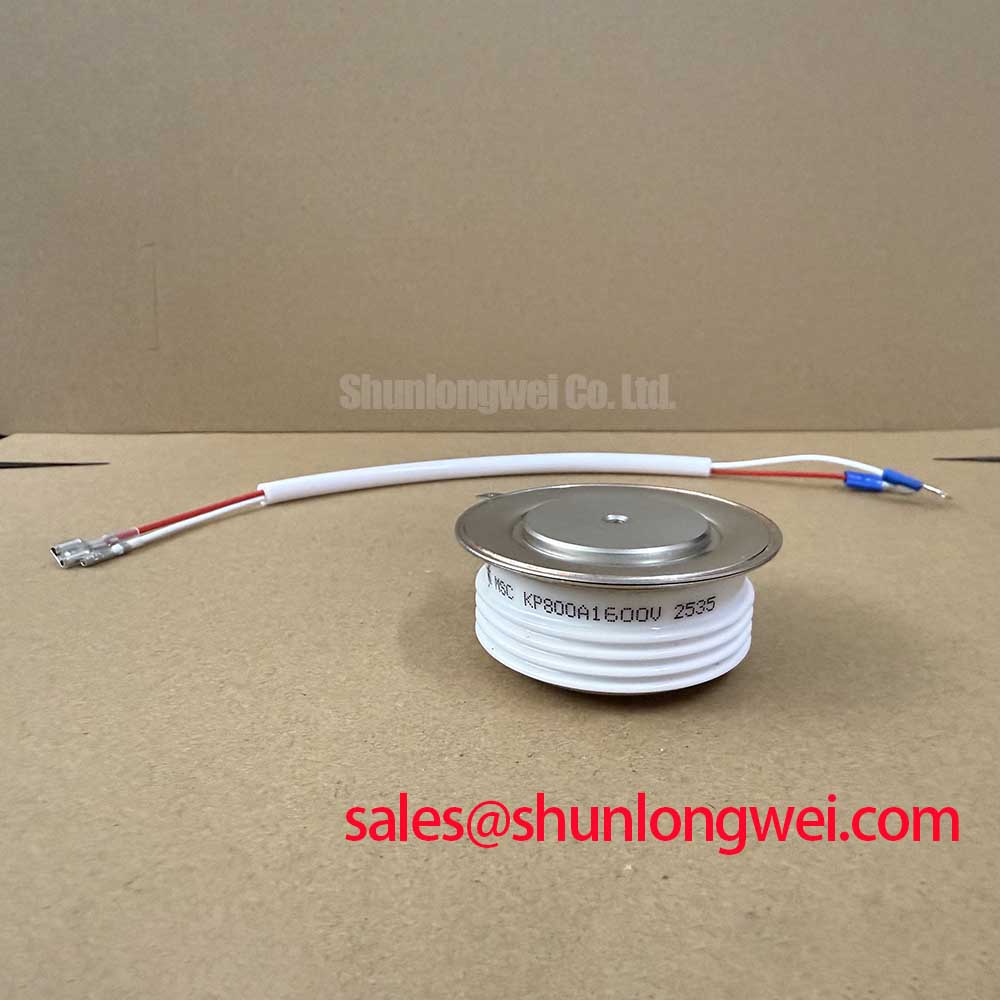
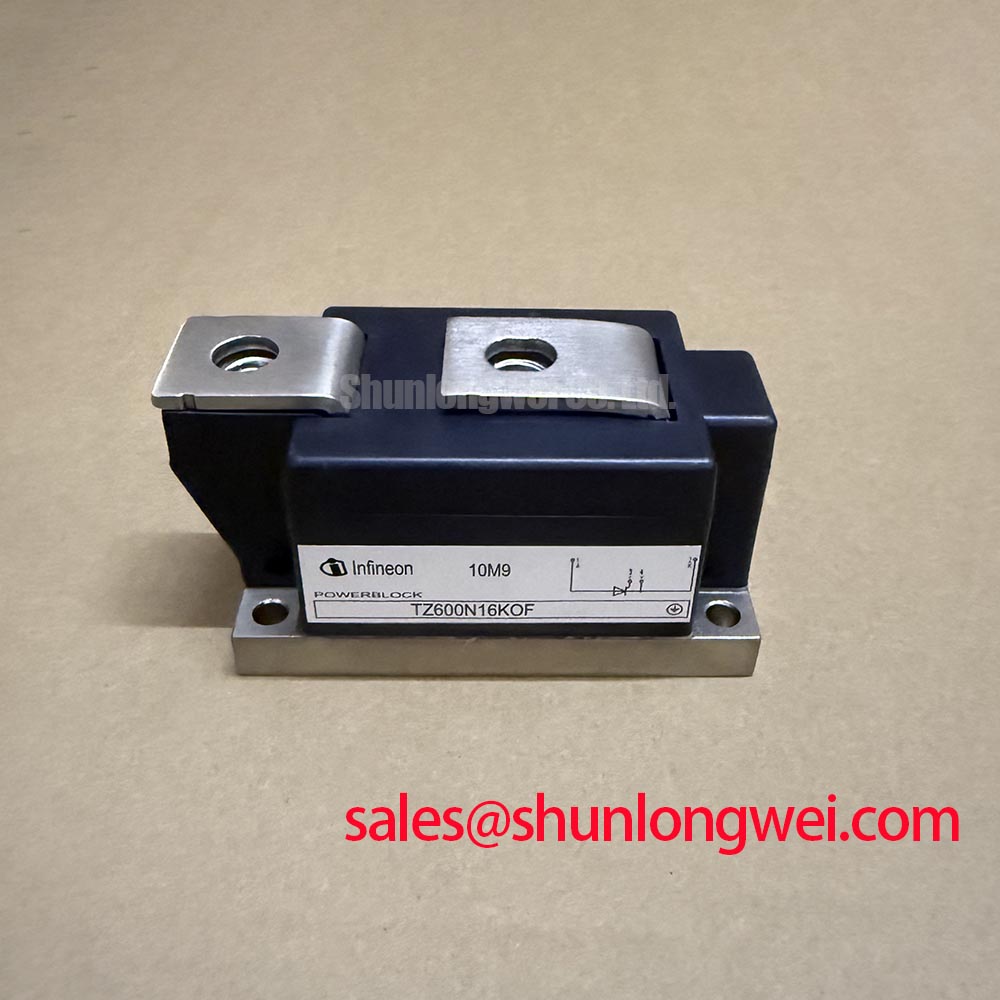
Delivering unmatched thermal resilience for megawatt-scale power systems, the Infineon TZ1070N16K stands as a premier Single Phase Control Thyristor Module. Operating at 1600V and sustaining an average on-state current of 1070A, this pressure-contact device maximizes lifespan under severe thermal cycling conditions. What makes pressure contact superior for 1000A+ switching? It relies on mechanical compression rather than rigid solder layers, drastically reducing the risk of substrate delamination during massive thermal expansions. For heavy-duty soft starters prioritizing thermal margin, this 1600V pressure-contact module is the optimal choice.
Key Parameter Overview
Decoding the Specs for Enhanced Thermal Reliability
When evaluating high-power semiconductors for industrial deployment, reviewing the functional parameters is critical for ensuring reliable system operation. The table below highlights the defining specifications of the Infineon TZ1070N16K.
| Functional Group | Parameter | Value |
|---|---|---|
| Electrical Ratings | Repetitive Peak Off-State Voltage (VDRM/VRRM) | 1600V |
| Average On-State Current (ITAVM) | 1070A | |
| Mechanical & Topology | Circuit Topology | Single Thyristor (Phase Control) |
| Assembly Technology | Pressure Contact |
Application Scenarios & Value
Achieving System-Level Benefits in Megawatt Soft Starters
Engineers consistently face the challenge of managing immense inrush currents when activating heavy-inertia machinery, such as industrial crushers or heavy-duty motor drives. The Infineon TZ1070N16K directly addresses this hurdle. In a heavy-duty soft starter application, the module's 1070A capacity easily absorbs the punishing initial current surge, while its single thyristor topology allows designers to construct isolated, high-redundancy power blocks.
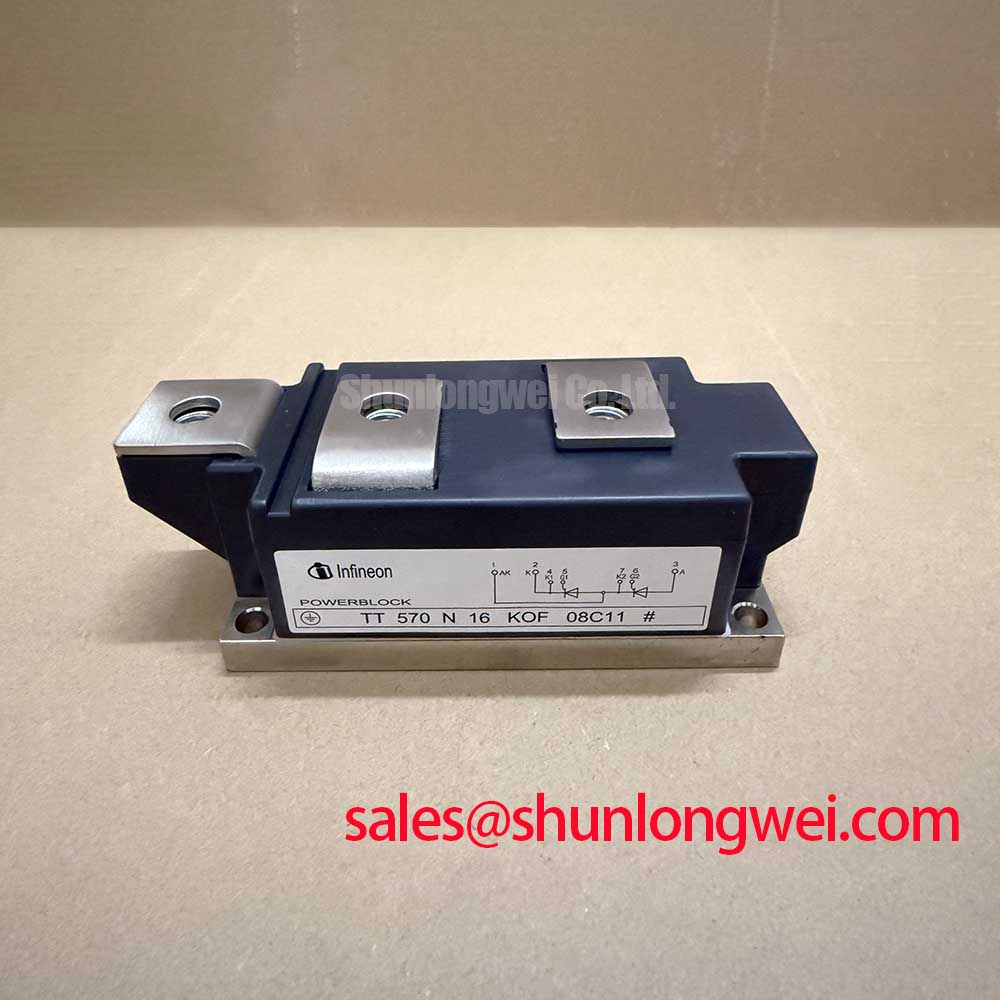
Integrating this module into a megawatt-scale heavy motor drive or a protective crowbar circuit ensures grid stability and prevents catastrophic downstream failures. While this module excels in extreme high-current environments, systems requiring lower current handling at the same voltage can utilize the related SKKT570/16E module, which provides a compact footprint for mid-tier power requirements.
Technical Deep Dive
A Closer Look at the Pressure-Contact Design for Long-Term Reliability
The operational endurance of a thyristor module at the 1000A+ threshold is dictated almost entirely by its mechanical packaging. Traditional solder-bonded modules suffer from differing coefficients of thermal expansion (CTE) between the silicon chip, the isolation ceramic, and the copper baseplate. Over thousands of load cycles, these rigid solder joints fatigue and crack.
What is the primary benefit of its pressure-contact design? Enhanced long-term reliability by eliminating solder fatigue. Instead of fusing the layers with a brittle alloy, the TZ1070N16K utilizes internal spring washers to apply immense, uniform physical pressure across the silicon wafer. Think of standard solder joints like glued wooden blocks; over repeated high-temperature heating, the glue turns brittle and inevitably fractures. In contrast, pressure contact is like clamping those same blocks together with a massive steel vice—it allows microscopic thermal expansion and contraction without ever breaking the physical and electrical bond.
Furthermore, managing the Thermal Resistance in a single device generating tremendous heat requires exceptional thermal interfaces. Operating a 1070A thyristor without pressure contact technology is akin to driving a high-performance sports car equipped with standard street tires; the interface simply cannot handle the extreme energy transmission over time. The pressure-contact approach guarantees a consistently low thermal resistance path from junction to case, ensuring the Infineon TZ1070N16K delivers stable switching performance across its entire lifecycle. For further insights on ensuring module lifespan, engineers often consult comprehensive field engineer handbooks.
FAQ
Clarifying Field Integrations and Design Trade-offs
How does the pressure contact technology in the TZ1070N16K directly impact heatsink selection?
The pressure contact assembly ensures an ultra-low and highly stable thermal resistance from the semiconductor junction to the baseplate. Because the interface does not degrade or crack over time, engineers can design heatsinks based on consistent, lifetime-guaranteed thermal metrics rather than drastically over-sizing the cooling system to compensate for predicted long-term solder degradation.
Why choose a single thyristor topology over a dual module for a 1600V crowbar circuit?
A single thyristor topology, as seen in this 1600V device, offers unparalleled physical and thermal isolation. In critical crowbar applications designed to short-circuit massive fault currents, housing only one die per package prevents an explosive thermal failure in one phase from mechanically destroying an adjacent phase, thereby preserving overall system safety and modular replacement capabilities.