Content last revised on September 10, 2026
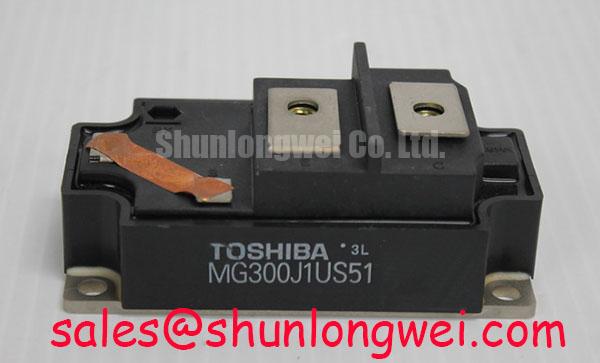
MG300J1US51 Toshiba IGBT Module: High-Speed Half-Bridge for Motor Control
How can engineers minimize switching losses in 600V motor drives without compromising thermal stability? The MG300J1US51 half-bridge IGBT module accelerates PWM efficiency by delivering exceptional high-speed switching dynamics and robust thermal dissipation capabilities. Featuring core specifications of 600V | 300A | tf = 0.30µs | PC = 1300W, this Toshiba GTR module effectively minimizes dynamic switching loss while streamlining half-bridge inverter layout. What is the main advantage of its integrated half-bridge? It minimizes stray inductance and simplifies high-frequency motor drive design. For 600V industrial variable frequency drives prioritizing switching efficiency, this 300A module is the optimal choice.
Frequently Asked Questions
Addressing Key Engineering Considerations for the MG300J1US51
- How does the tf = 0.30µs switching time impact motor drive performance?
The rapid 0.30µs fall time significantly reduces dynamic turn-off losses. This allows engineers to implement higher PWM carrier frequencies, which directly translates to smoother torque output and reduced acoustic noise in servo and VFD applications. - What thermal margins does the 1300W power dissipation rating provide?
With a maximum collector power dissipation of 1300W (at Tc = 25°C), the module offers substantial thermal headroom. This ensures reliable operation and protects the silicon during transient overloads or high-current startup surges typical in heavy industrial equipment.
Key Parameter Overview
Decoding the Specs for Efficient Power Conversion
The following table outlines the critical electrical and thermal specifications essential for evaluating the MG300J1US51 within demanding industrial applications.
| Functional Group | Parameter | Symbol | Value |
|---|---|---|---|
| Maximum Ratings | Collector-Emitter Voltage | VCES | 600 V |
| DC Collector Current | IC | 300 A | |
| Peak Collector Current (1ms) | ICP | 600 A | |
| Switching Characteristics | Turn-Off Fall Time (Max) | tf | 0.30 µs |
| Collector-Emitter Saturation Voltage | VCE(sat) | 2.70 V (Max) | |
| Thermal & Isolation | Collector Power Dissipation (Tc=25°C) | PC | 1300 W |
| Isolation Voltage (AC 1 minute) | VIsol | 2500 V |
Download the MG300J1US51 datasheet for detailed specifications and performance curves.
Technical Deep Dive
Analyzing the High-Speed Silicon N-Channel Architecture
The architecture of the MG300J1US51 revolves around an enhancement-mode, silicon N-channel structure optimized for high-speed transitions. By achieving a fall time (tf) of just 0.30µs alongside a reverse recovery time (trr) of 0.15µs, Toshiba has engineered a device that severely limits the overlap of voltage and current during switching events. Think of the 0.30µs fall time like a high-performance sports car braking system; it cuts off current sharply, minimizing the "frictional" heat (switching loss) generated during the transition. This rapid transition is paramount when designing high-frequency Variable Frequency Drive (VFD) systems.
Furthermore, packaging two silicon switches into a single integrated half-bridge configuration offers immense layout advantages. The integrated half-bridge package acts like a pre-assembled dual-valve manifold, drastically reducing the external "plumbing" or stray inductance required compared to wiring two discrete switches. Lower stray inductance mitigates voltage spikes (L*di/dt) during fast switching, preserving the Safe Operating Area (SOA) and enhancing the long-term reliability of the gate drive and thermal management infrastructure.
Application Scenarios & Value
Achieving System-Level Benefits in Industrial Inverters
A primary challenge for engineers designing industrial conveyor systems is managing the aggressive motor startup surges that threaten component integrity. The MG300J1US51 addresses this directly with its robust 600A peak current (ICP) handling capability. During the initial acceleration of a heavily loaded motor, the module comfortably absorbs the transient surge without pushing the junction temperature beyond safe limits, thanks to the 1300W power dissipation rating.
When implementing precise PWM switching control for robotics or CNC machinery, the high input impedance and isolated case design simplify both the electrical isolation strategy and heatsink mounting. The baseplate handles the severe thermal cycling of industrial automation, ensuring the 600V potential remains safely isolated from the chassis. While this model is ideal for 400V class bus systems, for 1200V line applications requiring higher voltage blocking, the related 2MBI300U4H-120 offers an upgraded voltage margin while maintaining comparable current throughput.
Ready to Optimize Your Motor Drive Design?
Connect with Our Engineering Support Team
Securing the right power semiconductor is critical for your next generation of motor controls and industrial inverters. Our technical distribution team provides detailed datasheets, compliance documentation, and comprehensive specification guidance to assist your component evaluation. Reach out today to verify the latest specifications and support your ongoing hardware development.