
Content last revised on September 10, 2026
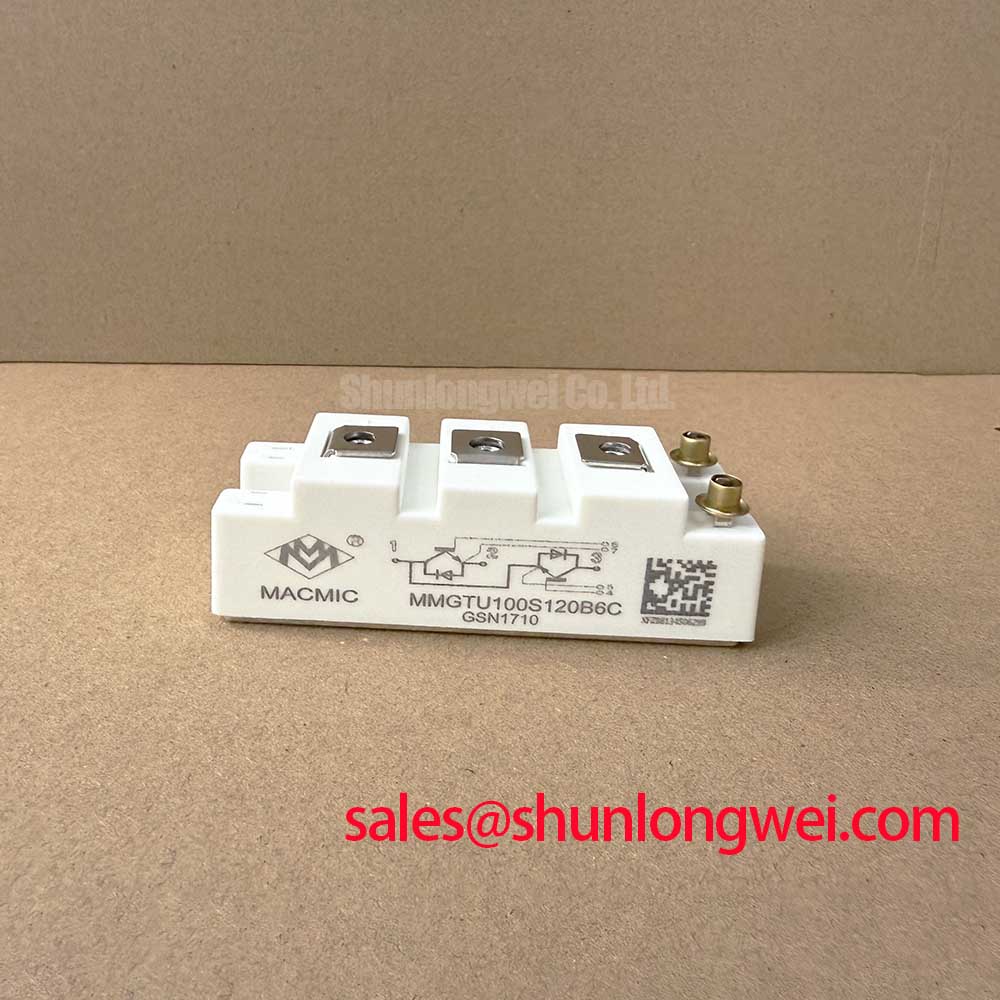
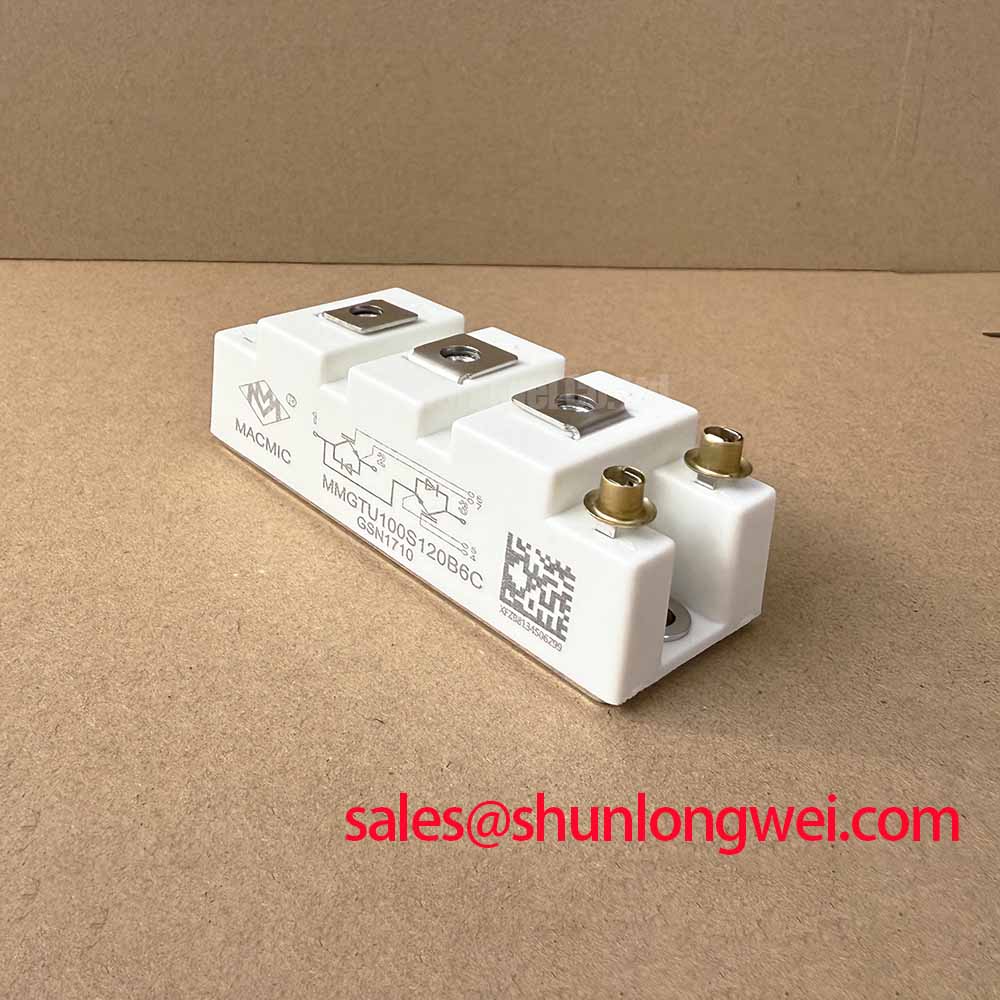
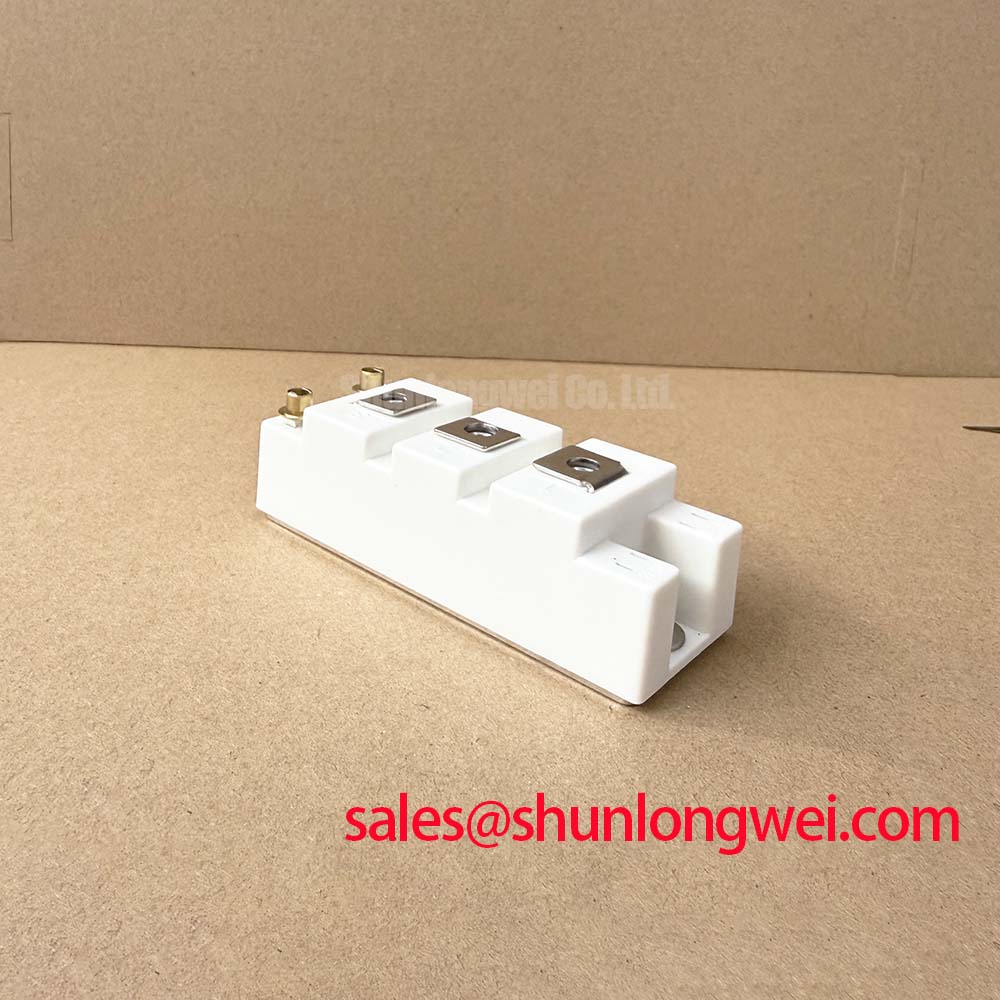
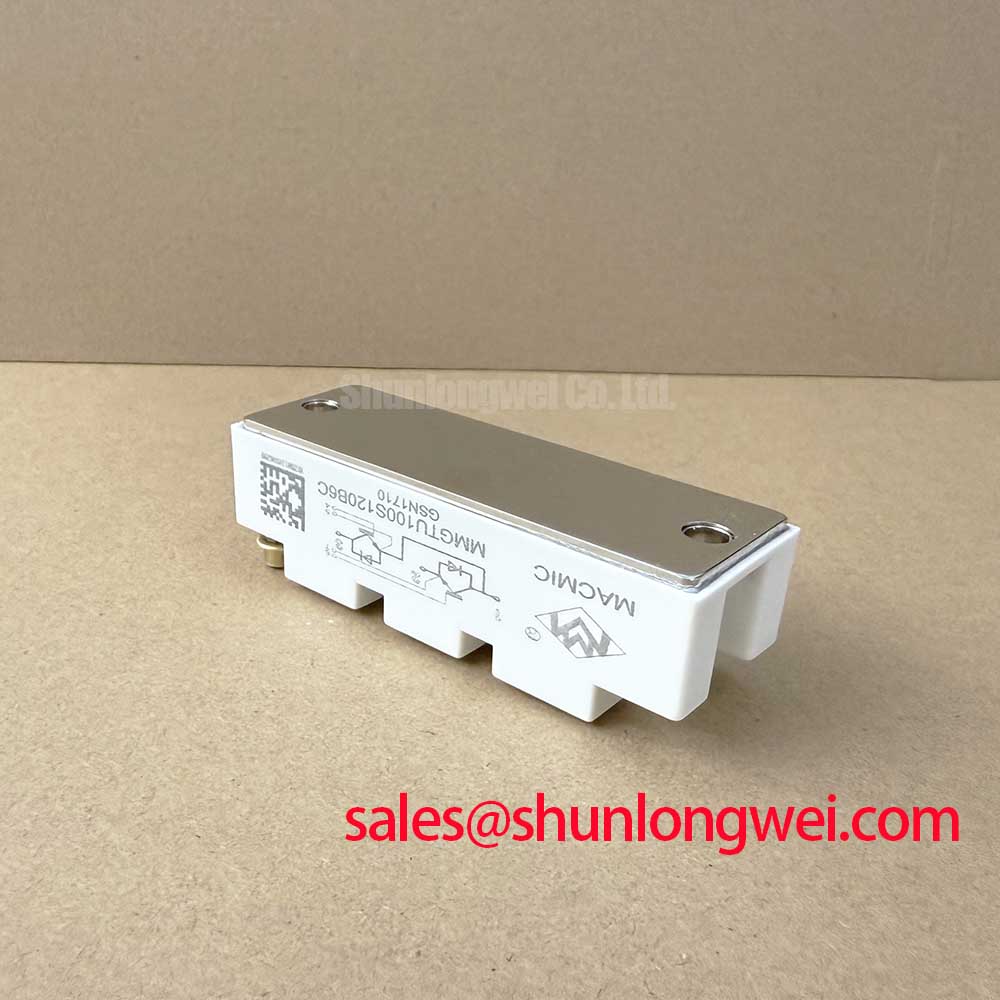
MMGTU100S120B6C MacMic 1200V 100A Six-Pack IGBT Module for High-Efficiency Industrial Power Systems
For systems requiring high-density power conversion with minimal switching losses, the MMGTU100S120B6C provides a robust 1200V 100A six-pack topology designed for precision and reliability. This module leverages Trench and Field Stop (FS) technology to deliver a superior balance between conduction and switching performance, making it a critical component for industrial IGBT modules applications.
UVP Statement: Delivering optimized energy efficiency through a 1.70V typical Vce(sat) and low switching energy, specifically engineered for 400V-line industrial inverter stages.
- Top Specifications: 1200V Vces | 100A Ic | 1.70V Vce(sat) | 150°C Operating Temperature.
- Key Benefits: Reduces heat dissipation in high-frequency switching and simplifies 3-phase inverter layout.
- Implicit Question Answer: What is the primary benefit of its Trench FS structure? It significantly reduces the tail current during turn-off, allowing for higher switching frequencies without excessive thermal stress.
For 400V industrial drives prioritizing thermal margin and switching speed, this 1200V module is the optimal choice.
Key Parameter Overview
Decoding the Specs for Enhanced Thermal Reliability
The technical evaluation of the MMGTU100S120B6C centers on its ability to handle continuous current while maintaining low on-state voltage. Below are the critical ratings extracted from the manufacturer's technical documentation for engineering assessment.
| Parameter | Symbol | Typical Value / Rating |
|---|---|---|
| Collector-Emitter Voltage | Vces | 1200V |
| Continuous Collector Current (Tc=80°C) | Ic | 100A |
| Collector-Emitter Saturation Voltage (Tj=25°C) | Vce(sat) | 1.70V |
| Gate-Emitter Threshold Voltage | Vge(th) | 5.0V to 6.5V |
| Total Power Dissipation (Tc=25°C) | Ptot | 545W |
| Short Circuit Withstand Time (Tj=125°C) | tsc | 10μs |
| Maximum Operating Junction Temperature | Tj(max) | 150°C |
Download the MMGTU100S120B6C datasheet for detailed specifications and performance curves.
Application Scenarios & Value
Achieving System-Level Benefits in High-Frequency Power Conversion
The MMGTU100S120B6C is frequently integrated into Variable Frequency Drives (VFDs) and Servo Drive systems where 3-phase power modulation is required. Engineers often face the challenge of managing transient voltage spikes and heat accumulation in compact enclosures. By utilizing the 10μs short-circuit withstand time and the integrated fast-recovery freewheeling diodes, this module offers a safety margin that is essential for protecting the power stage against motor-side faults.
In a high-fidelity engineering scenario, such as a conveyor belt system in a manufacturing plant, the 100A current rating ensures the module can handle the high start-up surge currents of induction motors. The low Vce(sat) of 1.70V acts like a narrow pipe with low friction, allowing current to flow with minimal resistance, which reduces the required size of the heat sink and extends the life of the DC-link capacitors by maintaining a cooler internal environment. This is particularly relevant when compared to standard IGBT modules that may exhibit higher saturation voltages at elevated temperatures.
For systems requiring higher current handling or different topology, the related FS100R12KE3 or the FP100R12KT4 offer 1200V 100A performance with varying integration levels. Understanding the IGBT vs MOSFET trade-offs is also vital for high-power designs, as explored in our selection guide.
Technical Deep Dive
A Closer Look at the Trench Field Stop Design for Efficiency
The core innovation of the MMGTU100S120B6C lies in its Trench Field Stop (FS) architecture. In traditional IGBT designs, the tradeoff between switching speed and conduction loss was often a bottleneck for engineers. The Trench structure allows for a higher cell density, which lowers the Vce(sat), while the Field Stop layer allows the wafer to be thinner, significantly reducing the energy lost during each switch (Eon and Eoff).
Analogy: Think of the Trench FS technology as a modern high-speed elevator system. While a standard elevator (traditional IGBT) might take a long time to start and stop (high switching losses) or have a low weight capacity (conduction losses), the Trench FS design optimizes the "starting and stopping" mechanism, allowing the elevator to move more people more efficiently while consuming less power. This translates to lower thermal resistance (Rth) and higher power density.
Furthermore, the MMGTU100S120B6C includes an integrated NTC thermistor for temperature monitoring. This allows the system controller to adjust switching frequencies or trigger alarms if the junction temperature exceeds safe limits, ensuring long-term Safe Operating Area (SOA) compliance. This level of integration is essential for meeting the IEC 61800-3 standard for electromagnetic compatibility and functional safety in industrial drive applications. For a deeper understanding of these technologies, refer to our analysis on IGBT module structures and the Infineon TRENCHSTOP™ IGBT3 technical standards.
Technical FAQ
How does the Vce(sat) of 1.70V impact the overall cooling requirements of the inverter?
A lower Vce(sat) directly reduces the conduction power loss (Pcond = Ic x Vce(sat)). For the MMGTU100S120B6C, the 1.70V typical rating means less heat is generated during the "on" state compared to older 1200V modules. This allows engineers to use smaller heat sinks or reduce airflow requirements, potentially lowering the total cost of ownership (TCO) of the system.
What is the significance of the 10μs short-circuit withstand time at 125°C?
The 10μs rating is the "reaction window" for the gate driver's protection circuitry. If a fault occurs, the MMGTU100S120B6C can survive a full short circuit for up to 10 microseconds. This gives the desaturation detection circuit enough time to shut down the module safely, preventing catastrophic failure and ensuring system-level robustness.
Can the MMGTU100S120B6C be used in 690V grid applications?
While the 1200V rating provides a generous margin for 400V or 480V AC line systems, it is generally insufficient for 690V applications due to the standard 2x safety margin required for voltage transients. For 690V lines, engineers typically evaluate 1700V modules to ensure long-term reliability against DC-link voltage fluctuations.
Designing for high-performance power stages requires more than just high ratings; it demands components that manage the invisible challenges of thermal flux and switching transients. The MMGTU100S120B6C stands as a data-proven solution for those requiring high-current 3-phase inversion in 1200V environments. By balancing a low 1.70V conduction loss with a robust 150°C thermal ceiling, it enables engineers to push the boundaries of power density in industrial automation.