
Content last revised on September 10, 2026
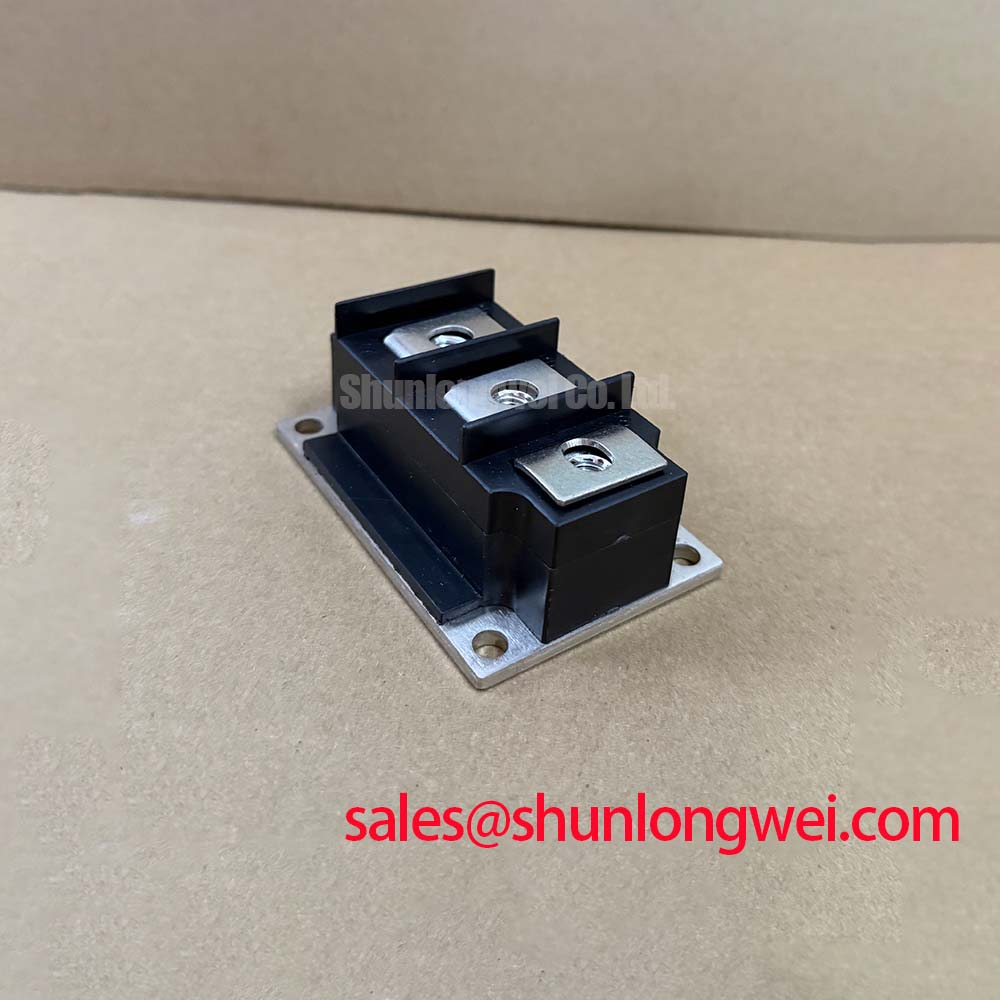
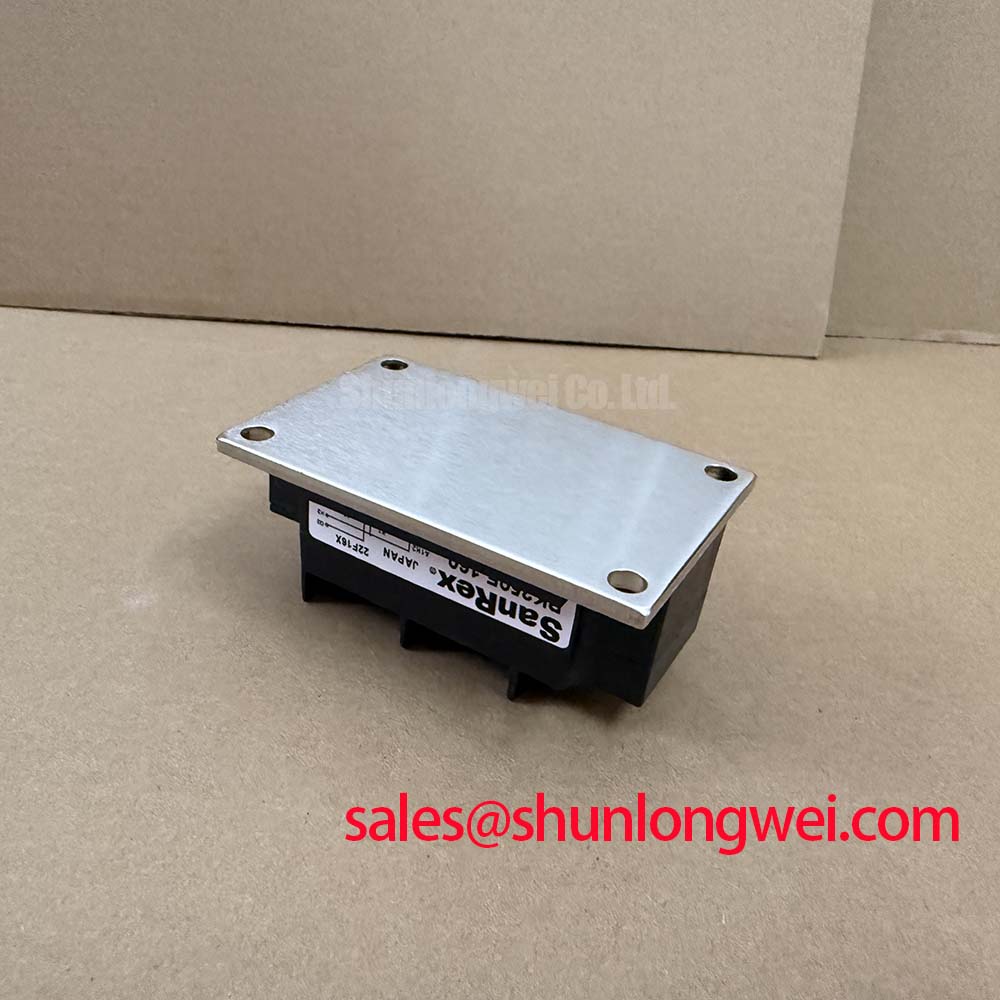
SanRex PK250F-160 Dual Thyristor Module: Engineered for 1600V Industrial Power Control
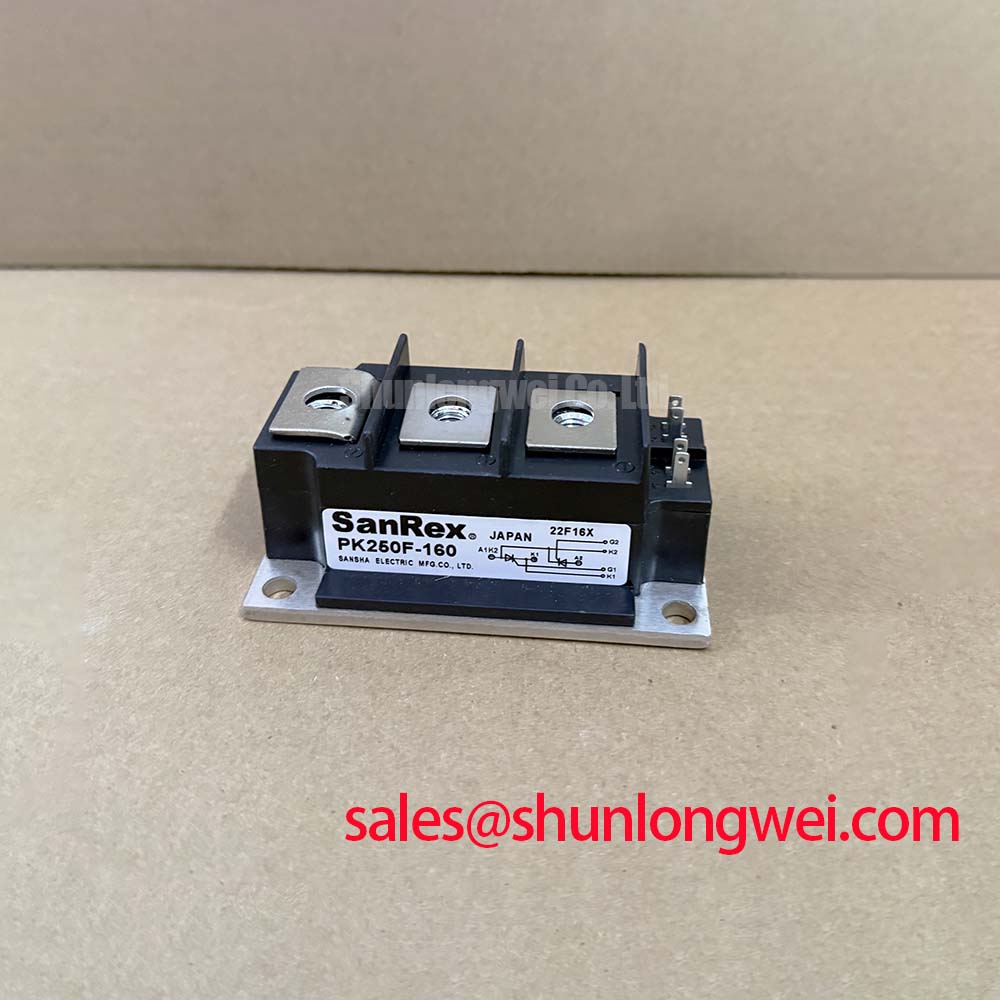
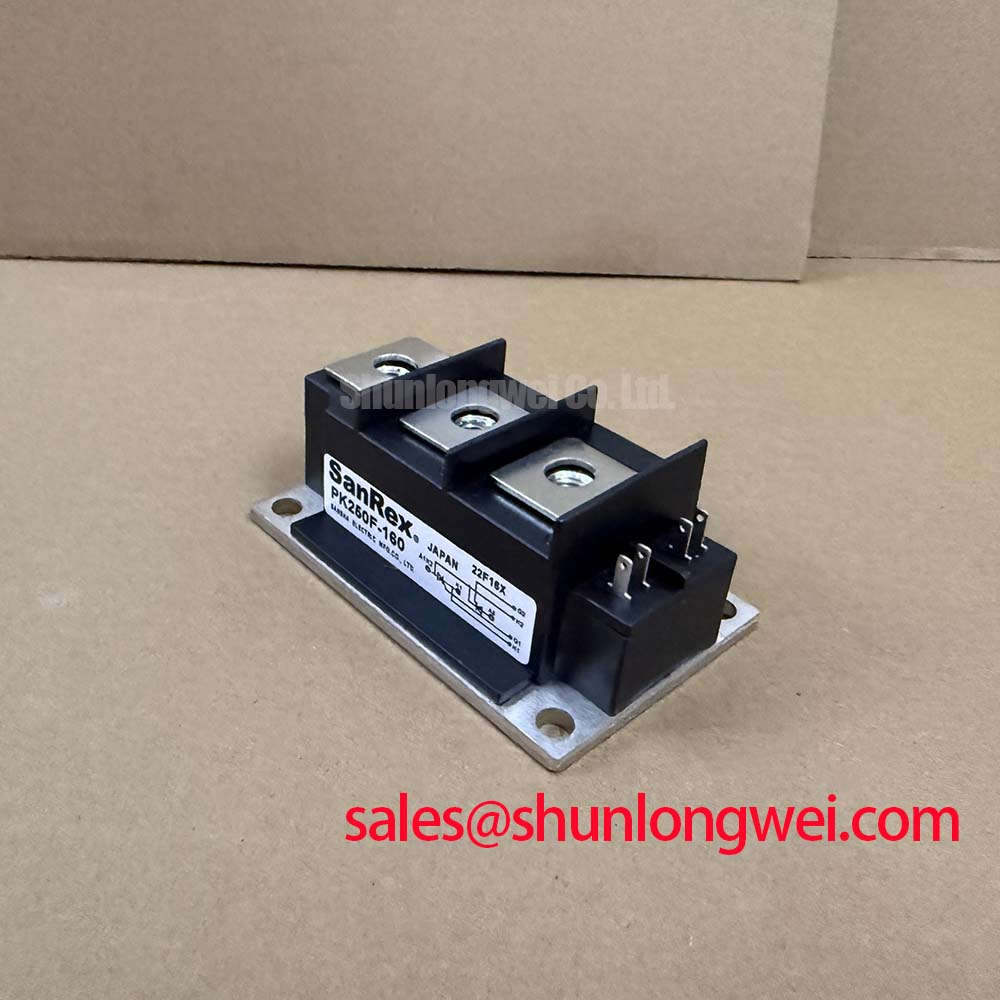
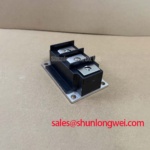
The SanRex PK250F-160, a cornerstone of the SanRex Thyristor Module family, represents a high-power density solution for industrial rectification and switching. Designed as a dual-thyristor (SCR) module in an isolated package, it offers a robust 1600V blocking voltage and an average on-state current of 250A. This module is specifically optimized for applications requiring high surge current handling and long-term thermal stability in harsh electrical environments. For engineers prioritizing voltage margin in 480V or 600V AC line applications, the PK250F-160 serves as a reliable building block for robust power conversion systems.
What is the primary benefit of its isolated base design? It allows for multiple modules to be mounted on a single heatsink, significantly simplifying thermal management and reducing system footprint. For 600V industrial line applications requiring high-surge ruggedness, the PK250F-160 stands as the optimal choice for soft-starter and rectification stages.
Key Parameter Overview
Decoding the Specs for Enhanced Thermal Reliability
The following table summarizes the critical electrical and thermal ratings for the PK250F-160. These values are essential for calculating safe operating margins and selecting appropriate cooling solutions.
| Category | Parameter Description | Value (Unit) |
|---|---|---|
| Voltage Ratings | Repetitive Peak Reverse Voltage (VRRM) | 1600V |
| Voltage Ratings | Repetitive Peak Off-State Voltage (VDRM) | 1600V |
| Current Ratings | Average On-State Current (IT(AV)) @ Tc=84°C | 250A |
| Current Ratings | Surge On-State Current (ITSM) 60Hz | 8000A |
| Thermal Dynamics | I2t for Fusing (8.3ms) | 265000 A²s |
| Thermal Dynamics | Thermal Resistance (Rth(j-c)) | 0.13 °C/W |
| Isolation | Isolation Voltage (Viso) 1 Minute | 2500V |
Download the PK250F-160 datasheet for detailed specifications and performance curves. Download Datasheet Placeholder
Application Scenarios & Value
Achieving System-Level Benefits in High-Current Power Conversion
The PK250F-160 is frequently integrated into industrial Soft Starters. In these systems, the module must withstand the significant inrush currents generated when a large induction motor accelerates from a standstill. The 8000A surge current rating (ITSM) ensures the module can manage these transient events without degradation. By utilizing a dual SCR configuration, designers can achieve precise phase control for smooth voltage ramping, which protects mechanical components from torque shocks.
In heavy-duty Welding Power Supply designs, the high I2t value of 265000 A²s provides a critical safety buffer, allowing circuit breakers or fuses to clear faults before the semiconductor junction is compromised. For systems requiring a hybrid configuration, such as a thyristor/diode bridge, the related PK250HB160 offers a different circuit topology within a similar power envelope. Selecting between these requires an analysis of the control requirements—the PK250F-160 provides full control over both halves of the AC cycle, whereas the PK250HB160 is tailored for semi-controlled bridge applications.
Understanding the transition from discrete semiconductors to integrated modules is vital for modern efficiency. You may explore how an IGBT works or compare different power technologies in our guide on semiconductor selection to see how thyristor modules like the PK250F-160 complement high-frequency switching devices in complex power architectures.
Industry Insights & Strategic Advantage
Reliability Under Stress in the Era of Industrial Automation
As industrial grids transition toward higher voltage levels to reduce transmission losses, the demand for 1600V rated components has intensified. The SanRex PK250F-160 addresses this by providing a significant safety margin above the standard 1200V threshold, which is crucial for mitigating the impact of line transients and inductive flyback. In the context of IEC 61800-3 compliance for variable speed drives, the robustness of the input rectification stage is a primary factor in overall system MTBF (Mean Time Between Failures).
Strategic thermal management remains the biggest hurdle in high-power design. The 0.13 °C/W thermal resistance of the PK250F-160 allows for more compact heatsink designs without exceeding the 125°C junction temperature limit. This efficiency is critical in high-density UPS systems and Renewable Energy converters where cabinet space is at a premium. By leveraging SanRex's expertise in isolated power modules, engineers can reduce assembly labor and potential failure points compared to using multiple discrete TO-247 packages. For deeper insights into thermal constraints, refer to our analysis on why Rth matters in power module selection.
Technical FAQ
How does the ITSM rating of the PK250F-160 influence fuse selection in a motor drive circuit?
The 8000A ITSM (Surge On-State Current) defines the maximum non-repetitive peak current the thyristor can survive for a single 60Hz cycle. Engineers must select a high-speed semiconductor fuse with an I2t rating lower than the module's 265000 A²s rating to ensure the fuse clears before the thyristor reaches its thermal failure point during a short-circuit event.
Why is the 1600V VRRM rating necessary for 480V AC industrial lines?
On a 480V RMS line, the peak voltage is approximately 678V. However, industrial environments are prone to switching transients and lightning surges that can easily double or triple the peak line voltage. A 1600V repetitive peak reverse voltage rating provides a safety factor of over 2.3x, which is industry-standard for ensuring long-term reliability against unpredictable voltage spikes.
Can the PK250F-160 be used in parallel for higher current requirements?
Yes, but it requires careful attention to current sharing. Because thyristors have a negative temperature coefficient for their on-state voltage drop, the hotter module will tend to draw more current, leading to potential thermal runaway. Using forced air cooling and small series resistances or balancing inductors is recommended. For more on this, see our guide on mastering module paralleling.