Content last revised on July 15, 2026
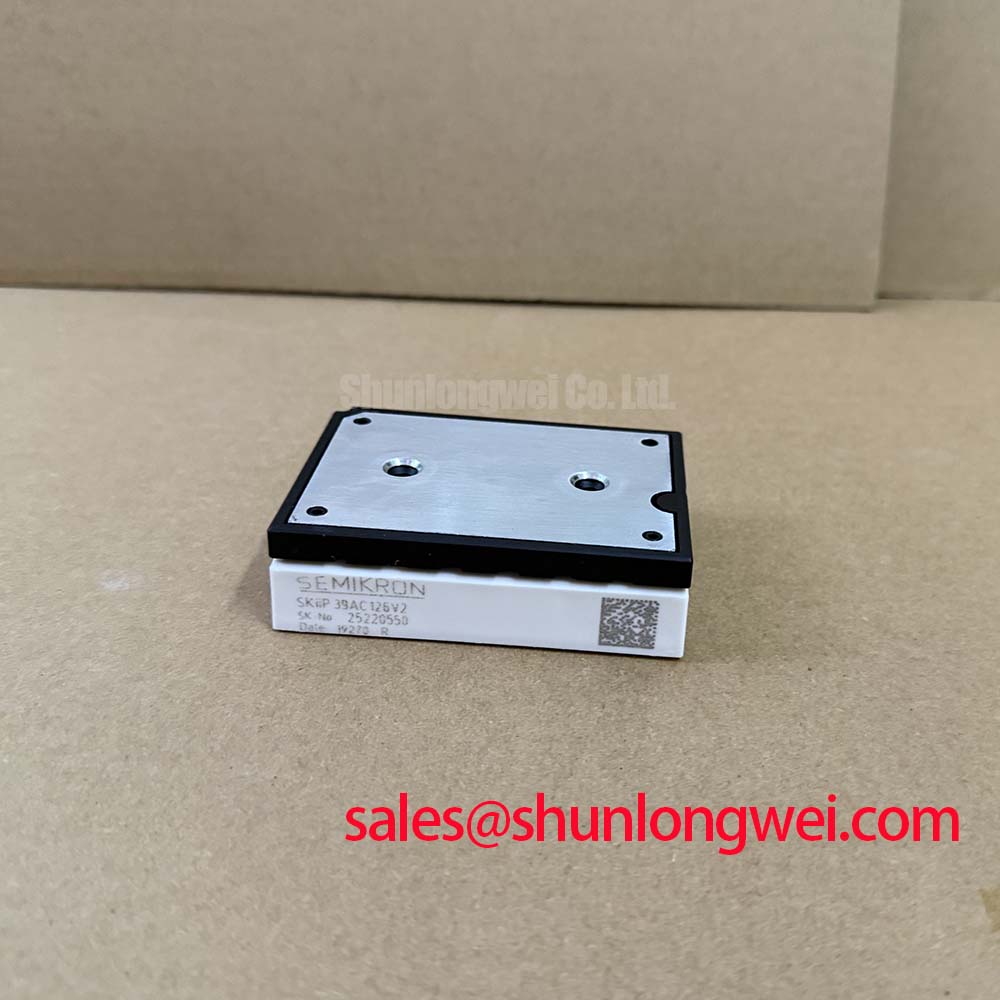
SKiiP 23AC12T4V1 Semikron-Danfoss 1200V 25A MiniSKiiP IGBT Module
The SKiiP 23AC12T4V1 represents a paradigm shift in industrial power module assembly, utilizing Semikron-Danfoss proprietary spring-contact technology to eliminate the failure points associated with traditional solder joints. As a 1200V 3-phase inverter module integrated with Trench IGBT4 technology, it is designed for high-efficiency motor control and power conversion. This module provides a 1200V collector-emitter voltage and a continuous collector current rating of approximately 25A at 80°C, supported by a low VCE(sat) to minimize conduction losses. For compact 400V variable frequency drives prioritizing assembly speed and long-term thermal cycling reliability, this 1200V Trench IGBT4 module is the optimal choice.
Top Specifications: 1200V | 25A (Tc=80°C) | VCE(sat) 1.85V (typ.)
Key Benefits: Solder-free spring mounting reduces assembly time and eliminates thermal expansion stress on joints.
What is the primary benefit of the SKiiP 23AC12T4V1 spring contact design? It enhances long-term reliability by eliminating solder fatigue, providing a pressure-loaded connection that adapts to continuous thermal cycling without mechanical degradation.
Key Parameter Overview
Decoding the Specs for Enhanced Thermal Reliability
The following technical data represents the core electrical and thermal performance of the SKiiP 23AC12T4V1. Engineers should pay close attention to the Trench IGBT4 characteristics, which offer a superior trade-off between switching speed and on-state voltage drop.
| Parameter Category | Specific Metric | Typical/Max Value | Engineering Significance |
|---|---|---|---|
| Voltage Rating | Vces (Collector-Emitter Voltage) | 1200V | Suitable for 400V-480V AC line applications with ample margin. |
| Current Capacity | Ic (Continuous Collector Current) | 25A (@Tc=80°C) | Defines the thermal envelope for steady-state operation in motor drives. |
| Conduction Loss | Vce(sat) (Saturation Voltage) | 1.85V (Tj=25°C) | Lower saturation voltage directly translates to higher inverter efficiency. |
| Mounting Tech | Assembly Interface | Spring Contact | Eliminates the need for soldering tools, simplifying field replacement. |
| Temperature Sensor | Integrated NTC | 5 kΩ (@25°C) | Provides real-time thermal monitoring to prevent catastrophic over-temperature. |
Download the SKiiP 23AC12T4V1 datasheet for detailed specifications and performance curves.
Application Scenarios & Value
Achieving System-Level Benefits in High-Frequency Power Conversion
The SKiiP 23AC12T4V1 is frequently specified for Variable Frequency Drives (VFD) and Servo Drives where space is at a premium and high vibration is a factor. In industrial conveyor systems, engineers often face the challenge of mechanical stress breaking solder connections over years of operation. By utilizing the spring contact system, the SKiiP 23AC12T4V1 absorbs these vibrations like a high-performance automotive suspension, ensuring electrical continuity where rigid solder might crack.
Furthermore, in Solar Inverters and UPS systems, the low Switching Loss of the IGBT4 Trench chips allows for higher carrier frequencies, which in turn permits the use of smaller inductors and capacitors, reducing the overall system footprint. For designs requiring slightly different current handling within the same footprint, the SKiiP 25AC12T4V1 or the lower-power SKiiP 13AC12T4V1 provide scalable alternatives within the MiniSKiiP family.
Technical Deep Dive
The Engineering Advantage of Solder-Free Pressure Contacts
Traditional IGBT Module designs rely on a direct-bonded copper (DBC) substrate soldered to a baseplate and pins soldered to a PCB. The SKiiP 23AC12T4V1 bypasses this hierarchy. The module utilizes the Semikron SKiiP® Technology where the pressure of the heatsink mounting itself establishes the electrical connections between the module and the PCB via spring contacts.
To understand the thermal significance, consider Thermal Resistance (Rth). Traditional solder layers act as thermal "bottlenecks." Because the MiniSKiiP design removes these layers, it optimizes the thermal path from the IGBT junction to the ambient air. For deeper insights into this mechanism, refer to our guide on why Rth matters in power systems. This pressure-contact methodology also simplifies System Integration, allowing for automated assembly that is both faster and more repeatable than manual soldering. For a broader comparison of module architectures, see our analysis of IGBT module internal structures.
FAQ
How does the lack of a copper baseplate in the SKiiP 23AC12T4V1 affect its thermal performance? By mounting the DBC substrate directly to the heatsink via pressure, the module reduces the number of material interfaces. This minimizes the total thermal resistance (Rth) and prevents "pump-out" effects of thermal grease often seen in modules with large baseplates.
Is special equipment needed to install the SKiiP 23AC12T4V1 spring-contact module? No specialized soldering equipment is required. The assembly is mechanical, requiring only a specific mounting pressure achieved via a standard screw-down torque to the heatsink, which simultaneously secures the PCB electrical interface.
Can the integrated NTC thermistor be used for active gate drive protection? Absolutely. The 5 kΩ NTC provides a voltage signal proportional to the internal DBC temperature. Engineers can use this data within a protection circuit to trigger a Gate Drive shutdown or current de-rating before the junction temperature (Tj) exceeds 175°C.
How does the Trench IGBT4 technology in this module compare to older planar designs? Trench IGBT4 chips provide significantly lower Vce(sat) and improved Switching Efficiency. This allows the SKiiP 23AC12T4V1 to operate at higher current densities without exceeding thermal limits compared to previous generations of 1200V modules.
Strategic hardware selection in power electronics is no longer just about voltage and current; it is about the reliability of the mechanical-to-electrical interface. The SKiiP 23AC12T4V1 offers a future-proof path for industrial designers seeking to maximize uptime through innovative Semikron-Danfoss engineering.