

Content last revised on September 10, 2026
A Technical Analysis of the SKIIP20NAB121T45: Reliability and Thermal Performance in Focus
Engineering for Longevity in High-Cycling Power Systems
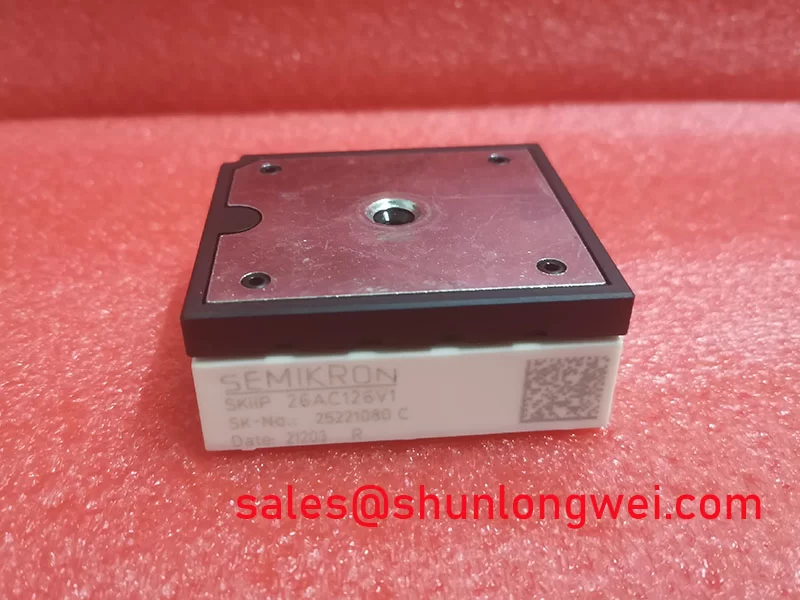
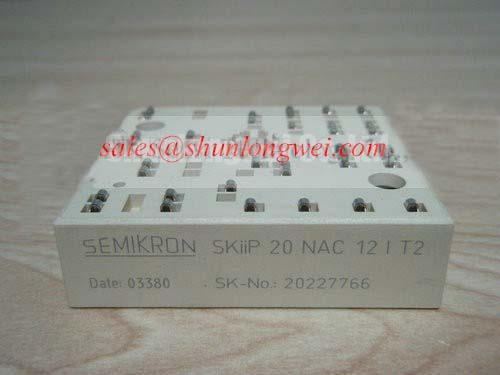
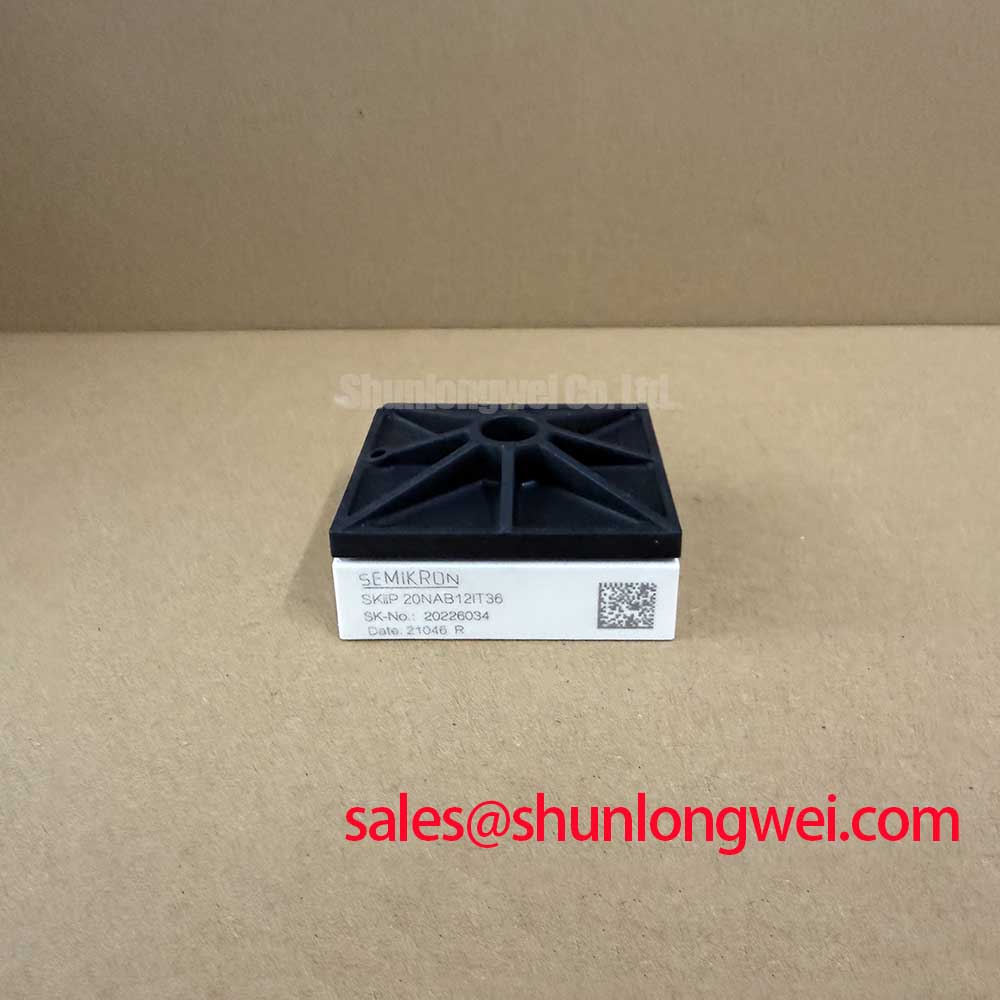
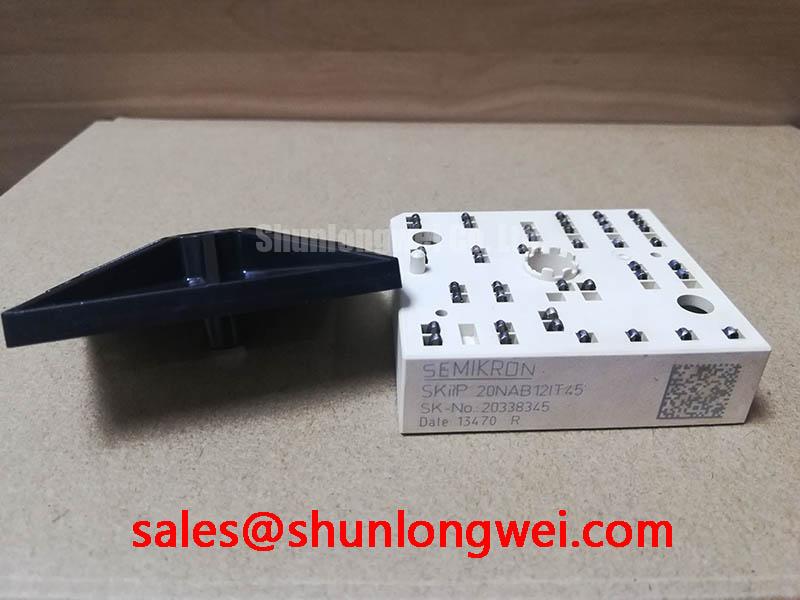
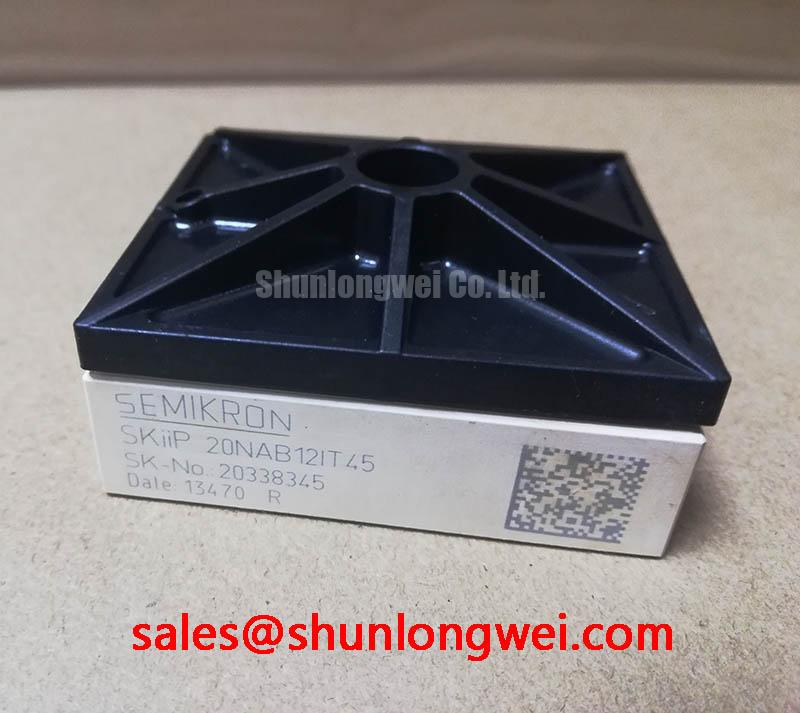
The SKIIP20NAB121T45 is a SKiiP 4 Intelligent Power Module (IPM) from Semikron, engineered as a compact three-phase bridge inverter for demanding power conversion applications. It integrates advanced technologies to deliver exceptional long-term reliability and thermal efficiency. With core specifications of 1200V and a nominal current rating of 20A (40A peak), this IPM is distinguished by its solder-free pressure contact system and sintered die-attach technology. These features directly address common failure modes in power electronics, offering superior power cycling capability and enhanced heat dissipation. For engineers designing compact and robust motor drives or power supplies, this module provides a pathway to simplified assembly and increased field reliability.
Application Scenarios & Value
Achieving System-Level Benefits in Advanced Motor Control
For compact systems where reliability under thermal stress is paramount, the SKIIP20NAB121T45 is the optimal choice. Its inherent design advantages make it particularly well-suited for high-performance Variable Frequency Drives (VFD) and precision servo drives used in robotics, CNC machinery, and automated manufacturing. In these scenarios, frequent start/stop and load change cycles induce significant temperature swings, which can lead to solder fatigue and eventual failure in conventional modules. The SKIIP20NAB121T45's solder-free SKiiP® pressure contact technology directly mitigates this risk, ensuring a stable and reliable connection throughout the operational life of the drive. This enhanced Power Cycling Capability translates to lower maintenance overhead and a reduced total cost of ownership. For systems requiring higher current handling, the related SKIIP32NAB12T49 offers a higher current rating within a similar technology family.
What is the primary benefit of the pressure contact system? It enhances long-term reliability by eliminating solder fatigue. How does sintered die attach improve performance? It lowers thermal resistance for superior heat dissipation.
Key Parameter Overview
Decoding the Specs for Enhanced Thermal Reliability
The technical specifications of the SKIIP20NAB121T45 are architected around delivering robust performance and simplifying the design of the overall power system. The integration of a gate driver, protection circuits, and Trench Gate IGBT4 technology results in a module optimized for both efficiency and durability.
| Parameter | Value | Engineering Significance |
| Collector-Emitter Voltage (V_CES) | 1200V | Provides a substantial safety margin for applications operating on 400V or 575V AC lines, ensuring resilience against voltage transients. |
| Nominal Collector Current (I_Cnom) | 20A | Defines the module's continuous current handling capability under specified thermal conditions. |
| Max. Collector Current (I_Cmax) | 40A | Indicates the peak current the module can handle for short durations, critical for managing motor inrush currents. |
| Collector-Emitter Saturation Voltage (V_CEsat) | 1.9V (typ. @ 20A, 25°C) | A low saturation voltage directly reduces conduction losses, improving overall system efficiency, especially in applications with high duty cycles. |
| Thermal Resistance, Junction-to-Sink (R_th(j-s)) | <1.8 K/W | This exceptionally low value, enabled by sintered die attach and pressure contacts, signifies superior heat transfer, allowing for smaller heatsinks or higher power density. |
| Topology | Three-Phase Bridge (Six-Pack) | A fully integrated six-pack configuration simplifies the inverter power stage, reducing component count and assembly complexity. |
| Isolation Voltage (V_isol) | 2500V | Ensures robust safety isolation between the power circuit and the control logic, meeting stringent industrial safety standards. |
Technical Deep Dive
A Closer Look at Sintering and Pressure-Contact Design
The standout features of the SKIIP20NAB121T45 are its advanced packaging technologies, which are central to its reliability claims. The module utilizes a solder-free design, replacing traditional failure-prone solder joints with a robust pressure contact system. Think of this like a high-end audio connector that uses spring-loaded pins instead of a soldered wire. While a soldered wire is rigid and can fracture from repeated bending (thermal expansion and contraction), the spring-loaded contacts maintain constant, reliable pressure, ensuring a perfect connection as the system heats and cools. This mechanical integrity is crucial for surviving thousands of thermal cycles without degradation.
Furthermore, the IGBT and diode chips are bonded to the substrate using silver sintering technology instead of solder. Comparing sintered die attach to traditional solder is like comparing a welded steel frame to one held by glue. The weld (sintering) creates a homogenous metallic bond with superior thermal conductivity, efficiently pulling heat away from the semiconductor junction. The glue (solder) is a separate material with inherently higher thermal resistance and is more susceptible to developing micro-cracks over time. The result of sintering is a significantly lower thermal resistance, which is a key enabler for higher power density and extended module lifetime.
Frequently Asked Questions (FAQ)
How does the integrated gate driver in the SKIIP20NAB121T45 simplify system design?
The integrated driver includes not only the gate drive circuitry but also crucial protection functions like short-circuit detection, under-voltage lockout (UVLO), and temperature monitoring. This eliminates the need for engineers to design, test, and source these complex external circuits, reducing the bill of materials (BOM), shrinking PCB space, and accelerating time-to-market. For more on this topic, explore this guide on IPM vs. Discrete IGBT design.
What specific advantage does the solder-free pressure contact system offer over traditional soldered modules?
Its primary advantage is drastically improved reliability under thermal cycling. Solder joints are a common point of failure as they become brittle and crack after repeated expansion and contraction. The pressure contact system is a mechanical interface that flexes with temperature changes, maintaining a consistent, low-resistance connection and effectively eliminating solder fatigue as a failure mode.
The datasheet specifies Trench Gate IGBT4 technology. What does this mean for switching performance and efficiency?
Trench Gate IGBT4 technology represents a mature and highly optimized generation of IGBTs. It is engineered to provide a balanced performance profile, featuring a low collector-emitter saturation voltage (Vce(sat)) to minimize conduction losses and refined gate characteristics for controlled switching behavior (Eon/Eoff). This makes the module highly efficient for motor control applications that operate at moderate switching frequencies. For deeper insights, consider reading about IGBTs in robotic servo drives and mastering thermal management.
By integrating proven IGBT technology with advanced packaging solutions, the SKIIP20NAB121T45 offers a strategic advantage for designers of next-generation power systems. Its focus on eliminating common failure points through superior thermal and mechanical engineering provides a foundation for building highly reliable and compact industrial equipment with a lower total cost of ownership.