Content last revised on September 10, 2026
Vicor VI-252-IX: Optimizing High-Density Power for Industrial Automation
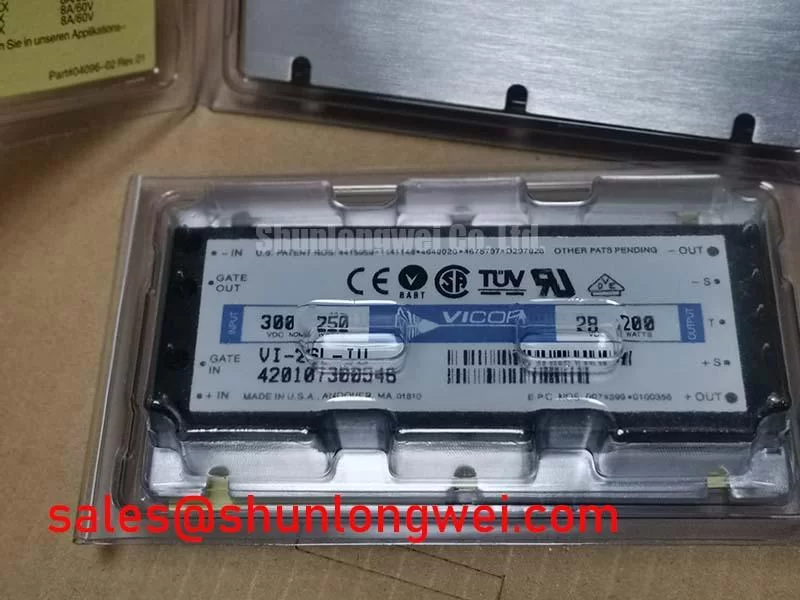
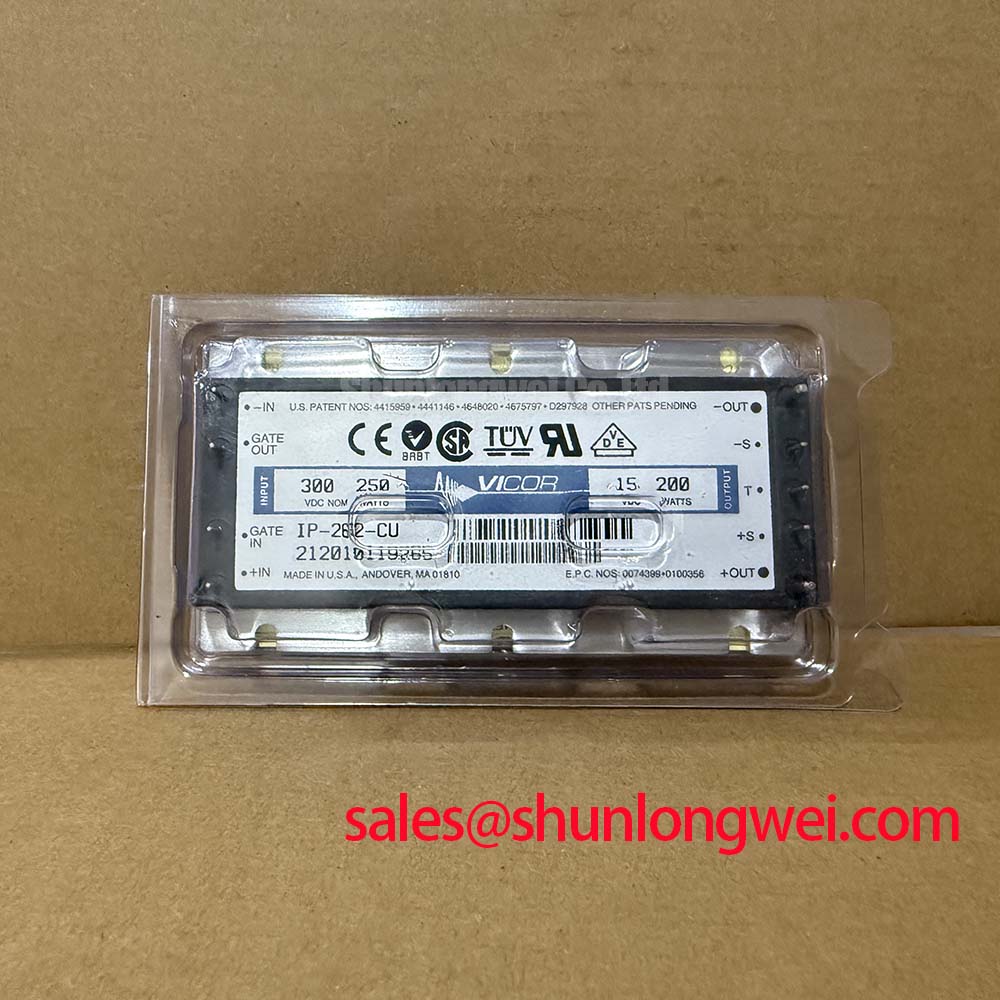
The Vicor VI-252-IX isolated DC-DC converter leverages Zero-Current Switching to deliver high efficiency and low noise for industrial power applications. Featuring a robust design inside an industry-standard full-brick package, this module provides a reliable voltage regulation stage under demanding electrical conditions. For industrial automation systems requiring a stable 15V rail from a fluctuating 150V bus, the VI-252-IX is the optimal choice.
Key Parameter Overview
Decoding the Specs for Enhanced Thermal Reliability
The technical specifications of the VI-252-IX define its operating boundaries and performance potential. The following table highlights the critical ratings derived from the manufacturer's official documentation:
| Parameter | Technical Value | Unit | Engineering Significance |
|---|---|---|---|
| Input Voltage Range | 100 – 200 | V DC | Accommodates large voltage drops on nominal 150V lines |
| Output Voltage | 15 | V DC | Provides a stable, clean rail for analog and digital control loops |
| Output Current (Max) | 5 | A | Capable of driving logic controllers and actuator circuits |
| Output Power | 75 | W | Delivers high power density in a standard brick package |
| Isolation Voltage | 3,000 | VRMS | Prevents ground loops and high-voltage transient transmission |
| Operating Temperature | -40 to +85 | °C | Industrial grade rating for baseline environmental resilience |
| Conversion Efficiency | 90 | % | Minimizes waste heat, reducing thermal management overhead |
Application Scenarios & Value
Achieving System-Level Benefits in High-Frequency Power Conversion
In modern industrial process plants, engineers face the challenge of powering sensitive 15V programmable logic controllers (PLCs) and human-machine interfaces (HMIs) from a noisy 150V DC bus. These power buses often experience massive voltage spikes due to inductive kickback from heavy motor startups. Integrating the VI-252-IX directly addresses this challenge. Its 3,000VRMS galvanic isolation acts as a protective barrier, preventing input line noise from corrupting delicate sensor signals downstream.
Moreover, operating at a high efficiency of 90%, the converter minimizes internal power dissipation. Inside sealed IP66 electrical cabinets where airflow is non-existent, keeping heat generation low is vital to prevent thermal runaway. While this 75W module serves as an excellent point-of-load converter, larger systems requiring initial three-phase input rectification can pair it alongside high-current input stages, such as those utilizing the VUB72-16NO1 diode bridge module.
When selecting switching components for complex designs, evaluating conversion topologies is crucial. System architects can explore detailed comparisons in our guide on IGBT vs MOSFET vs BJT. Proper selection ensures maximum performance across all stages of power conversion. Additionally, our comprehensive power semiconductor selection guide outlines practical decision frameworks for complex thermal and electrical requirements.
Technical Deep Dive
A Closer Look at ZCS Topology and its Impact on EMI
Traditional hard-switching converters switch the internal power MOSFET on and off while current is actively flowing. This process is like trying to close a high-pressure fire hose valve instantly; the abrupt shutoff causes severe kinetic hammer effects, which translate into high switching losses and severe electromagnetic noise. The VI-252-IX avoids this using ZCS topology. It behaves like a smart, synchronized valve that only shifts states when the current naturally drops to zero. Consequently, switching stress is practically eliminated, allowing high-frequency operation up to 1 MHz and enabling the use of much smaller internal filter components.
Another critical design factor is thermal resistance from the internal junction to the baseplate (Rth(j-c)). Think of thermal resistance as traffic congestion on a major highway. A high resistance acts like a bottleneck, trapping heat inside the semiconductor silicon. The low thermal resistance design of the VI-252-IX baseplate acts like adding extra lanes, letting heat flow freely to an external heatsink. This design permits the converter to deliver its full rated 75W output at baseplate temperatures up to 85°C without catastrophic failures.
Frequently Asked Questions
Addressing Common Design and Integration Queries for Engineers
What is the primary benefit of its ZCS design?
It minimizes switching losses by turning the MOSFET on at zero current. This reduction in switching stress enhances reliability and permits high-frequency operation with small filter footprints.
What is the function of the 3 kV isolation?
It protects downstream digital circuits from high-voltage input transients. This isolation prevents ground loops and safeguards sensitive control logic from noise on the primary line.
How can engineers adjust the output voltage of the VI-252-IX?
The output voltage can be trimmed from 10% to 110% of the nominal 15V output by utilizing the trim pin. This allows compensation for voltage drops over long PCB traces or wire runs.
Does the VI-252-IX include integrated fault protection?
Yes, the module is equipped with overcurrent protection (OCP), overtemperature protection (OTP), overvoltage protection (OVP), and short-circuit protection (SCP) to prevent damage under system-level electrical faults.
The dynamic power landscape of modern industrial systems requires robust conversion technologies that balance thermal density, safety isolation, and efficiency. Incorporating advanced converters like the VI-252-IX into distributed power architectures ensures compatibility with evolving industrial requirements, forming a critical pillar for long-term system reliability.