
Content last revised on July 27, 2026
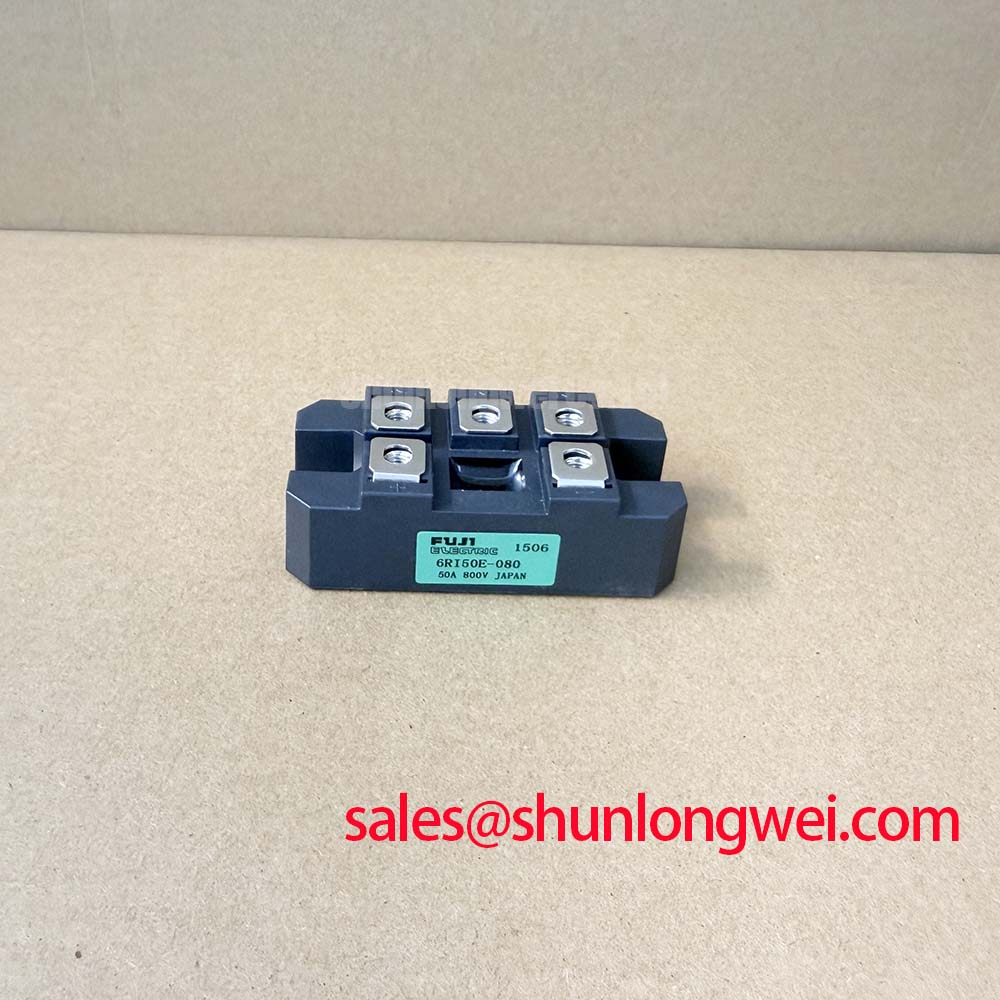
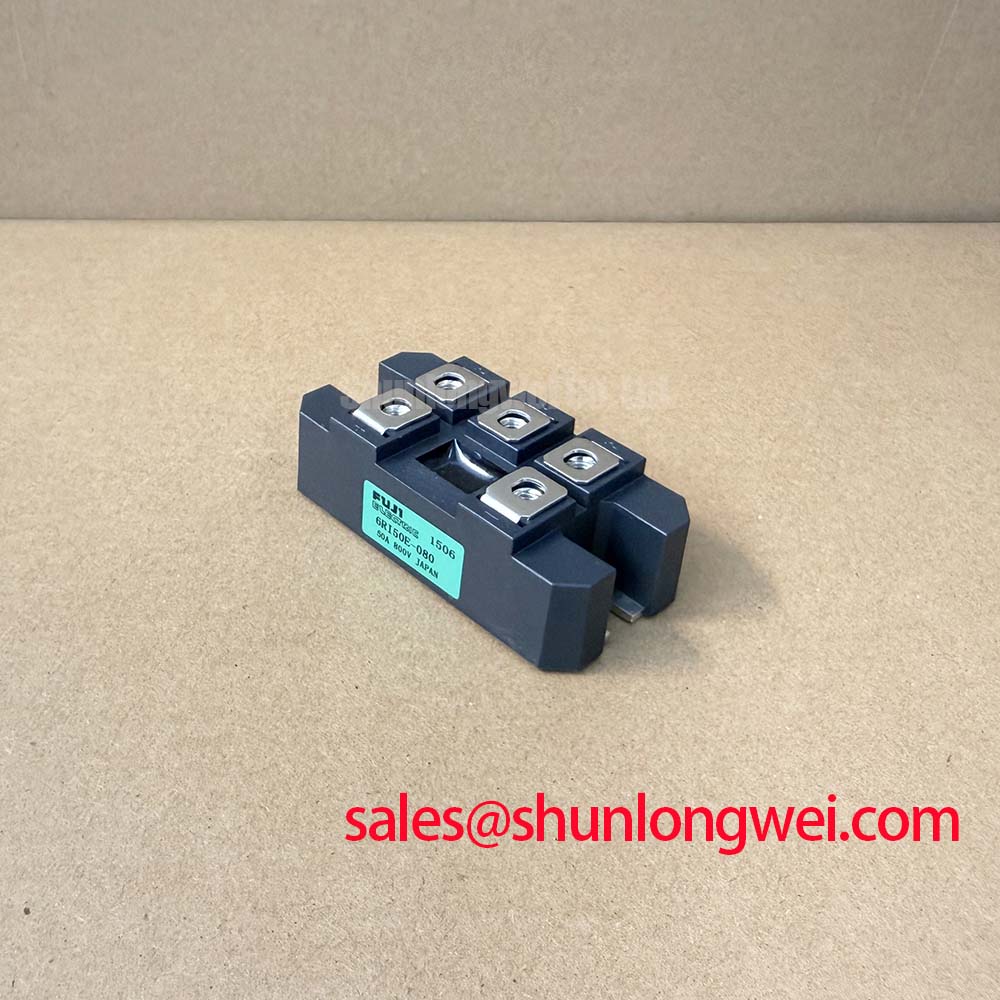
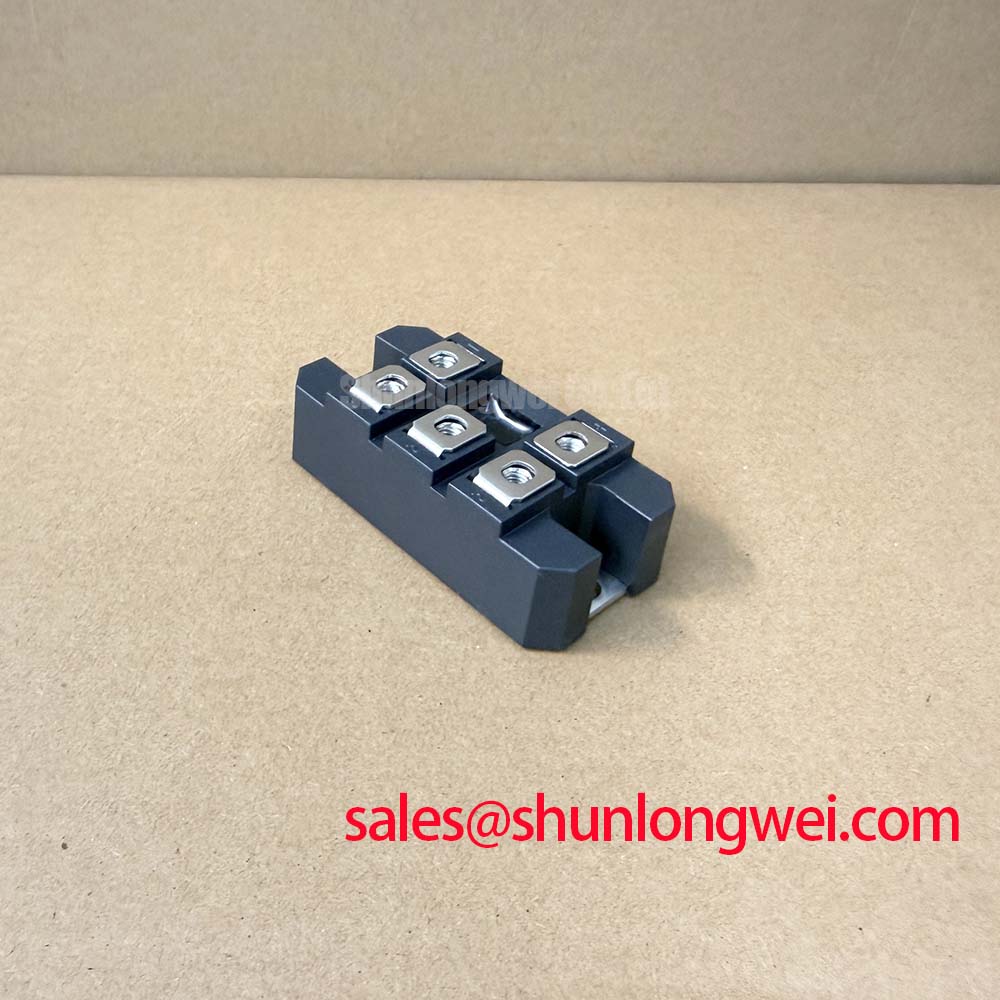
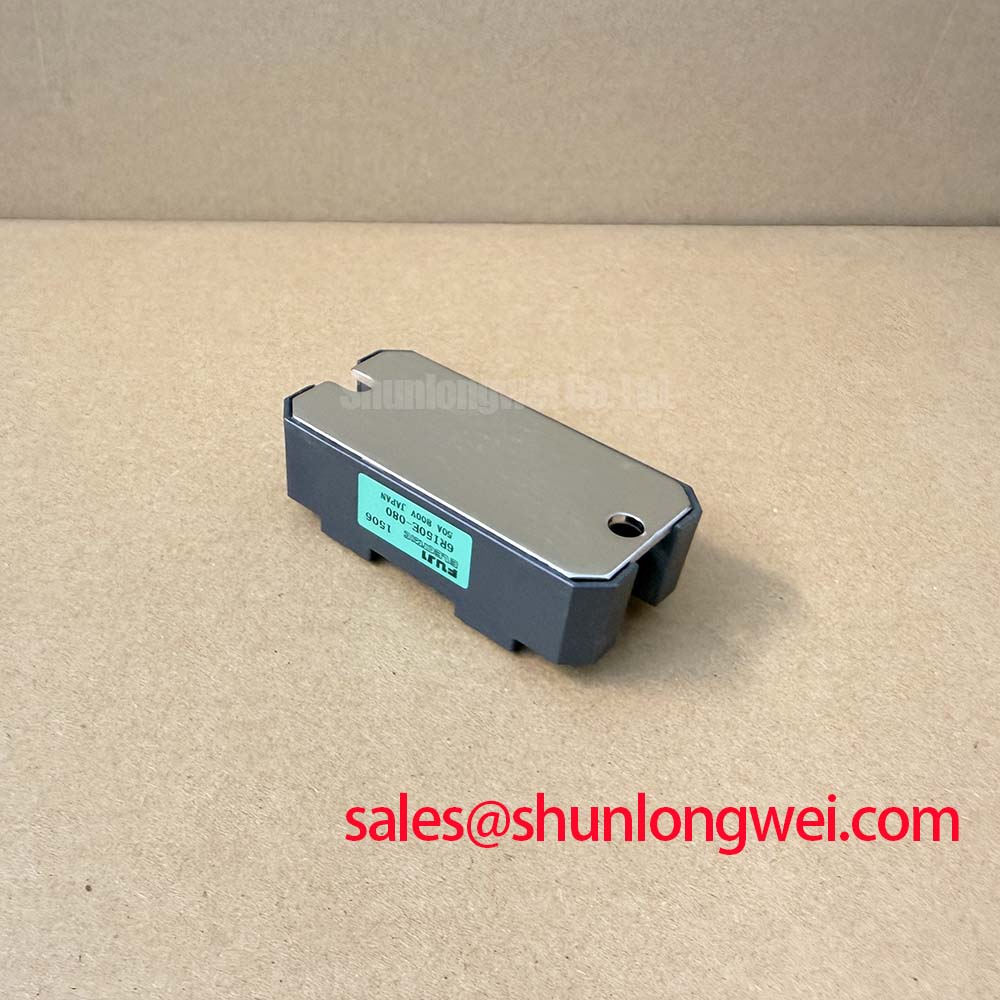
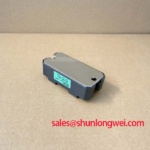
Fuji Electric 6RI50E-080 Three-Phase Diode Bridge Module
How do design engineers prevent premature failure in industrial motor drive rectifiers under continuous thermal loading? The primary challenge lies in selecting a rectifier module that balances robust thermal dissipation with stable electrical performance under transient stress.
The Fuji Electric 6RI50E-080, a high-reliability three-phase diode bridge rectifier module from their power block family, is designed to meet these demands. Featuring a 800V repetitive peak reverse voltage rating and a 50A average output current capacity, this module integrates six glass-passivated diode chips in a fully isolated package. For 380V industrial input lines prioritizing thermal margin, this 800V 50A module is the optimal choice.
Frequently Asked Questions
Resolving Core Engineering Questions on Fuji Diode Modules
How does the zinc oxide glass passivation affect the reliability of the 6RI50E-080 under humid conditions?
The glass passivation forms a robust barrier over the silicon junction, preventing moisture ingress and stabilizing the leakage current at 150°C.
What is the engineering significance of the 480A surge current rating for motor drive front-ends?
It provides a safety margin that prevents junction damage from transient inrush currents during motor startup without requiring oversized components.
Key Parameter Overview
Decoding the Specs for Enhanced Thermal Reliability
| Parameter Category | Key Specification | Value |
|---|---|---|
| Electrical Performance | Repetitive Peak Reverse Voltage (VRRM) | 800V |
| Electrical Performance | Average Output Current (IO) | 50A (at TC = 85°C) |
| Electrical Performance | Surge Forward Current (IFSM) | 480A (50Hz, 1 cycle) |
| Electrical Performance | Forward Voltage Drop (VFM) | 1.20V (at IFM = 50A) |
| Thermal & Isolation | Maximum Operating Junction Temperature (Tj) | -40°C to +150°C |
| Thermal & Isolation | Isolation Voltage (Viso) | 2000V AC (1 minute) |
| Thermal & Isolation | Junction-to-Case Thermal Resistance (Rth(j-c)) | 0.35°C/W (per element) |
Download the 6RI50E-080 datasheet for detailed specifications and performance curves.
Technical & Design Deep Dive
A Closer Look at the Glass-Passivated Isolated Architecture
The internal architecture of the 6RI50E-080 is optimized for harsh environment survivability. The six diode chips are passivated with zinc oxide glass, which chemically protects the silicon boundaries. This passivation layer prevents degradation caused by thermal stress, reducing leakage current even when operating near the limit of +150°C.
The electrically isolated baseplate functions like a fireproof wall in a building: it allows heat to pass through to the heatsink while completely blocking dangerous electrical voltages from reaching other system components. Similarly, the zinc oxide glass passivation acts like a hermetic seal on a submarine, keeping contaminants away from the silicon junction. What is the primary benefit of the glass passivation chip? Superior resistance to moisture and thermal cycling. How does the isolated mounting plate simplify system design? It allows multiple modules to share a single heatsink.
Isolation is key for multi-module thermal systems. The module features an isolation rating of 2000V AC, allowing users to mount multiple power blocks on a single cooling assembly. When selecting rectifiers, engineers should consult a comprehensive power semiconductor selection guide to evaluate isolation requirements. Proper isolation design is critical for preventing overcurrent and thermal degradation in high-voltage industrial enclosures. For further diagnostic procedures and validation steps, refer to resources on field testing and failure analysis.
Application Scenarios & Value
Achieving System-Level Benefits in Harsh Industrial Environments
In industrial motor controllers, rectifying input three-phase AC into stable DC is the initial power processing step. During startup or sudden load changes, the front-end rectifiers must handle high peak currents. The 6RI50E-080 offers a surge current rating of 480A and a transient thermal capacity defined by an I2t value of 920A2s. This thermal surge resilience allows engineers to easily coordinate semiconductor fuses, protecting the downstream converter stages during overload conditions.
Operating the device within its Safe Operating Area ensures that startup surges do not trigger thermal runaway. Minimizing the case-to-heatsink Thermal Resistance is also critical to maintaining the 50A average rating.
For systems requiring higher current handling, the related 6RI100E-080 provides a VRRM of 800V at 100A, while smaller systems can utilize the 6R1TI30Y-080.
To ensure optimal performance in your system design, review the detailed electrical and thermal characteristic curves. Contact our engineering support team or check our inventory online to obtain further technical specifications and request quotes.