
Content last revised on September 10, 2026
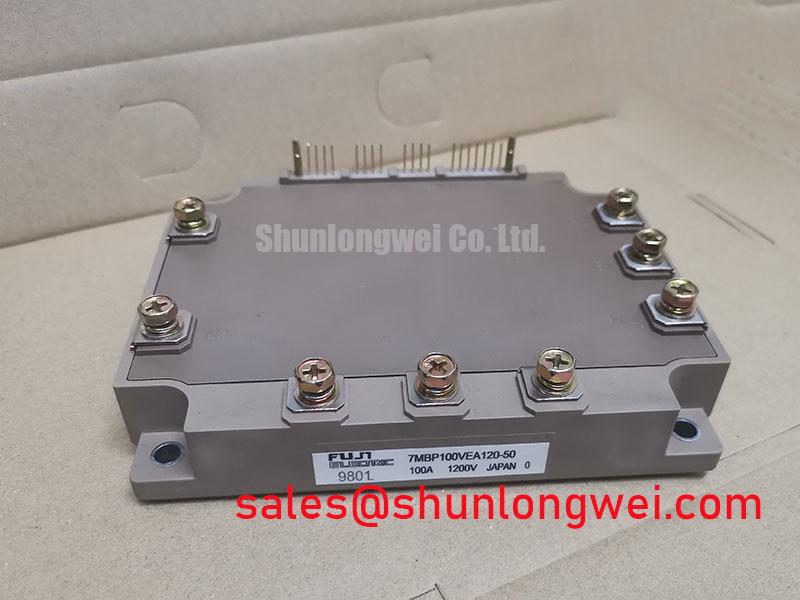
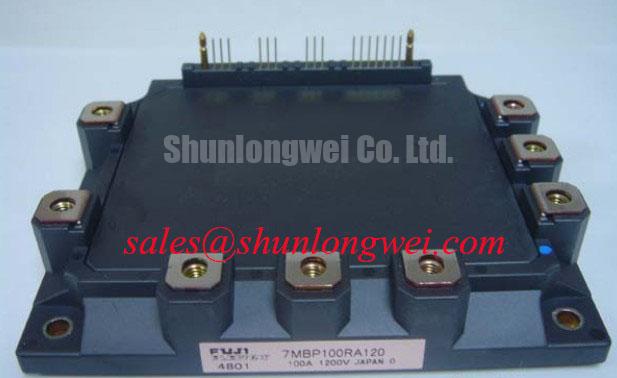
7MBP100RA120: 1200V 100A Intelligent Power Module
By integrating direct junction temperature sensing with a low-part-count control circuit, this module delivers unparalleled thermal reliability for demanding power conversion applications. 1200V | 100A | 7-in-1 IPM. Failsafe thermal monitoring. Minimized layout complexity. Direct junction temperature protection works by monitoring the silicon die itself rather than the baseplate, triggering a much faster shutdown during rapid thermal spikes. For 400V-class AC motor drives prioritizing thermal safety and compact design, this 1200V, 100A intelligent power module is the optimal choice.
Application Scenarios & Value
Enhancing System Reliability in Heavy-Duty Motor Control
Engineers often face significant challenges when protecting silicon against rapid thermal gradients during motor stall events. In a typical Variable Frequency Drive (VFD), a sudden overload can cause the die temperature to spike much faster than a traditional baseplate NTC thermistor can react. The 7MBP100RA120 mitigates this inherent risk by embedding the thermal sensor directly on the IGBT junction.
If an industrial conveyor belt jams, the module detects the temperature rise instantly. It utilizes its internal Undervoltage Lockout (UVLO) and overcurrent logic to halt switching immediately. This direct feedback loop prevents catastrophic thermal runaway. Furthermore, the inclusion of a Braking Chopper (DB) in this 7-pack configuration simplifies the management of regenerative energy during rapid deceleration phases. While this model operates efficiently in 400V-class AC inputs, for 200V-class systems requiring identical current ratings, the related 7MBP100RA060 offers an optimized 600V alternative.
Technical Deep Dive
Thermal and Switching Dynamics of the R-Series IPM
Integrating gate drivers and power switches within a single housing fundamentally changes the thermal and electrical design rules for power engineers. The 7MBP100RA120 leverages a specialized built-in control circuit that drastically reduces the discrete component count on the host PCB.
Think of this integration like a modern smartphone compared to carrying a separate camera, cellular phone, and GPS device. By putting all critical control logic onto a single substrate near the power chips, signal paths shrink drastically. This reduction minimizes parasitic stray inductance, ensuring cleaner, faster switching with minimal voltage overshoot during the turn-off phase.
Regarding its direct junction temperature monitoring, traditional thermistor setups are like measuring the temperature of an insulated room from the outside wall—there is always a dangerous thermal lag. The 7MBP100RA120 measures the junction directly, functioning like a highly responsive core thermometer inside the heating element. It provides real-time, high-fidelity thermal data to the protection circuitry. You can read more about IPM vs discrete IGBT power stage design to understand the system-level benefits of this architecture.
Key Parameter Overview
Critical Specifications for High-Voltage Inverters
| Functional Group | Parameter | Value / Rating |
|---|---|---|
| Absolute Maximum Ratings | Collector-Emitter Voltage (VCES) | 1200V |
| Continuous Collector Current (IC) | 100A DC | |
| Peak Collector Current (ICP) | 200A (1ms) | |
| Control Circuit Specifications | Operating Supply Voltage (VCC) | 15V (Typ.) |
| Isolation Voltage (Viso) | AC 2.5kV (1 minute) | |
| Power Dissipation | Max Power (PC) per Transistor | 735W |
Download the 7MBP100RA120 datasheet for detailed specifications and performance curves.
Frequently Asked Questions
Addressing Field Integration and Thermal Challenges
How does the direct junction temperature protection differ from baseplate thermistors in the 7MBP100RA120?
Unlike external thermistors that suffer from thermal latency due to the heavy copper baseplate mass, this module senses the operating temperature directly at the silicon level. This allows the built-in control circuit to react instantaneously to overloads, maintaining strict safety margins. What is the primary benefit of direct junction temperature detection? It ensures rapid and accurate overheating protection, preventing catastrophic failures during overloads.
Why is the 2.5kV isolation voltage (Viso) critical for industrial drive applications?
The AC 2.5kV isolation ensures that high-voltage switching transients on the power lines do not bridge back into the sensitive low-voltage logic circuits. This isolation level is essential for meeting compliance standards and protecting external microcontrollers in noisy environments. Before installation, it is recommended to review proper testing procedures for IGBT modules to verify module health.
Ready to optimize your next high-power motor control system? Reach out to our technical engineering team for complete datasheet details, structural evaluations, and configuration support for this intelligent power module.