
Content last revised on September 10, 2026
CM1200HC-50H: 2500V 1200A HV-IGBT Module for High-Power Drives
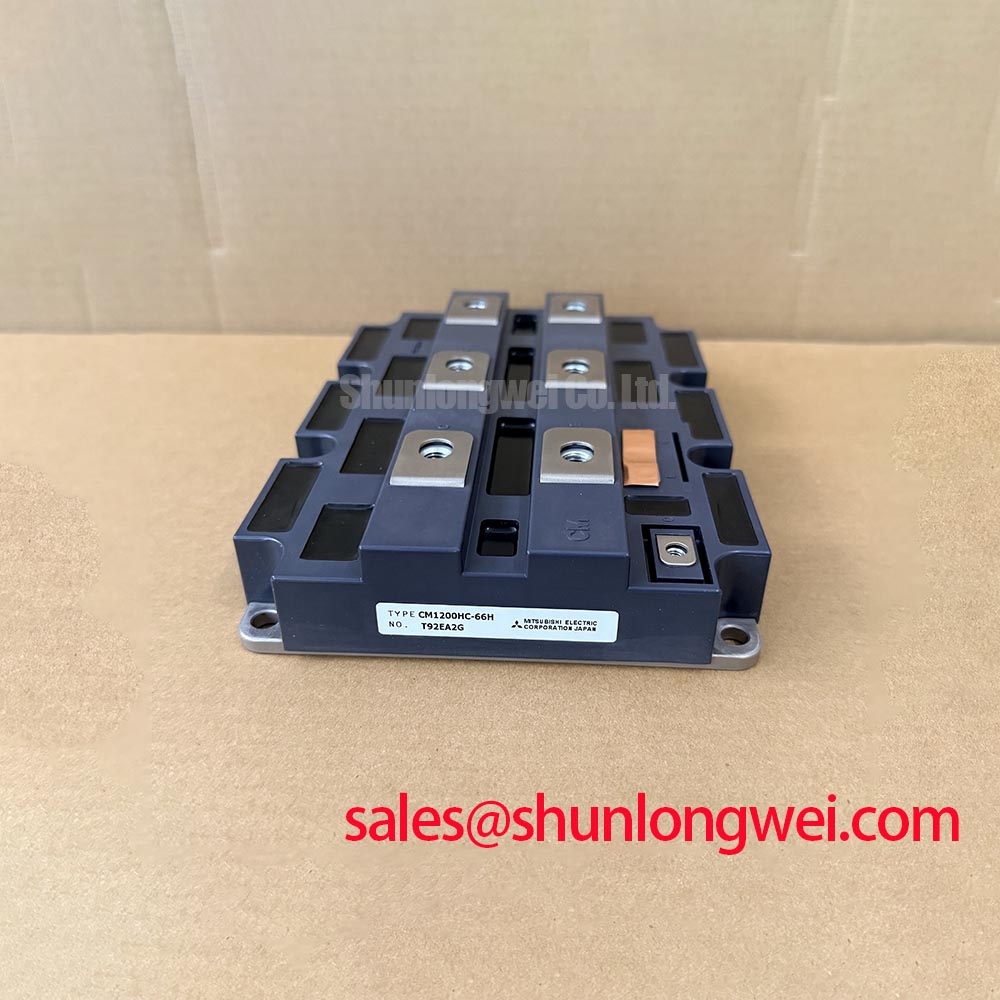
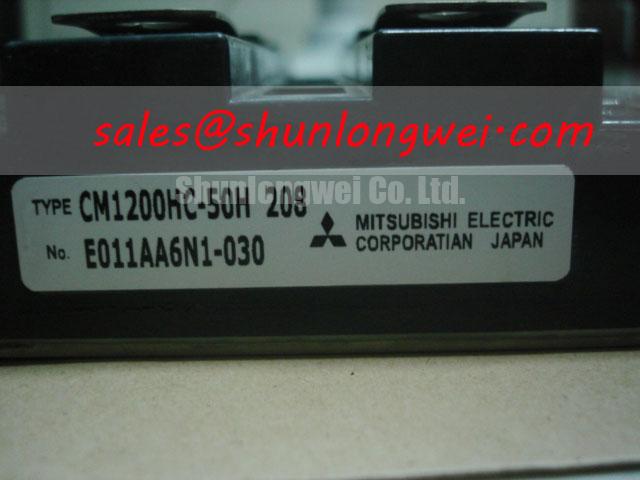
What is the primary benefit of the CM1200HC-50H in traction applications? Its ultra-low thermal resistance prevents derating under heavy loads. The CM1200HC-50H by Mitsubishi is an advanced Single HV-IGBT module. Delivering a 2500V and 1200A rating, alongside an exceptional Rth(j-c) of 0.0085 K/W, it mitigates thermal bottlenecks in massive power stages. For medium voltage drives prioritizing thermal margin, this 2500V module is the optimal choice. It actively minimizes conduction losses while establishing a robust Safe Operating Area (SOA), resolving the specific search intent for a reliable 2500V 1200A single IGBT in high-stress industrial frameworks.
Application Scenarios & Value
Achieving System-Level Reliability in Heavy-Duty Topologies
Engineers often face severe thermal management constraints when designing MW-class traction inverters and medium voltage drives. The CM1200HC-50H tackles these constraints head-on. In a high-power DC chopper application subject to frequent load cycling, the module's 1200A continuous collector current capability must be supported by aggressive heat dissipation. Here, the component's 6000V isolation voltage and ultra-low thermal resistance ensure that semiconductor junctions remain within safe boundaries during sudden surge events.
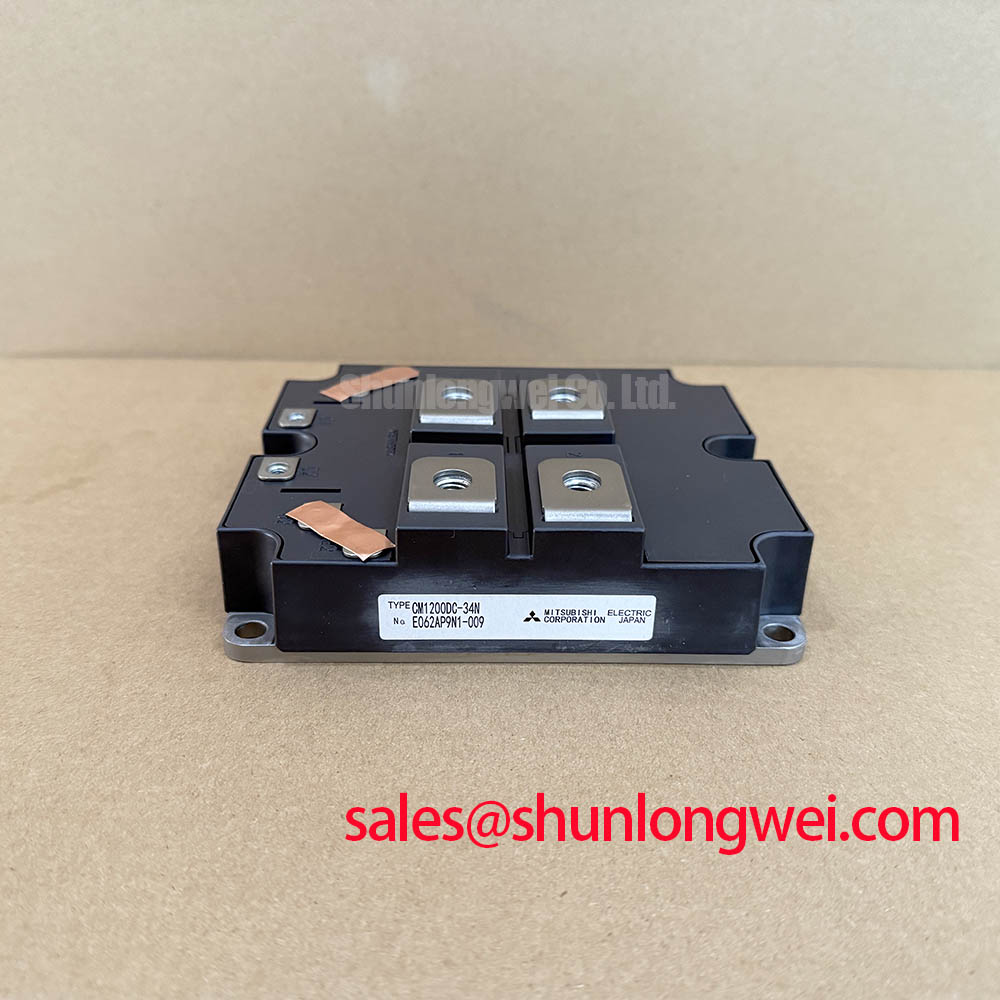
While this module excels in 2500V architectures, systems requiring lower voltage thresholds might benefit from the related CM1200DB-34N, which offers a 1700V rating at an identical current capacity. Conversely, for ultra-high voltage 3300V networks, the 1MBI1500UE-330 presents a viable alternative. By evaluating these modules, designers can stabilize the thermal equilibrium across varying grid demands.
Technical Deep Dive
Decoding CSTBT Architecture and Thermal Pathways
The core of the CM1200HC-50H lies in its Mitsubishi CSTBT™ (Carrier Stored Trench-Gate Bipolar Transistor) framework. To grasp its functional efficiency, imagine the CSTBT structure as a specialized hydro-dam that deliberately retains a localized pool of water (charge carriers) near the emitter interface. This localized carrier accumulation layer drastically suppresses the internal impedance during forward conduction, yielding a highly competitive VCE(sat) of 2.8V even when processing MW-scale continuous currents.
Thermal engineering heavily dictates semiconductor longevity. The module’s specified Rth(j-c) of 0.0085 K/W serves as its primary mechanical advantage. Think of thermal resistance as a transit highway for heat: a remarkably low numerical value acts as a multi-lane expressway where thermal energy immediately escapes the silicon baseplate and transfers into the heatsink without transit congestion. This attribute directly governs the module's power cycling endurance, ensuring that extreme thermal gradients do not precipitate structural degradation over decades of operation. For an expanded perspective on optimizing these parameters, consult this analysis on the core trio of IGBT module selection.
Key Parameter Overview
Highlighted Metrics for High-Power Drive Selection
| Parameter | Value | Engineering Implication |
|---|---|---|
| VCES (Collector-Emitter Voltage) | 2500V | Provides substantial headroom for medium voltage drives. |
| IC (Continuous Collector Current) | 1200A | Enables MW-scale power delivery without requiring immediate paralleling. |
| VCE(sat) (Typical at 125°C) | 2.8V | Minimizes static conduction losses during continuous high-load states. |
| Rth(j-c) (IGBT Thermal Resistance) | 0.0085 K/W | Maximizes thermal transfer efficiency to the external heatsink. |
| Visol (Isolation Voltage) | 6000V | Secures dielectric integrity against extreme transient spikes. |
Download the CM1200HC-50H datasheet for detailed specifications and performance curves.
Frequently Asked Questions
Field Engineer Inquiries on the CM1200HC-50H
- How does the Rth(j-c) of 0.0085 K/W dictate heatsink selection for the CM1200HC-50H?
This exceptionally low junction-to-case thermal resistance demands a high-performance liquid or forced-air heatsink with a correspondingly low Rth(c-f). It ensures maximum heat extraction, minimizing thermal derating during 1200A peak loads. - Why is the 6000V isolation rating imperative for 2500V traction systems?
In high-voltage environments, transient spikes are inevitable. The 6000V Visol specification provides a massive dielectric safety buffer, preventing catastrophic flashovers between the internal silicon array and the grounded baseplate. - What functional advantage does CSTBT technology offer in a single IGBT package?
By accumulating carriers near the emitter, CSTBT effectively lowers the forward voltage drop to a VCE(sat) of 2.8V. This minimizes static conduction losses, which is paramount when continuously switching heavy currents in industrial drive trains. - How do the specifications of the CM1200HC-50H satisfy requirements for DC chopper applications?
Engineers searching for a robust 2500V 1200A single IGBT require immense current handling paired with high isolation. The CM1200HC-50H delivers this, along with a wide Safe Operating Area (SOA) necessary to absorb inductive kickbacks inherent in chopper circuits.
Strategic Implications for Power Architectures
Implementing the CM1200HC-50H transforms how grid-level and traction systems manage thermal loads. By bridging the gap between high blocking voltage and minimal thermal impedance, this module anchors the stability of next-generation high-power conversion infrastructures.