Content last revised on September 10, 2026
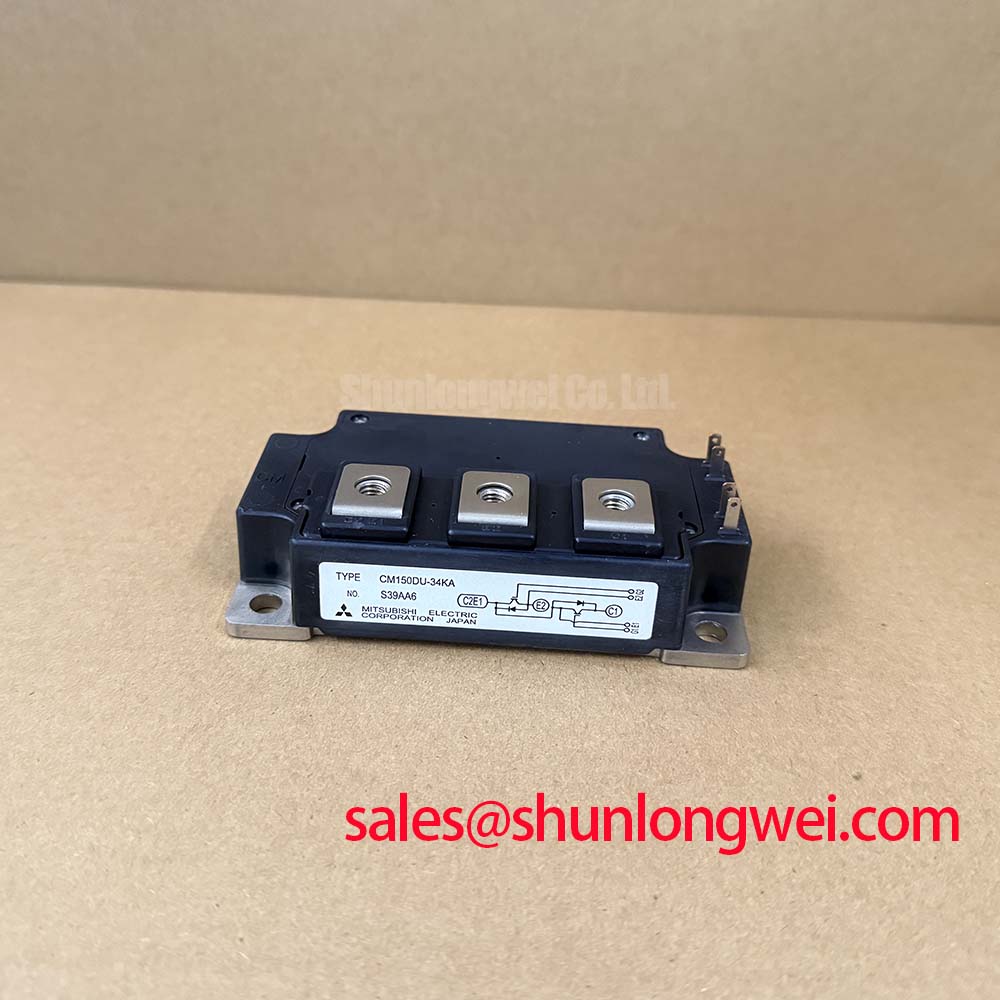
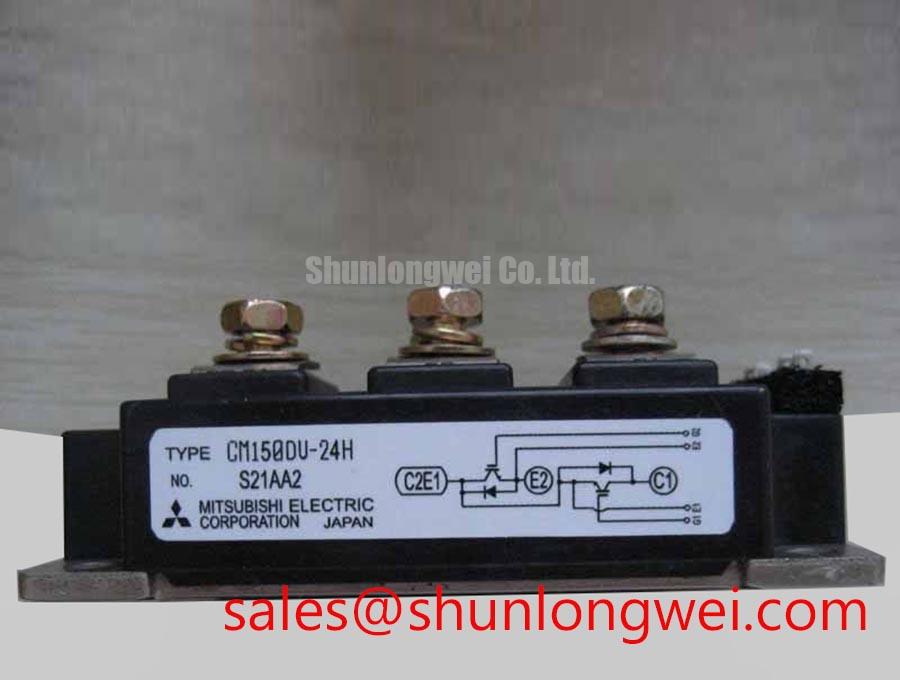
CM150DU-24H Mitsubishi 1200V 150A IGBT Module
The CM150DU-24H, a cornerstone of Mitsubishi Electric's H-series, represents a robust solution for medium-power switching applications requiring a 1200V collector-emitter voltage and a 150A continuous current rating. This dual-transistor module is specifically engineered to provide a high-reliability interface for industrial motor drives and uninterruptible power supplies (UPS), where thermal stability and efficiency are non-negotiable. By leveraging an isolated copper baseplate and a compact DU package, it enables engineers to achieve high power density without compromising electrical safety. For industrial motor drives prioritizing thermal stability, the CM150DU-24H is the optimal choice.
Application Scenarios & Value
Achieving System-Level Benefits in High-Frequency Power Conversion
In high-fidelity engineering scenarios, such as the design of a Variable Frequency Drive (VFD) for industrial pump stations, the CM150DU-24H excels by addressing the common challenge of thermal cycling fatigue. Consider an engineer tasked with maintaining a constant pressure flow in a facility where the 150A load fluctuates rapidly. The isolated baseplate of this Mitsubishi module allows for optimized heatsink coupling, preventing the localized hot spots that lead to catastrophic failure in lesser components. This reliability ensures that the IEC 61800-3 compliance for drive systems is easier to maintain over long service lives. What is the primary benefit of its isolated baseplate? It facilitates superior heat dissipation and higher voltage isolation between the circuitry and the chassis. For systems requiring higher current handling, the related CM200DY-24H offers 200A capability in a similar footprint, while the CM300DU-24H is available for 300A requirements.
Key Parameter Overview
Decoding the Specs for Enhanced Thermal Reliability
The following technical specifications are derived from official Mitsubishi documentation to support precise integration into power electronic systems. Understanding the VCE(sat) and switching characteristics is critical for calculating total system losses.
| Parameter | Symbol | Value/Condition |
|---|---|---|
| Collector-Emitter Voltage | Vces | 1200V |
| Collector Current (DC) | Ic | 150A (at Tc=25°C) |
| Collector-Emitter Saturation Voltage | VCE(sat) | 2.8V (Typical) |
| Total Power Dissipation | Ptot | 1100W |
| Isolation Voltage | Viso | 2500V AC (1 min) |
Download the CM150DU-24H datasheet for detailed specifications and performance curves. Further insights on balancing these parameters can be found in our guide to IGBT module selection.
FAQ
Technical Clarifications for Field Engineering
How does the VCE(sat) of 2.8V impact the overall efficiency of an inverter system?
The VCE(sat) of 2.8V represents the conduction loss of the module. In a typical inverter operating at 150A, lower saturation voltages reduce the heat generated during the "on" state, directly influencing the size of the required Thermal Management solution and increasing overall energy efficiency.
What is the significance of the "DU" package for mechanical integration?
The DU package is an industry-standard footprint that ensures mechanical compatibility across various IGBT Module platforms. Its robust terminal structure is designed to withstand Servo Drive vibrations while providing a low-inductance path for switching, which is vital for suppressing voltage spikes.
Can the CM150DU-24H be used in high-altitude applications?
Yes, provided that the clearance and creepage distances are derated according to IEC standards. The 2500V isolation rating provides a safe margin, but for extreme altitudes, engineers must verify the air breakdown voltage based on the specific system housing design.
Technical & Design Deep Dive
Analyzing the Internal Architecture for Long-Term Reliability
The internal structure of the CM150DU-24H utilizes Mitsubishi's H-series chip technology, which balances fast switching speeds with a rugged Safe Operating Area. The dual configuration (half-bridge) simplifies the design of three-phase inverters by reducing the component count. To explain the thermal management of this device, think of Thermal Resistance like a bottleneck in a cooling system; the lower the resistance (the wider the bottleneck), the faster heat can escape to the heatsink, preventing the internal silicon from reaching its 150°C limit. This is further enhanced by the copper baseplate, which acts as a thermal reservoir, smoothing out transient temperature spikes during heavy inductive load switching in Welding Power Supply environments. For a more technical exploration, refer to the analysis of 1200V IGBT efficiency.
Industry Insights & Strategic Advantage
The Role of Proven IGBT Technology in the Industrial 4.0 Landscape
As industries transition toward smarter, more efficient power grids, the demand for reliable IGBT Module components like the CM150DU-24H remains high. While newer silicon carbide (SiC) technologies are emerging, traditional silicon-based Mitsubishi modules offer a proven, cost-effective track record for standard Variable Frequency Drive (VFD) applications. This module’s longevity in the market ensures a stable supply chain and well-documented failure modes, making it a "safe" choice for infrastructure projects where a 10-to-15-year lifecycle is expected. The dual-module structure is like a relay team; each transistor shares the burden of the high-voltage load, ensuring that no single part of the UPS system tires out prematurely, thus maintaining the uptime required for mission-critical data centers. This reliability is why Mitsubishi remains a dominant force in the power semiconductor market.
For strategic procurement, the CM150DU-24H represents a balance of high-voltage performance and established reliability, ensuring that modern power systems remain both efficient and durable in the face of evolving industrial demands.