Content last revised on August 28, 2026
DMF682ANF-EW: Technical Specifications and Engineering Analysis of an Integrated 20x4 Character LCD Module
An Integrated Display Solution for Streamlined Embedded System Design
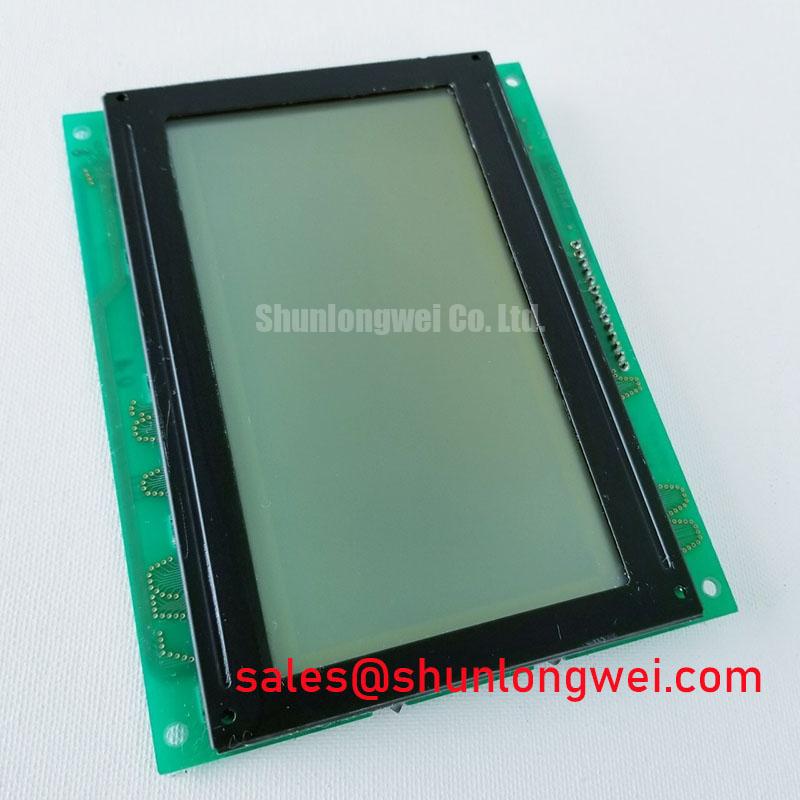
The DMF682ANF-EW is a highly integrated 20-character by 4-line dot matrix LCD module designed to accelerate development and simplify hardware design in embedded systems. With its onboard controller and character ROM, this display offloads critical functions from the host processor, enabling more efficient and cost-effective system architecture. Key specifications include: 20x4 Characters | 5x8 Dot Matrix Format | -20°C to +70°C Operating Temperature. This integration delivers two primary engineering benefits: a significantly reduced external component count and drastically shortened firmware development cycles. For engineers facing tight project timelines, the module's built-in intelligence provides a direct path to a functional user interface without the complexity of managing a separate display driver IC. What is the main advantage of its integrated controller? It frees up the host microcontroller's processing power and memory for core application tasks.
Application Scenarios & Value
System-Level Benefits in Industrial Control and Instrumentation
The DMF682ANF-EW is engineered for applications where clear, reliable information display and rapid development are paramount. Its robust design and straightforward integration make it an excellent fit for a variety of human-machine interfaces (HMI). The optimal application for this module is in systems requiring a text-based user interface with minimal demand on the host microcontroller's resources, such as industrial process controllers, measurement instruments, and network hardware status panels.
Consider the design of a new DIN rail-mounted power monitoring device. The primary challenge for the design engineer is to provide a clear status readout within a compressed development schedule and a constrained hardware budget. The DMF682ANF-EW directly addresses this challenge. Its built-in SED1278F controller and character generator ROM eliminate the need for an external driver IC and the associated firmware overhead of creating a character set. The engineer can interface the module directly to a standard 8-bit MCU, send simple ASCII commands, and immediately display critical data like voltage, current, and system alerts. This pre-integrated approach transforms a complex HMI sub-project into a simple, manageable task, enabling faster prototyping and a quicker path to market. While this 20x4 display is ideal for information-dense readouts, for more compact applications, a smaller module like the LCM-S01602DSF/B might be considered.
Key Parameter Overview
Decoding the Specifications for Embedded Integration
The performance of the DMF682ANF-EW is defined by a combination of its optical characteristics and its highly integrated electrical interface. The following parameters are critical for system design and integration.
| Parameter | Specification | Engineering Significance |
|---|---|---|
| Display Format | 20 Characters × 4 Lines | Provides sufficient space for displaying multiple system parameters, menus, and diagnostic information simultaneously. |
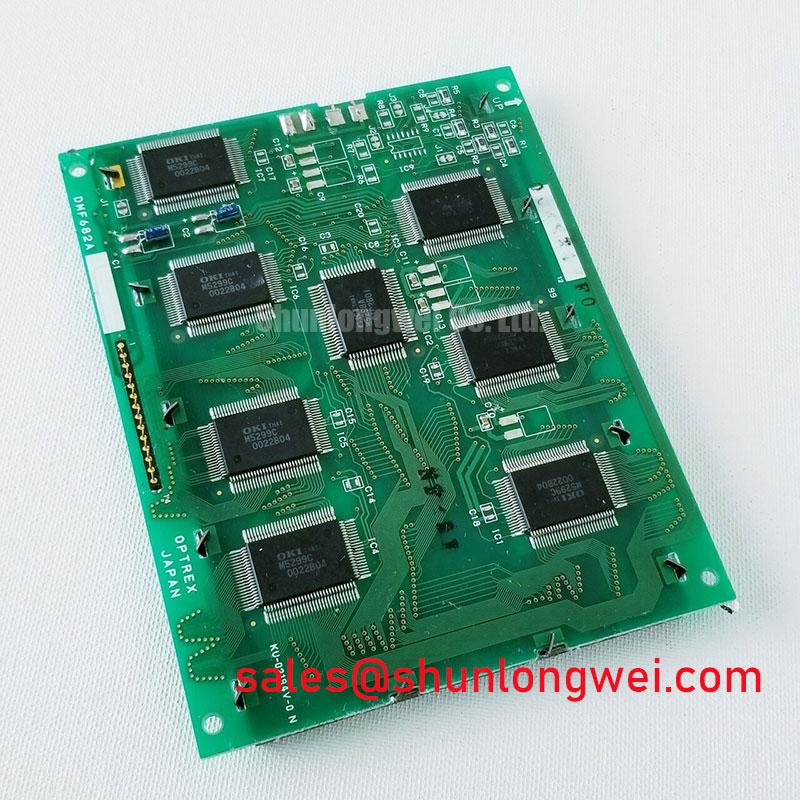
| Built-in LSI | SED1278F (Controller), SED1200F (Driver) | The core of its integration value; handles all display refresh, cursor control, and character generation, simplifying the host MCU's software. |
| Character Font | 5 × 8 Dots | Delivers clear and highly legible alphanumeric characters suitable for most industrial and instrumentation applications. |
| Character Generator ROM | 240 Character Types (Includes alphanumeric & symbols) | Eliminates the need to store character maps in the host MCU's memory, saving valuable resources for the primary application logic. |
| Operating Temperature Range | -20°C to +70°C | Ensures operational reliability in a wide range of environments, from unheated field enclosures to factory floors. |
| MPU Interface | 4-bit or 8-bit Parallel | Offers flexibility to connect to a wide variety of microcontrollers, allowing designers to optimize for I/O pin count. |
| Supply Voltage (VDD) | 5.0V ±0.25V | Compatible with standard logic levels found in many legacy and contemporary embedded systems. |
Technical Deep Dive
Analyzing the SED1278F Controller for Efficient System Design
The true engineering advantage of the DMF682ANF-EW lies within its integrated SED1278F controller LSI. This component acts as a dedicated display co-processor, managing the complex task of driving the LCD panel. For a system designer, this is analogous to having a specialized hardware accelerator for the user interface. Instead of writing low-level code to control individual pixels, refresh timings, and voltage levels, the engineer interacts with the display through a high-level command set.
This command-based interface, accessible via the parallel data bus, dramatically simplifies software development. Functions such as clearing the display, positioning the cursor, or writing a character are executed by sending a single byte-level instruction. The onboard Display Data RAM (DD-RAM) stores the character codes for all 80 positions (20x4), and the controller automatically fetches the corresponding font pattern from the CG-ROM to display on the screen. This architecture ensures that the display remains static and flicker-free without any intervention from the host Microcontroller (MCU), freeing up its cycles for critical real-time tasks.
Frequently Asked Questions (FAQ)
What is the primary benefit of the built-in SED1278F controller for an embedded systems engineer?
The controller's primary benefit is the abstraction of low-level display driving tasks. It manages all refresh cycles, cursor control, and character generation, allowing the engineer to interface with the display using simple commands. This significantly reduces firmware complexity and accelerates development time.
How does the integrated Character Generator ROM (CG-ROM) impact my host processor's memory requirements?
The onboard CG-ROM, which contains 240 pre-defined characters, completely eliminates the need to store font bitmaps in your microcontroller's flash or RAM. This saves several kilobytes of memory, which can be a critical advantage in resource-constrained 8-bit or 16-bit embedded systems.
Can the DMF682ANF-EW be used in outdoor or unconditioned environments?
Yes, within limits. The specified operating temperature range of -20°C to +70°C makes it suitable for many industrial and outdoor applications. However, for direct sunlight exposure, additional considerations for glare reduction and UV protection would be necessary for the final product enclosure.
Engineering Perspective
From an engineering standpoint, the DMF682ANF-EW is a problem-solving component. It is not simply a display but a pre-engineered HMI subsystem. Its value is measured in reduced development hours, simplified PCB layouts, and freed-up microcontroller resources. By integrating the controller and character memory, it allows design teams to focus on their core application logic rather than the intricacies of LCD control, making it a pragmatic choice for industrial and instrumentation projects where efficiency and reliability are the key metrics for success.