
Content last revised on October 15, 2026
Luminance Half-Life and the 50,000 h Maintenance Question
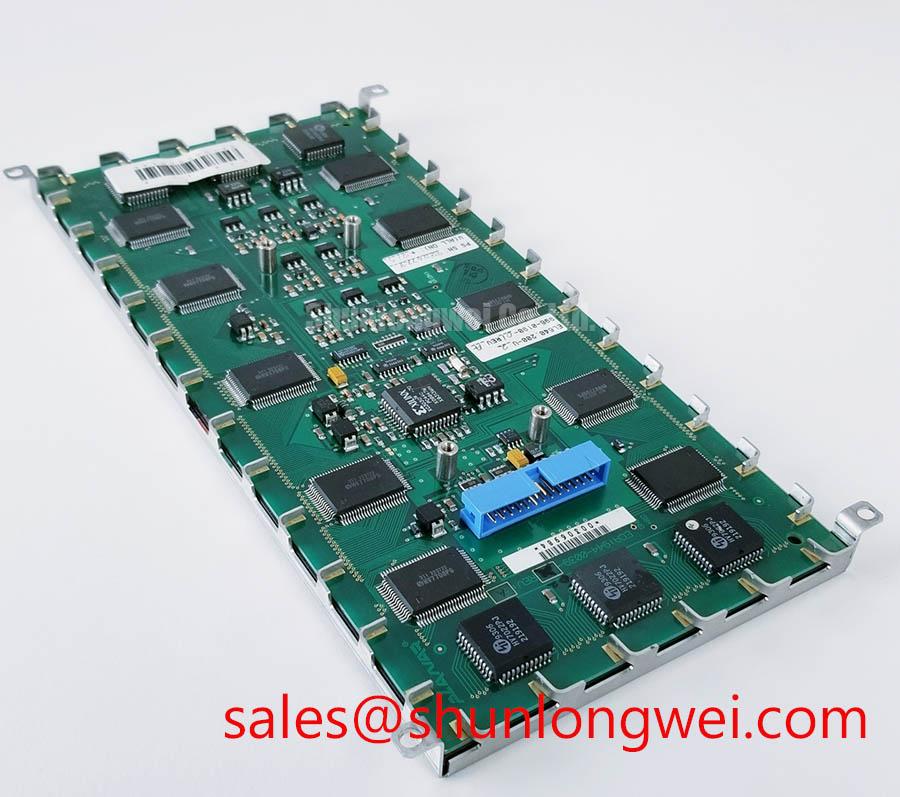
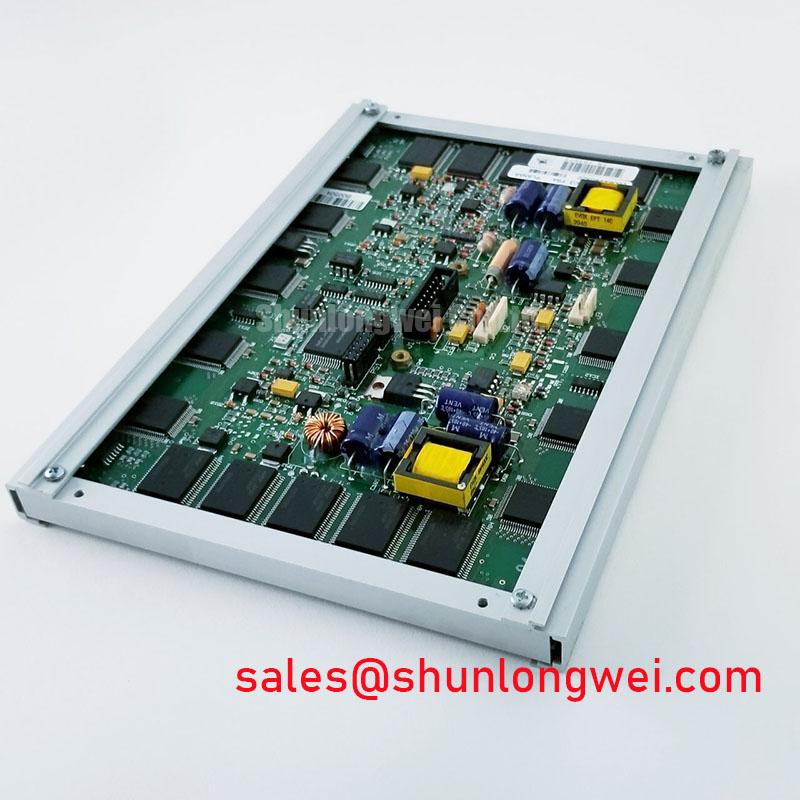
A claimed luminance half-life or MTBF value must be separated from the confirmed identity of this product. The supplied parameter set identifies the EL640-480-AF1 as an industrial LCD/HMI panel in an electroluminescent panel format, but it does not establish MTBF greater than 50,000 hours as an Official Specification. A maintenance engineer should therefore record the actual display symptom, operating temperature, drive condition, and accumulated service history instead of assigning a lifetime value from a general EL technology description.
For a surgical navigation display, ultrasound diagnostic console, CNC operator pendant, or industrial HMI, luminance evaluation begins with a controlled comparison against a known-good image path. Use the same test image, camera position, ambient lighting, and display settings when comparing an installed unit with a replacement. Uneven brightness may originate from the panel, the drive circuit, optical contamination, cable contact, or configuration data. The observation should be recorded before the panel is removed, because changing the harness or mounting pressure can alter the symptom.
Electroluminescent panels require a drive method appropriate to their documented construction. A symmetrical alternating waveform and balanced charge transfer are common design considerations for AC electroluminescent systems because net DC bias can accelerate dielectric stress in some panel architectures. This principle does not authorize a technician to apply a fixed high-voltage waveform to the EL640-480-AF1. Values such as 180 V to 240 V peak, pulse timing, frequency, and resonant recovery behavior must come from the applicable Planar documentation or the equipment’s original driver design.
Charge-recovery circuitry should be evaluated as part of the complete panel drive system. A failed switching device, altered resonant component, damaged insulation path, or incorrect load connection can change the pulse shape seen by the panel. Oscilloscope work on an electroluminescent drive circuit requires probes and isolation methods suitable for the circuit’s actual voltage and switching behavior. The repair record should capture the waveform at the driver output, the panel connector condition, and the behavior under the original equipment’s normal brightness command.
Low-temperature operation also needs a measured approach. Solid-state display technology avoids the liquid freezing mechanism associated with conventional liquid-crystal fluid, but that does not prove that every panel assembly, adhesive, connector, driver, or optical layer has identical performance at −40°C. If a high-precision ultrasound or surgical display is exposed to a cold storage environment, allow the complete assembly to reach a controlled thermal condition before evaluating brightness, uniformity, and connector stability. The applicable environmental rating remains a source-specific requirement.
The same discipline applies to impact claims. A statement such as 100G shock resistance cannot be assigned to this model from the product category alone. Mechanical qualification belongs to a defined test method, mounting condition, pulse profile, and sample configuration. During field service, inspect the bezel, mounting points, connector retention, and cable strain relief after a shock event, then compare image stability while gently checking the harness without flexing the panel glass.
Viewing-angle behavior should be verified with the actual installed orientation. The supplied baseline does not confirm a 179-degree omnidirectional viewing angle. In equipment with a fixed operator position, contrast and grayscale visibility should be checked from the required viewing direction, particularly where a protective window, anti-glare surface, or recessed bezel changes reflections. Optical performance may differ between a bench test and the final enclosure.
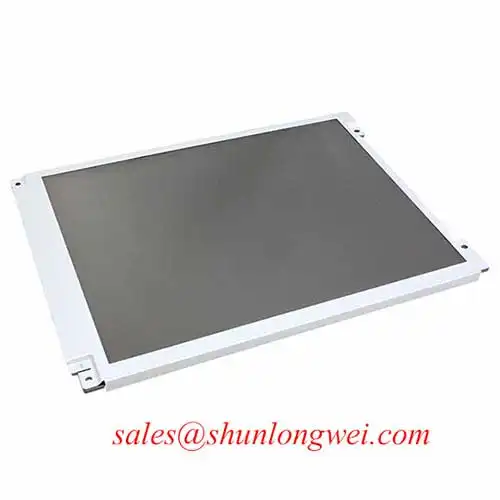
When a same-size or same-resolution replacement is being assessed, the G121SN01 V1 can be reviewed as a separate display option. It should not be treated as an automatic substitute: mounting points, active area, connector orientation, timing, power requirements, and optical stack compatibility must be compared against the original equipment.
Electroluminescent Dielectric Pin-Hole Defect Self-Healing vs. Catastrophic Short-Circuit Screening
Dielectric integrity is assessed through controlled electrical behavior, not by assuming that a visible dark spot has one definitive cause. A local emission defect may be associated with the panel layer, the drive waveform, contamination, connector contact, or mechanical stress. A broader loss of illumination may involve the driver or protection circuit. The practical objective is to distinguish panel-side behavior from drive-side behavior while avoiding additional electrical stress.
Before applying the original drive signal, isolate the panel from the equipment where the service procedure permits it and inspect the connector for contamination, displaced contacts, carbonized areas, or damaged insulation. Use the equipment’s approved diagnostic mode to establish whether the fault follows the panel, the harness, or the driver channel. Do not use an arbitrary high-voltage bench source as a substitute for the documented panel driver.
For AC electroluminescent operation, zero net DC bias is a useful Design Consideration because an unbalanced waveform can place sustained electrical stress across a dielectric layer. The actual waveform must still be checked for amplitude symmetry, switching transition behavior, repetition rate, and load response against the original system specification. A charge-recovery network should be evaluated for component drift and connection errors, since a changed resonant response can create abnormal voltage or current even when the controller command appears normal.
Dielectric pin-hole behavior should not be described as self-healing without a documented qualification source for this exact panel construction. When a small inactive region appears, document its position and dimensions, then check whether it remains stable during a controlled operating period. A growing region, intermittent flash, unusual audible activity, or driver protection response warrants removal from service and inspection of the complete high-voltage path. These observations support a repair decision without converting one symptom into a predetermined failure diagnosis.
Sub-millisecond electro-optical response is another value that requires product-specific evidence. A fast visual response may be important in ultrasound imaging or surgical navigation, but it should be measured with a suitable photodetector and test pattern if timing is critical. The controller’s frame timing, image-processing path, exposure behavior, and camera measurement method can affect the result. The EL640-480-AF1 baseline supplied for this page does not establish a response-time rating.
Temperature screening should focus on repeatability. At a cold condition, compare startup behavior, uniformity, connector stability, and driver protection response with the panel at normal laboratory temperature. Do not infer a complete −40°C qualification from the use of electroluminescent technology alone. If the application involves a medical imaging console, the display assembly must also be assessed within the enclosure, because airflow, window reflections, cable routing, and system warm-up control influence field behavior.
Backlight and dimming terminology must be handled carefully. The supplied baseline does not confirm an LED backlight, a constant-current driver, PWM dimming, a flicker-free operating range, or open-load and short-load protection for this exact model. Designers evaluating a replacement should trace the original brightness command and determine whether it controls an external driver, an internal panel circuit, or a separate system board. A related display solution such as G121X1-L04 may be reviewed as a separate topology reference, but its electrical characteristics should not be transferred to the EL640-480-AF1.
Video compatibility also requires direct verification. The model information supplied here does not confirm LVDS, TTL, JEIDA, VESA, DisplayPort, or another interface. If a system uses a packetized high-speed display path, the DisplayPort High Bit Rate packetized protocol reference can help explain general link behavior, but it is not evidence that this Planar panel contains a DisplayPort receiver. Check connector pin assignment, lane count, pixel format, clocking, power sequencing, and enable signals from the original documentation.
💡 Pro Tip: Keep differential display pairs routed as a controlled, symmetrical group and verify the known-good signal at the panel connector before changing the display driver configuration.
For enclosure integration, the cutout and bezel should support the panel without transferring concentrated force into the active area. Verify the mounting interface, gasket compression, rear clearance, cable bend path, and service access using the actual equipment chassis. A touch layer should not be assumed: the supplied baseline does not confirm resistive or capacitive touch, glove operation, water detection, or controller compatibility. If touch is required on a medical or industrial terminal, test the complete cover lens, touch controller, gloves, moisture condition, and software calibration as one assembly.
Where the equipment operates in a demanding environment, the Industrial Display & HMI Solutions reference can support broader enclosure, wiring, and service planning. It should complement, not replace, the model-specific electrical and mechanical documentation needed to qualify the EL640-480-AF1 in the target system.