Content last revised on September 10, 2026
G101EAN02.4: An Engineer's Perspective on this 10.1" WXGA AHVA Display
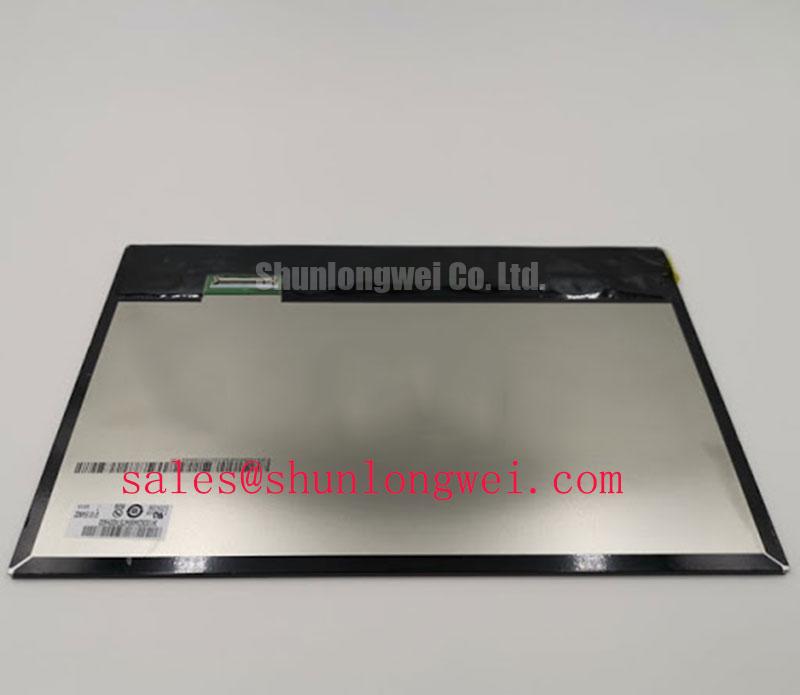
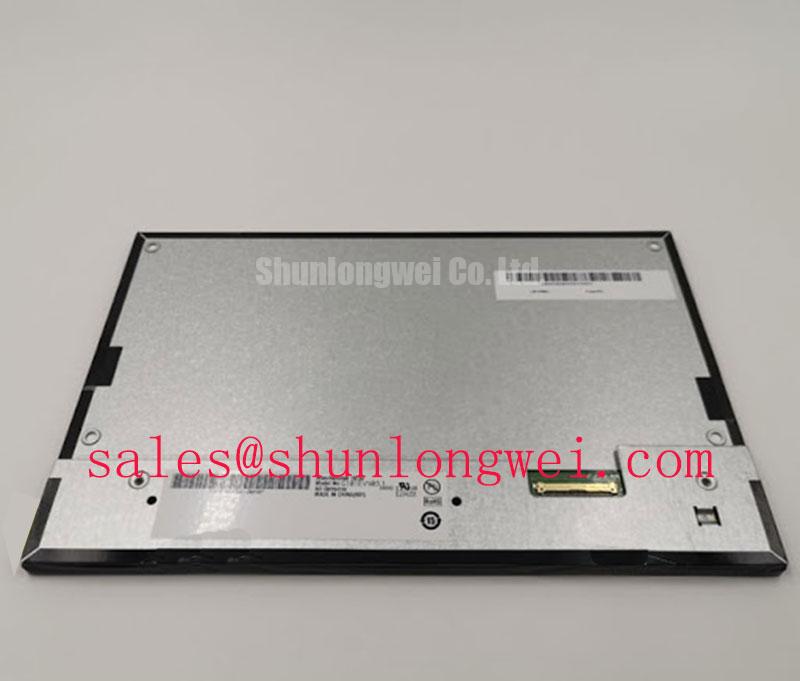
The AUO G101EAN02.4 is a 10.1-inch TFT-LCD module engineered for applications demanding superior visual fidelity and integration flexibility. It features a resolution of 1280x800 (WXGA), a brightness of 400 nits, and utilizes AHVA (Advanced Hyper-Viewing Angle) technology. This combination delivers exceptional off-axis color consistency and high information density. The key benefits include wide, consistent viewing angles for multi-person observation and a standard eDP interface that simplifies system design. This makes the G101EAN02.4 an ideal candidate for upgrading or designing compact human-machine interfaces where data clarity is paramount. For systems prioritizing off-axis readability and color accuracy in a 10.1-inch form factor, the G101EAN02.4's AHVA technology provides a distinct performance advantage over traditional TN panels.
Application Scenarios & Value
Enabling Clarity and Precision in Compact Human-Machine Interfaces
The G101EAN02.4 is engineered to excel in environments where data must be interpreted quickly and accurately from various angles. Its primary value is most evident in the development of modern Human-Machine Interface (HMI) panels for industrial automation and portable medical devices. For instance, on a factory floor, a process control HMI using this display allows multiple operators and supervisors to view critical operational data simultaneously without color shift or loss of detail, thanks to the AHVA technology providing symmetrical viewing angles of 89/89/89/89 degrees. This is a significant advantage over older TN panels, where off-axis viewing can lead to incorrect readings.
In a high-fidelity engineering scenario, consider a portable patient monitoring system. The device needs to be compact yet display complex waveforms and vital signs with high precision. The G101EAN02.4's 1280x800 (WXGA) resolution on a 10.1-inch screen provides a pixel density of 149 PPI, ensuring that detailed graphical user interfaces (GUIs) and fine text are sharp and legible. The 800:1 contrast ratio further enhances readability by ensuring deep blacks and bright whites, which is critical for distinguishing between different data traces. The display's standard eDP (Embedded DisplayPort) interface streamlines connection to a wide range of single-board computers (SBCs), reducing development time and simplifying the overall system architecture. For applications that may require a different interface or feature set within the same form factor, the related G101EVN01.2 offers alternative integration possibilities.
Key Parameter Overview
Decoding the Specs for Enhanced Visual Performance and Reliability
The technical specifications of the G101EAN02.4 are optimized for demanding industrial and professional applications. The combination of resolution, viewing angle technology, and operational robustness defines its suitability for high-performance systems.
| Specification | Value | Engineering Value |
|---|---|---|
| Panel Size | 10.1 inches | Provides a compact footprint suitable for portable instruments and space-constrained control panels. |
| Resolution | 1280(RGB)×800 (WXGA) | Delivers high information density, enabling complex GUIs and sharp rendering of text and graphics. |
| Display Mode | AHVA, Normally Black, Transmissive | Ensures superior color fidelity, wide viewing angles, and a deep black state for high contrast. |
| Brightness | 400 cd/m² (Typ.) | Offers clear visibility in typical indoor industrial and medical environments. |
| Viewing Angle (CR≥10) | 89/89/89/89 (Typ.) | Allows for accurate off-axis viewing with minimal color distortion, critical for collaborative use. |
| Contrast Ratio | 800:1 (Typ.) | Provides excellent differentiation between light and dark content, enhancing image clarity. |
| Signal Interface | eDP (1 Lane), 30 pins | A modern, standard interface that simplifies integration with host systems and reduces cabling complexity. |
| Operating Temperature | -20 ~ 60 °C | Ensures reliable performance across a wide range of industrial operating conditions. |
Technical Deep Dive
A Closer Look at AHVA Technology and Its System-Level Impact
The choice of display technology is a critical decision in system design, directly influencing usability and performance. The G101EAN02.4 utilizes AUO's AHVA (Advanced Hyper-Viewing Angle) technology, which is a type of In-Plane Switching (IPS) panel. Unlike traditional Twisted Nematic (TN) panels where liquid crystals twist perpendicularly to the screen, IPS-type crystals align parallel to the screen's surface. This structural difference is the key to its superior performance.
What is the primary benefit of AHVA technology? Enhanced visual consistency from any viewing position. For an engineer, this translates to greater design freedom. You no longer have to constrain the device's placement or orientation to a narrow "optimal" viewing cone. Imagine a control panel mounted low on a machine; with a TN display, an operator standing above it would see distorted, washed-out colors. With the G101EAN02.4's 89-degree symmetrical viewing angles, the color and contrast remain stable, ensuring data integrity regardless of the operator's position. This is analogous to the difference between an old laptop screen that you have to tilt perfectly and a modern tablet that looks great from any angle. This reliability is essential for applications where misinterpreting a color-coded warning could have operational consequences. Explore more about the fundamentals of display technologies in The Ultimate Guide to TFT-LCD.
Frequently Asked Questions (FAQ)
How does the AHVA technology in the G101EAN02.4 benefit an industrial HMI application compared to a standard TN panel?
AHVA, a type of IPS technology, provides ultra-wide viewing angles (89/89/89/89) with minimal color shift. In an industrial HMI, this means multiple operators can view the screen from different positions without misinterpreting color-coded statuses or data, enhancing both safety and operational efficiency. TN panels suffer from significant color and contrast degradation when viewed off-axis.
What is the significance of the 'Normally Black' display mode?
"Normally Black" means that pixels are black or unlit in their default, non-energized state. This results in deeper black levels and a higher perceived contrast ratio (800:1 for this model), making images appear more vivid. It also means that a dead pixel will appear as a black dot, which is often less distracting than a bright, "stuck-on" pixel in Normally White displays.
Is the G101EAN02.4 suitable for use in bright indoor environments?
Yes, with a typical brightness of 400 cd/m² (nits), this display is well-suited for most indoor industrial, medical, and commercial environments where ambient lighting is controlled. The hard coating on the surface also helps to reduce glare and reflections.
What are the advantages of the eDP (Embedded DisplayPort) interface?
The eDP interface on the G101EAN02.4 offers several advantages for system integration. It uses fewer conductors than the older LVDS standard for the same data rate, which simplifies cable routing and reduces potential EMI (Electromagnetic Interference). It is a direct interface to many modern SoCs and processors, often eliminating the need for an intermediate converter board.
How does the -20 to 60°C operating temperature range impact its potential applications?
This wide operating temperature range ensures the display can function reliably in environments that are not climate-controlled, such as factory floors, unheated warehouses, or in-vehicle systems. This thermal robustness is a key differentiator from consumer-grade displays and is critical for ensuring long-term reliability in industrial equipment. For more on designing for harsh environments, see this guide on Engineering for Harsh Environments.
From an engineering standpoint, the G101EAN02.4 represents a strategic component choice for modern, data-intensive user interfaces. Its core strength lies not in a single specification but in the synergistic combination of high resolution for detail, AHVA technology for viewing freedom, and a standardized eDP interface for simplified integration. These features directly address the practical challenges of creating effective and reliable HMIs, making it a valuable asset for designers aiming to enhance usability and reduce system complexity.