Content last revised on September 10, 2026
Samsung LTM170EI-A01 Technical Analysis and Engineering Overview
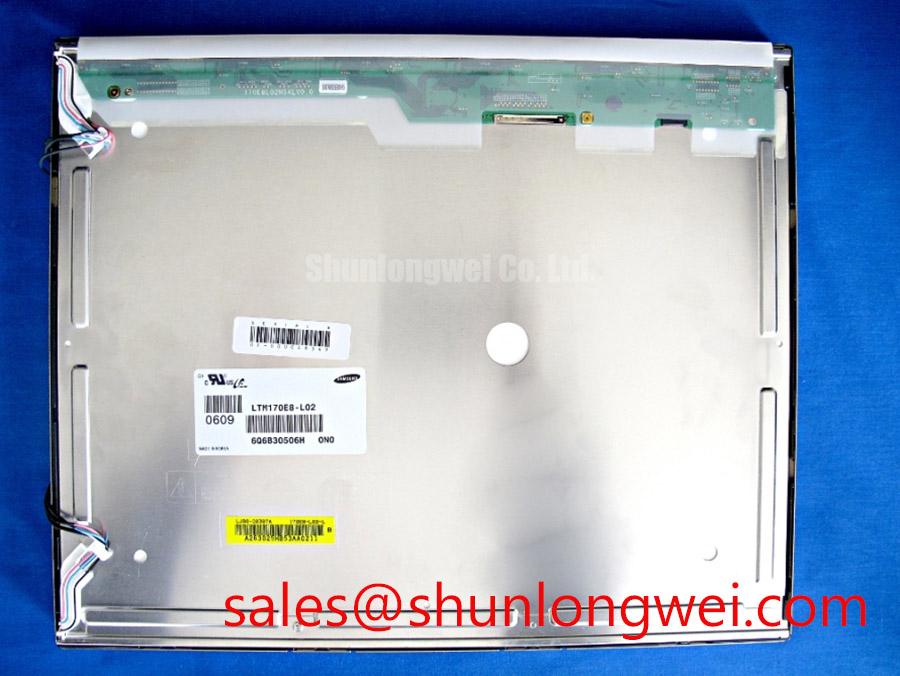
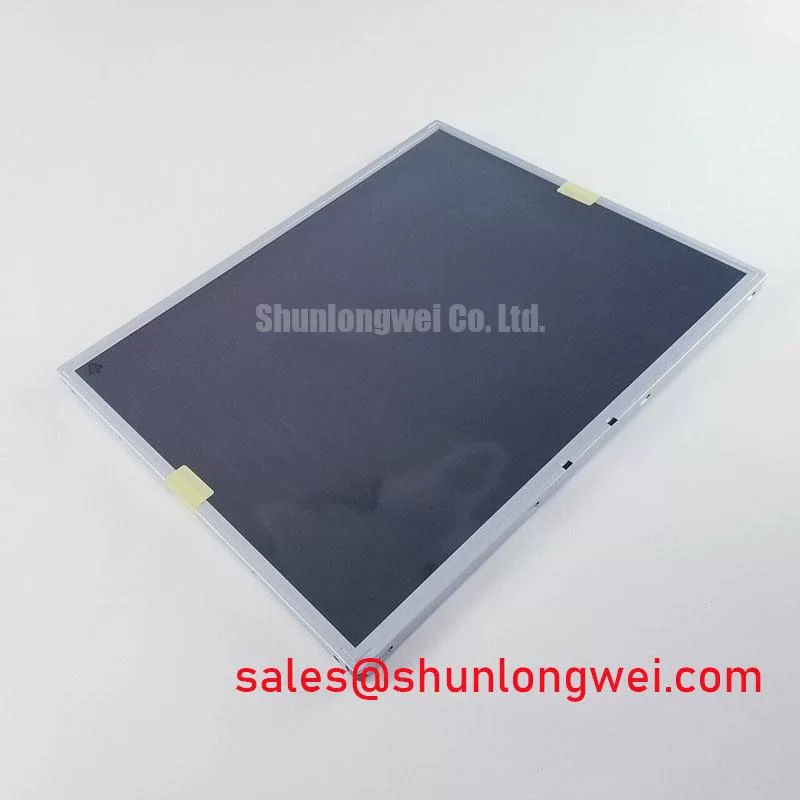
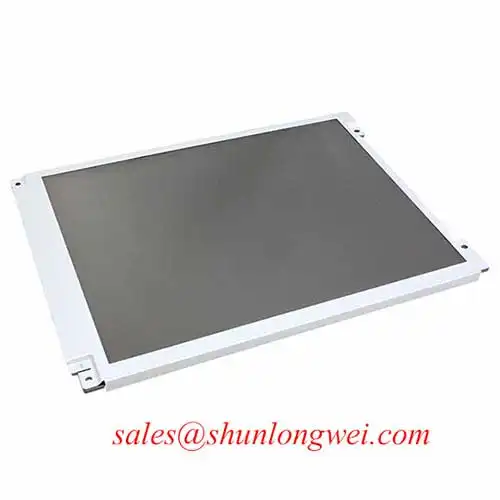
The Samsung LTM170EI-A01 is a high-performance 17.0-inch diagonal a-Si TFT-LCD display module designed for professional industrial and commercial environments. Featuring a native 1280(RGB)×1024 resolution, commonly known as SXGA, this panel utilizes a 5:4 aspect ratio that remains a critical standard in medical imaging, air traffic control, and rack-mounted industrial consoles.
For industrial rackmount consoles requiring a 5:4 SXGA format, this Samsung LTM170EI-A01 provides unmatched legacy compatibility and signal stability.
UVP: Superior Stability and Long-term Consistency for 5:4 Aspect Ratio Legacy Systems.
Top Specs: 1280x1024 Resolution | 300 cd/m² Brightness | LVDS 2-ch 8-bit Interface.
Key Benefits: High pixel density for detailed telemetry; consistent color reproduction across industrial lifecycles.
How does the LTM170EI-A01 ensure signal integrity in high-EMI environments? By utilizing a 2-channel LVDS interface, the module minimizes electromagnetic interference while maintaining high-speed data transmission for flicker-free imaging.
Application Scenarios & Value
Sustaining Efficiency in Precision Industrial Control Interfaces
Engineers often face significant challenges when maintaining legacy industrial systems that rely on 5:4 aspect ratios. Modern widescreen displays often fail to fit mechanical footprints or distort specialized software GUIs. The Samsung LTM170EI-A01 solves this by offering a drop-in 17.0-inch solution that maintains the precise 0.264 x 0.264 mm pixel pitch required for sharp text and detailed schematics.
In a high-fidelity engineering scenario, consider a CNC control station operating in a factory with significant vibration and fluctuating ambient light. The LTM170EI-A01 features a 500:1 contrast ratio and 300 cd/m² luminance, ensuring that critical safety alerts are visible even in bright workshop conditions. The 8ms (Tr+Tf) response time prevents motion blur in real-time waveform monitoring, which is essential for precision machining diagnostics. For newer systems requiring LED backlighting rather than CCFL, the G170ETN02.0 offers a contemporary alternative with similar mechanical dimensions.
Beyond traditional manufacturing, this module is frequently integrated into medical diagnostic equipment and maritime navigation bridges, where the SXGA resolution provides the necessary vertical space for dense data overlays. For systems requiring even higher pixel stability, the M170ETN01.1 may be evaluated for comparative performance benchmarks.
Technical & Design Deep Dive
Engineering Resilience Through LVDS Signal Optimization
The internal architecture of the Samsung LTM170EI-A01 is centered around a robust 30-pin LVDS connector system. This 2-channel 8-bit configuration supports 16.7 million colors, providing the depth needed for nuanced image rendering in quality control applications. To understand the significance of this interface, one can compare the 2-channel LVDS to a dual-lane highway; it allows for high-volume data travel at lower clock speeds, which significantly reduces the thermal footprint and EMI emissions of the display controller circuit.
The backlight system utilizes a 4-piece CCFL (Cold Cathode Fluorescent Lamp) arrangement. While newer LED technologies exist, the CCFL system in the LTM170EI-A01 provides a specific spectral output that many long-term industrial users prefer for its consistent color temperature over years of continuous operation. Engineers should note the 5.0V logic power supply (VCC) requirement, which is standard for most industrial motherboard headers, simplifying the integration of this TFT-LCD into existing chassis. Properly managing the engineering behind industrial displays involves balancing these power requirements with thermal dissipation to prevent mura effects during 24/7 operation.
Key Parameter Overview
Decoding the Specs for Enhanced Industrial Reliability
| Technical Specification | LTM170EI-A01 Values | Engineering Value |
|---|---|---|
| Screen Size | 17.0 inch | Standard rackmount compatibility |
| Resolution | 1280x1024 (SXGA) | High-density 5:4 data visualization |
| Interface Type | LVDS (2 ch, 8-bit) | Low-noise, high-speed data transfer |
| Luminance | 300 cd/m² (Typ.) | Reliable visibility in indoor environments |
| Contrast Ratio | 500:1 (Typ.) | Sharp differentiation of complex data |
| Viewing Angles | 80/80/80/80 (CR≥10) | Uniformity from multiple viewing points |
Download the LTM170EI-A01 datasheet for detailed specifications and performance curves.
FAQ
What is the primary benefit of its CCFL backlight design?
The CCFL backlight in the Samsung LTM170EI-A01 ensures high brightness uniformity across the 17.0-inch panel, which is crucial for medical imaging where inconsistent lighting can lead to misinterpretation of data.
Is the LTM170EI-A01 compatible with standard 30-pin LVDS cables?
Yes, it utilizes a standard 30-pin LVDS interface. However, engineers must verify the pin mapping against the motherboard output to ensure the 5.0V power supply is correctly aligned with the VCC pins.
How does the 80/80/80/80 viewing angle impact HMI design?
This symmetrical viewing angle allows the display to be mounted in either portrait or landscape orientations while maintaining consistent legibility for operators standing at different heights or lateral positions.
Can this module withstand harsh industrial chemicals?
The front surface features an anti-glare coating with a 3H hardness rating. For environments involving chemical exposure, refer to our guide on industrial display maintenance and cleaning.
What are the power requirements for the inverter?
Since this is a CCFL-based module, it requires an external high-voltage inverter to drive the four lamps. Precise voltage and current requirements can be found in the technical reference manual to ensure optimal lamp life.
From an integration standpoint, the Samsung LTM170EI-A01 remains a definitive choice for specialized equipment that cannot transition to wide-screen formats without significant software or mechanical overhaul. Its predictable performance and standardized interface make it a reliable cornerstone for long-term industrial projects.