Content last revised on September 10, 2026
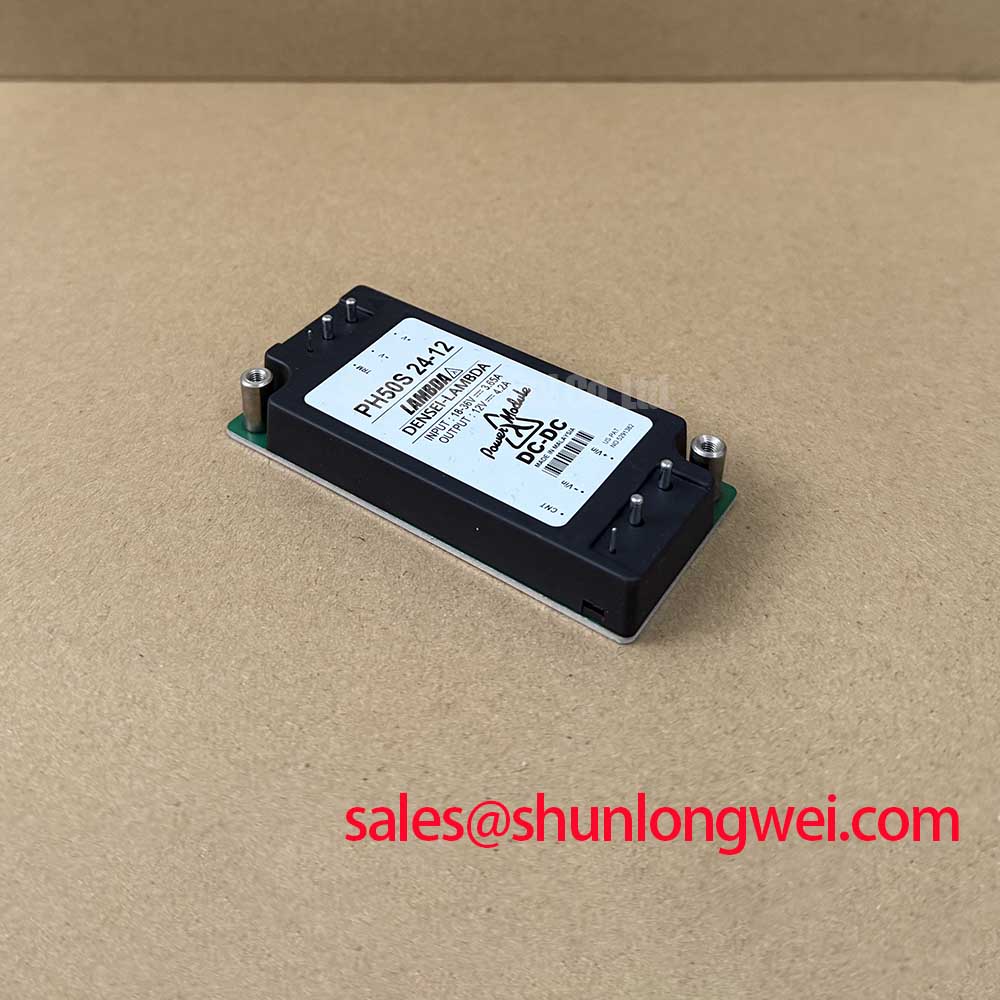
PAH350S24-28 TDK-Lambda 24V Input 28V 350W Half-Brick DC-DC Converter
How do engineers maintain precise 28V bus stability when the primary 24V source fluctuates or faces significant line loss in remote industrial environments? The TDK-Lambda PAH350S24-28, a high-density 350W half-brick power module, is designed specifically to solve this challenge through a robust 18–36V DC wide input range and a precision-regulated 28V DC output. What is the primary benefit of its baseplate-cooled design? It ensures maximum power density in air-flow-constrained enclosures by transferring heat directly to the system chassis. For high-density systems requiring a stable 28V rail from a standard 24V battery or bus, the PAH350S24-28 provides the necessary thermal margin and voltage accuracy. This module excels in eliminating voltage drops in distributed power architectures, ensuring that mission-critical electronics receive consistent power regardless of source variability.
Frequently Asked Questions
Addressing Common Engineering Challenges in Power Conversion
How does the baseplate cooling mechanism of the PAH350S24-28 impact system-level thermal design?
The PAH350S24-28 is designed to operate primarily via conduction cooling through its aluminum baseplate. This allows engineers to achieve a 350W output even in sealed or fanless enclosures by mounting the module directly to a heatsink or the metal chassis. This approach significantly reduces the reliance on high-velocity airflow, which is often a point of failure in dusty or harsh industrial settings. For a deeper understanding of these principles, engineers can refer to our guide on why thermal resistance matters in power system design.
What is the significance of the Remote Sense and Remote On/Off features in this specific module?
The Remote Sense function allows the PAH350S24-28 to compensate for voltage drops across long PCB traces or wiring, ensuring the 28V reaches the load precisely. The Remote On/Off feature facilitates system-level power sequencing, allowing the converter to be toggled by a low-power logic signal. This integration simplifies the design of complex multi-rail systems without requiring high-current mechanical switches.
Can the output voltage be adjusted beyond the nominal 28V?
Yes, the PAH350S24-28 features an output trim function. Typically, the output can be adjusted within a range of 16.8V to 32.2V (approximately 60% to 115% of the nominal 28V) using an external resistor. This flexibility allows the module to be used in specialized battery charging applications or to compensate for unique line requirements in aerospace or defense communications equipment.
Key Parameter Overview
Functional Grouping of Technical Specifications
The following technical data is derived from the official PAH350S series specifications to support procurement and engineering evaluation.
| Category | Parameter | Value / Specification |
|---|---|---|
| Input Specifications | Input Voltage Range | 18–36V DC (Nominal 24V) |
| Input Specifications | Efficiency (Typical) | 88% (at 24V input and full load) |
| Output Specifications | Output Voltage | 28V DC |
| Output Specifications | Maximum Output Current | 12.5A |
| Output Specifications | Maximum Output Power | 350W |
| Output Specifications | Voltage Accuracy | +/- 1% |
| Protection & Control | Over-Voltage Protection | 125% – 145% of nominal |
| Protection & Control | Over-Current Protection | 105% minimum (Constant current) |
| Physical / Environmental | Operating Baseplate Temp | -40°C to +100°C |
| Physical / Environmental | Package Size | Half-Brick (61mm x 12.7mm x 57.9mm) |
Technical & Design Deep Dive
Maximizing Power Density Through Advanced Baseplate Technology
The PAH350S24-28 utilizes a "thermal highway" architecture, where all heat-generating components—including the power MOSFETs and magnetic structures—are thermally coupled to a single aluminum baseplate. Think of the baseplate as a high-speed drain for thermal energy; its efficiency determines whether the module can sustain its 350W rating or requires significant derating. In high-power designs, minimizing the interface resistance between the module and the heatsink is as critical as the electrical layout itself. Engineers must account for the Rth(b-c) (Baseplate-to-Case) values to ensure the internal junction temperatures remain within safe limits, particularly during 100°C peak operation.
Electrically, the PAH350S24-28 employs a high-frequency switching topology that balances efficiency with electromagnetic compatibility (EMC). While many discrete solutions struggle with parasitic inductance in 24V systems, this integrated module is optimized for the low-voltage, high-current stresses typical of 12.5A outputs. For designers moving from discrete components to integrated power, our analysis of IPM vs. discrete power design offers valuable parallels in reliability and space-saving strategies. Furthermore, the PAH350S24-28 includes an isolation voltage of 1500V AC between input and baseplate, providing a necessary safety barrier for industrial control systems.
Application Scenarios & Value
Ensuring Reliability in High-Fidelity Power Environments
In distributed power architectures (DPA), the PAH350S24-28 serves as a critical regulation stage. For instance, in telecom base stations, the primary 24V battery backup often sags during heavy load or discharge cycles. The PAH350S24-28 maintains a rock-solid 28V supply to power amplifiers, even as the input dips to 18V. This prevents signal degradation and system resets, which are unacceptable in infrastructure applications. While this module is optimized for 24V systems, for higher voltage requirements like 400V industrial buses, the related PM150CVA120-2 offers a vastly different power profile for 1200V applications.
In the industrial automation sector, this converter is frequently used to drive high-precision servo drives or sensitive measurement equipment that requires a voltage slightly higher than the 24V floor. The 28V output is often ideal for compensating for long cable runs in large-scale machinery, where a standard 24V supply would arrive at the actuator as 22V or less. For systems requiring advanced motor control switching, integrating this DC-DC converter with high-performance modules like the SKM300GA123D can enhance the overall efficiency of the power stage. By leveraging the PAH350S24-28, designers can consolidate multiple low-power converters into a single, highly reliable 350W source, significantly improving the system's Mean Time Between Failures (MTBF).
For strategic insights into how these power components fit into the evolving landscape of industrial efficiency, explore our 2025-2026 global power electronics outlook. The transition toward higher power density and robust thermal management remains the defining trend for next-generation industrial power supplies.
Our engineering team provides comprehensive technical support for the integration of the PAH350S24-28 into your specific power architecture. By focusing on data-driven specifications and thermal realities, we enable procurement and design teams to build more resilient systems. Request a detailed technical consultation to optimize your 28V power rail strategy today.