
Content last revised on September 21, 2026
Preventing Spurious Faults: DC-Link Capacitance Bank Layout and Low-ES Guidelines for PM30CMA060
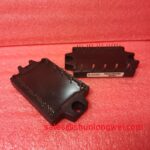
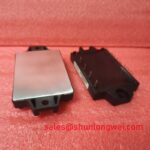
Before applying control power, verify the nameplate boundary of PM30CMA060 against the drive documentation and inspect its Mitsubishi IPM module housing, terminals, and mounting face for handling damage, contamination, or uneven thermal compound residue. This Mitsubishi Electric intelligent power module is officially rated at 600.0 V and 30.0 A. Those are Official Datasheet Specifications and should be treated as device identity data, not as complete system operating limits. The host inverter design, gate-drive interface, protection circuitry, cooling arrangement, and DC-link conditions still determine whether a replacement can be commissioned safely.
For a high-dynamics multi-axis CNC or robotics servo drive, PM30CMA060 should be evaluated as part of the original power-stage assembly. Confirm the terminal arrangement, control interface, isolation arrangement, mechanical mounting pattern, and the surrounding protection network from the equipment documentation before installation. Mitsubishi Electric provides its power semiconductor portfolio context through its Power Semiconductors & High-Power Modules resources; the original drive documentation remains the controlling reference for equipment-specific integration.
| Parameter | Value | Classification |
|---|---|---|
| Product model | PM30CMA060 | Official product identification |
| Manufacturer | Mitsubishi Electric | Official product identification |
| Voltage rating | 600.0 V | Official Datasheet Specification |
| Current rating | 30.0 A | Official Datasheet Specification |
| Package category | Mitsubishi IPM Module | Official package classification |
Start intermittent-trip investigation at the DC-link physical path rather than assuming that the IPM is the source of the event. With the drive isolated, inspect the capacitor bank connections, busbar surfaces, terminal hardware, and the distance between the DC-link capacitors and the PM30CMA060 power terminals. Loose hardware, oxidized interfaces, extended connection paths, or a capacitor bank that has been relocated during a previous repair can increase the commutation loop impedance. The result can be switching overshoot, ringing, nuisance protection activity, or stress that appears only during acceleration and deceleration transitions.
Design Consideration: during a fast current transition, peak voltage is influenced by the DC-link voltage plus the voltage developed across stray inductance as current changes. This is commonly expressed in engineering analysis as Vpeak being the DC-link voltage plus stray inductance multiplied by the current-change rate. The important maintenance implication is practical: reducing loop area helps suppress inductive overshoot. A compact, symmetrical connection between the capacitor bank and inverter power terminals normally gives a more controlled result than separated wiring paths with unequal lengths. The required layout geometry, clearance, and final switching margin must be verified by the system engineer on the actual DC-link voltage and measured switching waveforms.
A snubber network should not be selected by copying a value from an unrelated inverter. Its capacitance, resistance, voltage capability, pulse duty, and placement are system-determined. When reviewing an existing circuit, compare the installed network with the original equipment schematic, then use properly rated differential probing to observe the relevant terminal waveform under controlled conditions. Repeated ringing after an otherwise correct replacement can indicate a layout, capacitor, connection, or measurement issue rather than an inherent fault in PM30CMA060.
For equipment repair, inspect the DC-link capacitor terminals for heat discoloration and check whether each parallel capacitor connection has an equivalent low-impedance path. An asymmetric bus arrangement can distribute transient current unevenly. Keep high-current commutation paths physically distinct from low-level control wiring where the cabinet architecture permits, and preserve original separation practices around high-voltage terminals. Creepage and clearance distances are system-level insulation requirements governed by the equipment design and applicable installation environment; they should not be altered casually during retrofit work.
If a repair review identifies another power-device reference such as CM300DXDX1-24A, it should be treated as a separate component for neutral comparison rather than an automatic substitute. Voltage class, current class, topology, package geometry, terminal locations, driver compatibility, and protection behavior all require confirmation against the original assembly.
Field Diagnostics & Commissioning: Overvoltage Trip Prevention via Fast-Switching in PM30CMA060 Topologies
Commissioning should begin with the machine load disconnected or controlled according to the equipment safety procedure, followed by verification of the DC-link charging path, protection status, and phase-to-phase wiring. In servo systems, a rapid deceleration can return mechanical energy from the motor to the DC link. If the drive uses a braking chopper and ballast resistor, their condition matters as much as the inverter stage. A failed braking resistor connection, an open thermal protection path, a damaged chopper circuit, or a control signal that does not command energy dissipation can allow the DC-link voltage to rise and trigger protection.
Engineering Recommendation: calculate braking capability from the actual reflected inertia, speed profile, deceleration demand, duty cycle, DC-link operating range, and resistor pulse-energy capability. The braking IGBT or integrated braking function, where present in the original topology, must also be assessed against the original design documentation. PM30CMA060 is specified as a Mitsubishi IPM module rated at 600.0 V and 30.0 A, but these ratings do not establish the specifications of external braking components or define a permissible regenerative-energy profile.
When a drive trips during speed reversal, capture the sequence rather than replacing parts on symptom alone. Review the DC-link waveform, brake-command timing, actual motor motion profile, and controller fault record together. A voltage rise that occurs only at deceleration may be associated with energy return, while a sharp localized transient near switching edges may point toward commutation layout or output-cable behavior. These observations can overlap, so waveform evidence is more useful than a single-cause diagnosis.
Fuse coordination also deserves a documentation-based review. A high-speed semiconductor fuse can be used in some inverter architectures to limit fault energy, but its clearing behavior, pre-arcing characteristics, and I²t coordination must be checked against the complete protection scheme. It is not appropriate to infer device surge capability from the 600.0 V and 30.0 A nameplate ratings alone. Verify the installed fuse part number, holder condition, conductor torque, and upstream protective-device coordination against the machine schematic before energizing a repaired unit.
Isolation quality between the controller and power stage can affect commissioning results. Optical isolators or digital isolators in the industrial drive board require correct supply sequencing, return-path control, and immunity appropriate to the measured common-mode switching environment. Design Consideration: route control returns deliberately and keep noisy power-node coupling away from sensitive feedback and enable circuits. Where a gate-control or protection issue is suspected, compare control signals with a known-good signal path using measurement practices suitable for high-voltage inverter work.
⚠️ Maintenance Note: Regularly monitor terminal contact temperature rise and confirm that the cooling airflow path remains clear before returning a repaired servo drive to production.
PM30CMA060 Thermal-Electrical Optimization: Suppression of 2x V_DC Voltage Doubling at Practical Tuning
Long motor leads can change the behavior observed at the motor terminals and the inverter output. A fast switching edge travelling along a cable can be reflected when the cable impedance and motor-end impedance are mismatched. Under particular cable, load, and switching conditions, reflected-wave behavior can produce terminal excursions approaching twice the DC-link voltage. This is a Design Consideration for the complete motor-drive interconnect, not an Official Datasheet Specification of PM30CMA060 and not a guaranteed outcome in every installation.
When unexplained motor insulation alarms, output overvoltage alarms, or repeated inverter protection events follow a cable replacement or machine relocation, inspect cable type, shielding termination, phase routing, connector condition, and motor-end accessories. Confirm the cable length and approved cable construction against the servo-drive documentation. An oscilloscope measurement using appropriate high-voltage probing at both the inverter output and motor terminals can distinguish a local switching transient from a reflected-wave condition. Measurement grounding and probe placement need particular care because an unsuitable probing arrangement can introduce misleading ringing.
Output reactors and dv/dt filters are common system-level tools considered when cable-related voltage transitions must be managed. Their required electrical rating, impedance characteristics, insulation capability, and location depend on the motor cable, switching behavior, motor insulation system, control requirements, and drive manufacturer guidance. Designers should verify filter selection through measured motor-terminal voltage and current behavior rather than treating any generic filter as universally suitable for the PM30CMA060 topology.
Thermal symptoms can accompany electrical stress. A restricted cabinet air path or hardened interface material increases junction-to-ambient burden indirectly by reducing the heatsink’s ability to remove heat. That higher thermal burden can change switching behavior and protection margin under load. During preventive maintenance, clean heatsink fins and fan guards, examine fan operation under normal cabinet conditions, and inspect for moisture or condensation paths near power terminals and control connectors. Avoid directing conductive debris or compressed-air contamination toward exposed circuitry.
For broader context on heat-flow architecture and cooling approaches, consult The Advanced Thermal Management Revolution. That resource supports thermal-system discussion, while installation decisions for PM30CMA060 should remain tied to the original inverter assembly, heatsink condition, and validated operating measurements.
PM30CMA060 Operational Boundaries: Evaluating Baseplate Convexity Compensation and Screw Limits
Before mounting PM30CMA060, clean the heatsink contact area using an approved non-residue process and inspect it under angled light. Look for burrs, embedded debris, corrosion, scratches, uneven residue, and signs that the previous module was clamped against an irregular surface. These conditions can create localized contact loss. A visual inspection should also check whether the heatsink has distortion around threaded holes or whether previous overtightening has pulled material upward around the fastening points.
Design Consideration: thermal interface material is applied as a controlled thin layer to fill microscopic surface irregularities, not as a thick thermal spacer. In practical power-module work, a thin, continuous layer in the general range of 50–100 μm is commonly evaluated, subject to the thermal-material supplier instructions and the actual flatness of the mating surfaces. The required thickness is system-determined. Excess compound can raise interface resistance, while insufficient coverage can leave voids. Do not infer a specific Mitsubishi factory-applied material or thickness from the PM30CMA060 package classification alone.
Baseplate curvature compensation should be approached as a mechanical-contact problem. Place the module on the cleaned heatsink without compound first, where the service procedure permits, and observe whether the mounting face rocks or whether one fastening area appears to pull down before the others. A sequential tightening pattern that progresses evenly across the mounting locations helps establish uniform contact. The correct screw size, torque, washer arrangement, and tightening order must come from the original equipment service documentation or the applicable Mitsubishi mounting guidance. General industry torque figures should not be presented as official PM30CMA060 requirements without that source.
After installation, inspect power-terminal hardware and control connectors before closing the enclosure. Confirm that busbars are not applying side force to terminals, that cable lugs sit flat, and that wiring does not obstruct the airflow route. In humid or high-low temperature industrial environments, assess enclosure sealing, cabinet heater operation where fitted, and evidence of condensation. Moisture-related residue, loose terminal hardware, and aged thermal compound can each contribute to unstable service behavior, so preventive inspection should address all three rather than relying on a single corrective action.
The final energization check should compare phase current balance, DC-link behavior, cooling response, and fault history against the known operating characteristics of the machine. PM30CMA060 remains defined here by its official 600.0 V, 30.0 A, Mitsubishi IPM module identification; the actual operational boundary is established only after the complete drive assembly has passed its documented commissioning and protection checks.