



Content last revised on April 25, 2026
SanRex SCE55AA160: 1600V 55A Thyristor/Diode Phase Leg Module
Introduction & Core Highlights
A High-Surge Phase Leg Solution for Motor Control
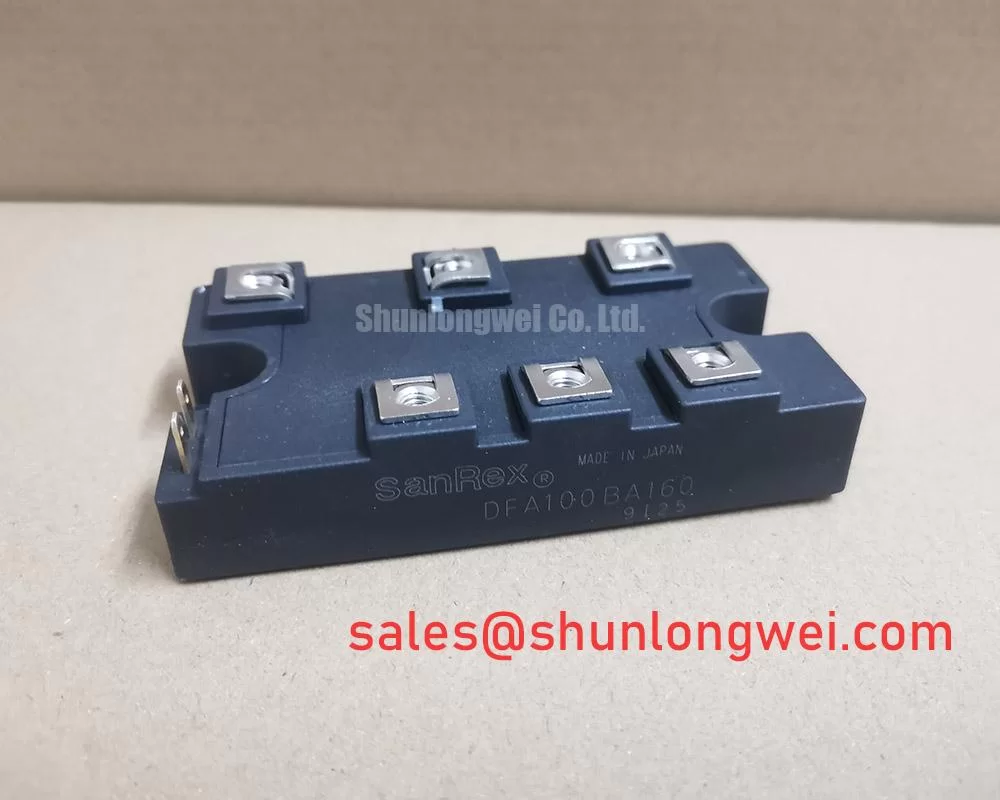
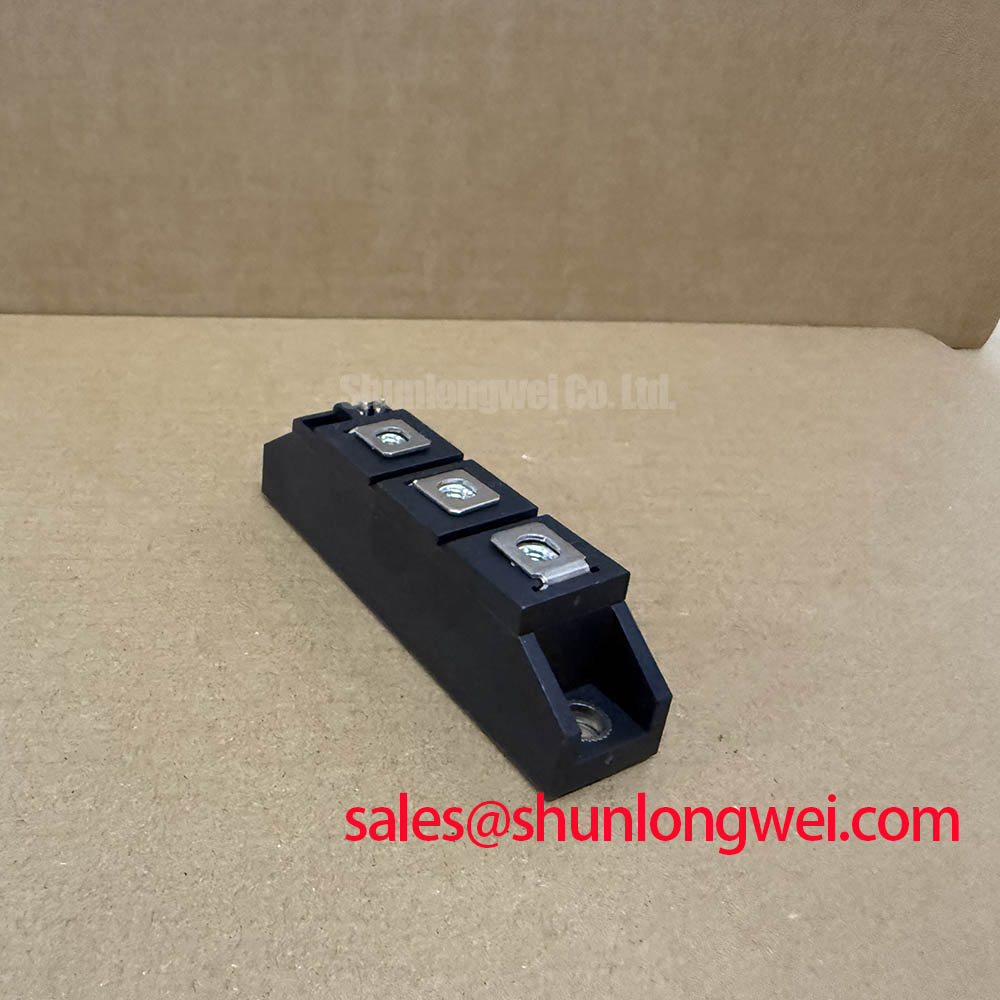
The SanRex SCE55AA160, part of their Thyristor/Diode Module family, operates as a highly reliable phase leg configuration. Balancing a robust 1600V / 55A continuous rating with an exceptional 1500A surge tolerance, it stands as an optimal solution for transient-heavy industrial motor control. Core specs include 1600V VDRM/VRRM, 55A IT(AV) at a 95°C case temperature, and a thermal resistance of 0.4 °C/W. These metrics translate to two clear benefits: minimized heatsink volume and elevated immunity against grid-level voltage spikes. Why choose a thyristor/diode phase leg for 400V industrial drives? It significantly reduces component count and simplifies the rectification stage design compared to discrete setups. What is the primary benefit of the SCE55AA160 phase leg module? It provides robust 1500A surge tolerance, ensuring exceptional reliability in industrial soft starters.
Application Scenarios & Value
Mitigating Inrush Currents in Heavy-Duty Environments
For industrial soft starters requiring high transient resilience, this 1600V thyristor/diode module is the optimal choice. Engineers often face massive inrush currents when activating high-inertia induction motors. In a typical motor drive or soft starter implementation, initial startup loads can easily exceed five to seven times the nominal operational current. The SCE55AA160 absorbs these violent fluctuations through its robust 1500A non-repetitive surge rating (ITSM). This capability ensures the silicon substrate remains intact even during aggressive mechanical jamming or unpredictable grid transients.
Furthermore, its integration supports compliance with strict IEC 61800-3 emission standards by minimizing parasitic inductance across the AC-to-DC conversion stage. By unifying a thyristor and a diode within a single chassis-mount package, design teams effectively consolidate their layout, lowering the risk of thermal mismatches common in multi-discrete assemblies. While the SCE55AA160 is ideal for 55A continuous loads, for systems demanding massive current capacity, the related SCE200AA160 provides a 200A rating to support higher-tier industrial applications.
Technical Deep Dive
Decoding Surge Tolerance and Thermal Highways
The operational longevity of the SCE55AA160 relies heavily on two structural advantages: surge resilience and junction-to-case Thermal Resistance. The 1500A ITSM rating functions much like industrial shock absorbers on a heavy transport vehicle. When a sudden transient overvoltage or severe inrush current hits the system, these "electrical shock absorbers" dissipate the extreme energy pulse across a highly optimized die area, preventing localized melting or catastrophic short circuits.
Simultaneously, managing the continuous heat generation of a 55A load requires an unhindered dissipation path. The module achieves an Rth(j-c) of 0.4 °C/W. You can visualize this thermal coefficient as a multi-lane highway for heat; it rapidly and continuously moves thermal energy away from the silicon junction to the baseplate. This efficiency lowers the steady-state operating temperature, allowing engineers to specify smaller, more cost-effective heatsink assemblies without compromising the 95°C case temperature margin required for full-load operation. Proper thermal management practices further amplify these structural benefits.
Key Parameter Overview
Specifications and Their Direct Engineering Impact
| Specification | Value | Engineering Impact |
|---|---|---|
| Repetitive Peak Reverse Voltage (VRRM) | 1600V | Provides ample derating margin for 400V and 690V AC industrial supply lines. |
| Average On-State Current (IT(AV)) | 55A (@ Tc=95°C) | Ensures stable continuous power delivery without premature thermal degradation. |
| Non-Repetitive Surge Current (ITSM) | 1500A (50/60Hz) | Safeguards the semiconductor structure during intense motor start-ups or grid faults. |
| Thermal Resistance (Rth j-c) | 0.4 °C/W | Enables higher power density by relaxing the cooling infrastructure requirements. |
| Gate Trigger Current (IGT) | 100 mA | Ensures decisive state transitions even under high electrical noise conditions. |
Download the SCE55AA160 datasheet for detailed specifications and performance curves.
Frequently Asked Questions
Addressing Field Deployment Queries
- How does the 1500A ITSM rating influence fuse selection? It dictates the required I²t rating (9380 A²s) for protective semiconductor fuses, ensuring they clear faults well before the module sustains internal damage.
- Can the SCE55AA160 operate reliably in 690V AC line networks? Yes, its 1600V repetitive peak reverse voltage provides sufficient overhead and derating margin for 690V industrial grids, protecting against standard AC transients.
- What is the practical benefit of the 0.4 °C/W thermal resistance in UPS designs? It allows for a more compact cooling infrastructure, directly reducing the spatial footprint of the UPS rectifier stage while maintaining junction temperatures within safe limits.
- Why utilize a combined thyristor/diode phase leg instead of two discrete thyristors? This specific topology simplifies gate drive circuitry for half-controlled bridge rectifiers, reducing bill-of-materials (BOM) costs and minimizing potential points of failure.
- What gate trigger current (IGT) is required to guarantee reliable turn-on? A minimum trigger current of 100 mA is specified, ensuring sharp and decisive activation, which is critical for avoiding localized heating during the switching phase.
Field evaluations consistently demonstrate that specifying a phase leg module with generous surge margins drastically reduces unplanned maintenance. By anchoring your rectification stage with the SCE55AA160, you ensure the power hardware easily outlasts the mechanical lifecycles of the driven heavy-duty motors.