



Content last revised on September 10, 2026
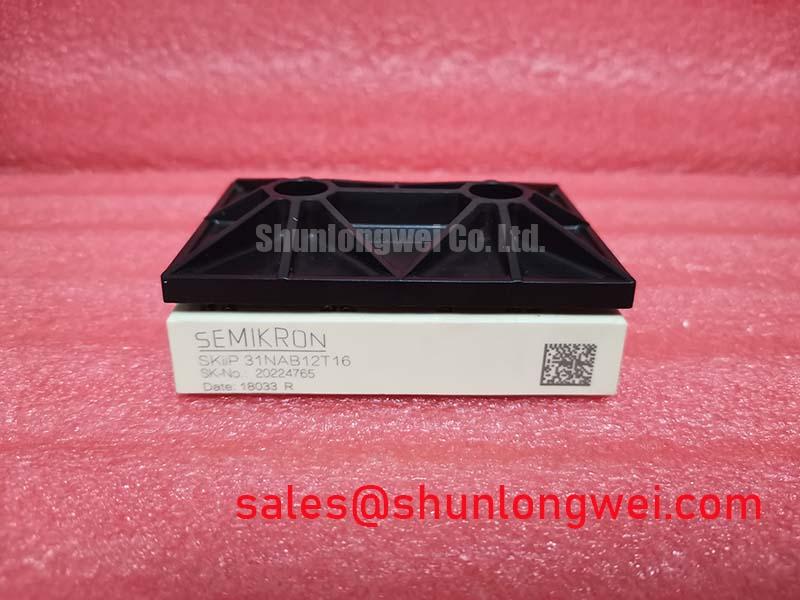
SKIIP31NAB12T16 | 1200V 50A IPM | Engineering Analysis for High-Reliability Drives
Introduction to a High-Reliability Power Core
Driving Longevity and Thermal Stability in Demanding Power Conversion Systems
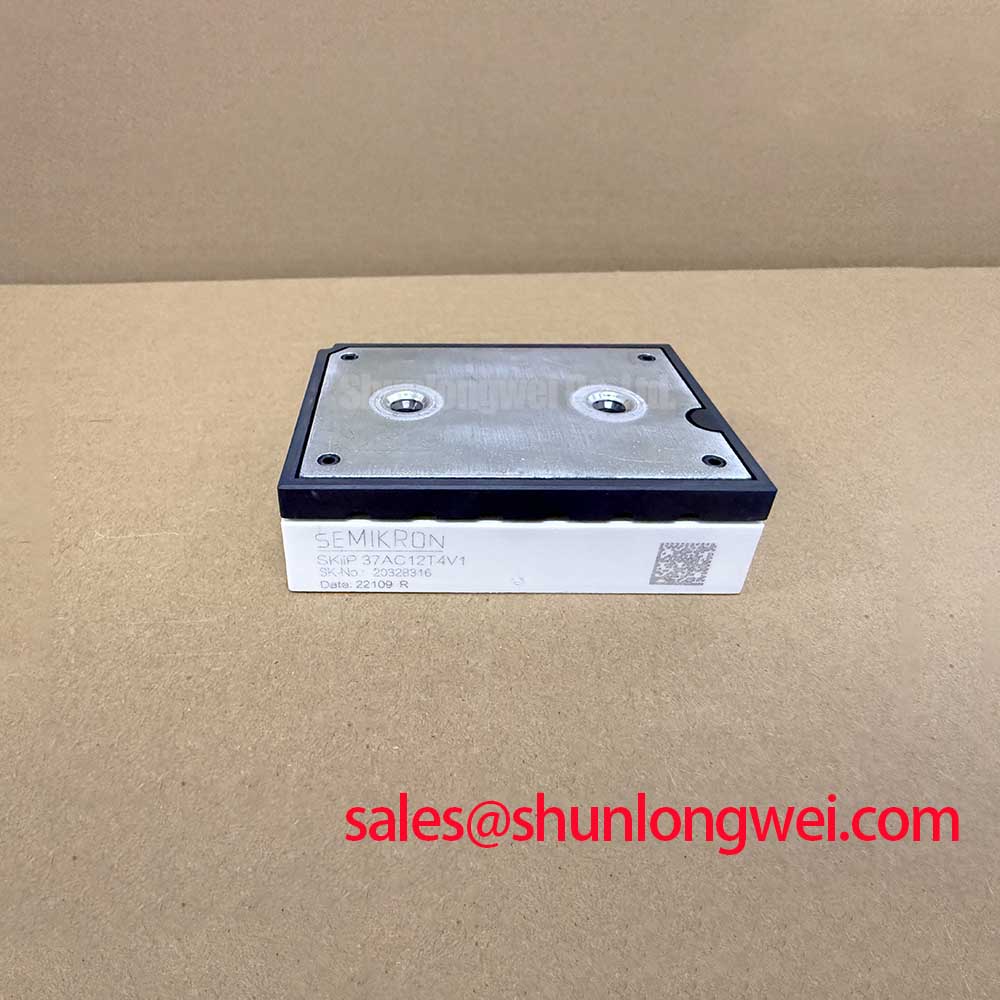
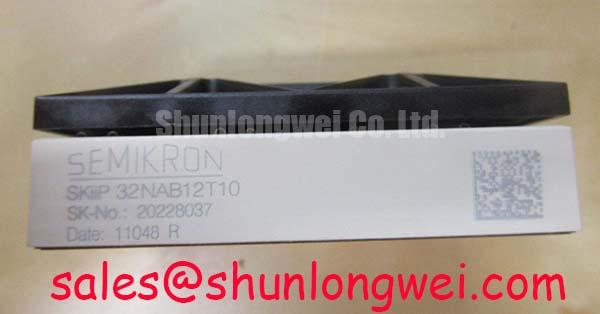
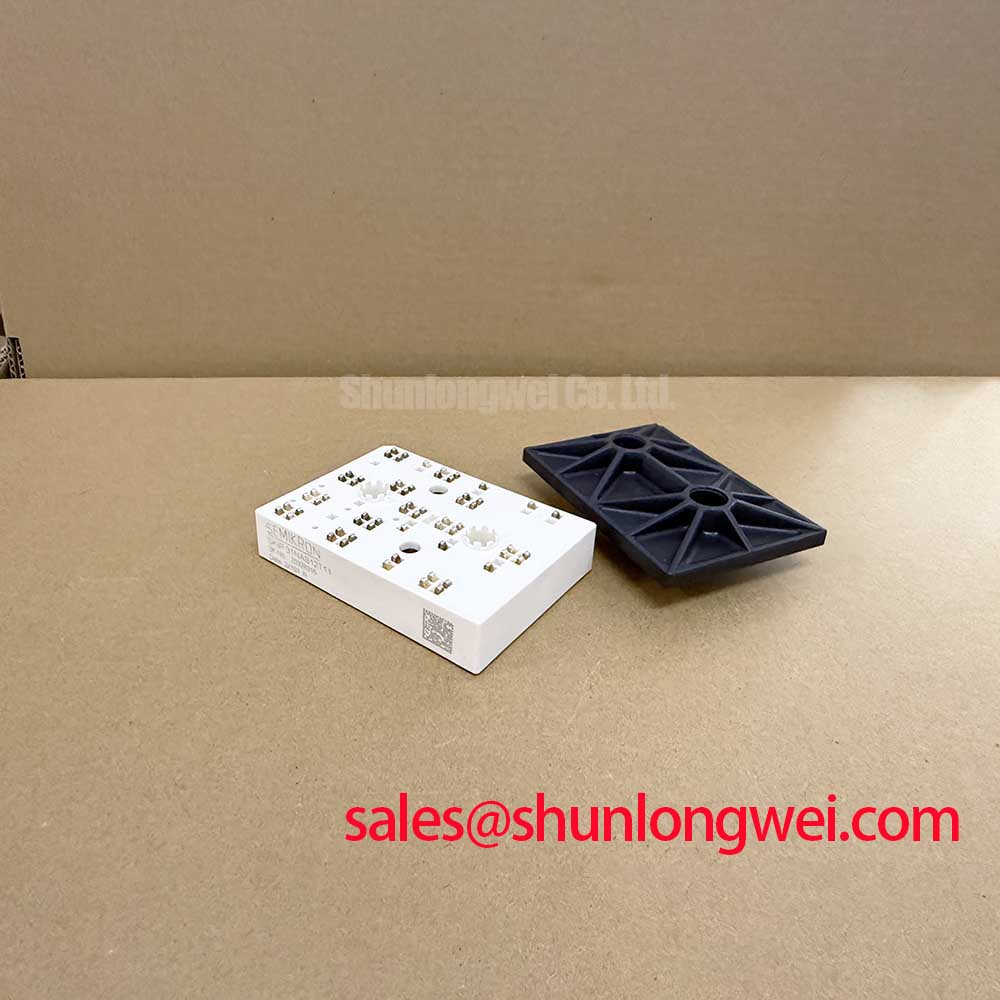
The SKIIP31NAB12T16 is an advanced SKiiP 3 Intelligent Power Module (IPM) engineered to deliver exceptional long-term reliability and thermal efficiency for demanding industrial drives through its solder-free pressure contact technology. This integrated solution provides a robust power stage rated for 1200V and 50A (nominal), incorporating a three-phase inverter, braking chopper, and input rectifier. Key benefits include superior power cycling capability and simplified thermal management, directly addressing the common failure points of conventional soldered modules. For industrial servo drives and motion control systems demanding maximum operational lifetime under severe thermal cycling, the SKIIP31NAB12T16's pressure contact design is the definitive choice.
Key Parameter Overview
Decoding the Specs for Enhanced Thermal Reliability
The electrical and thermal characteristics of the SKIIP31NAB12T16 are tailored for high-performance inverter applications. The specifications below highlight the key metrics that enable its robust and efficient operation. Special attention should be paid to the low saturation voltage and thermal resistance, which are critical for minimizing losses and managing heat dissipation effectively.
| Parameter | Symbol | Conditions | Value |
|---|---|---|---|
| Collector-Emitter Voltage | VCES | Tj = 25 °C | 1200 V |
| Nominal Collector Current | IC,nom | Tcase = 25 °C | 50 A |
| Collector-Emitter Saturation Voltage | VCE(sat) | IC = 50 A, Tj = 125 °C | 2.1 V (Typ.) |
| Thermal Resistance, Junction-to-Case | Rth(j-c) | per IGBT | 0.36 K/W |
| Short Circuit Withstand Time | tpsc | VCC = 800 V, VGE ≤ 15 V, Tj = 125 °C | 10 µs |
| Diode Forward Voltage | VF | IF = 50 A, Tj = 125 °C | 1.9 V (Typ.) |
Application Scenarios & Value
System-Level Benefits in High-Reliability Industrial Motion Control
The SKIIP31NAB12T16 is optimally designed for power conversion systems where operational uptime and service life are critical. Its primary value is realized in applications characterized by frequent and intense thermal cycling.
Consider a high-precision CNC machine's Servo Drive. These systems execute rapid start, stop, and acceleration commands, causing significant temperature swings within the power module. In conventional soldered modules, the mismatched thermal expansion coefficients between the silicon chip and the copper baseplate lead to solder layer fatigue, a primary cause of module failure. The SKIIP31NAB12T16's solder-free pressure contact design directly mitigates this failure mode, ensuring a consistently reliable electrical and thermal connection. This translates to extended machine life, reduced maintenance downtime, and greater positional accuracy over the long term. This robust thermal management is crucial for maintaining performance in demanding industrial environments. For applications requiring higher current output within a similar package, the SKiiP35NAB12T4V1 offers an increased current rating.
Technical Deep Dive
Inside the Solder-Free Design: A Closer Look at Pressure Contact Technology
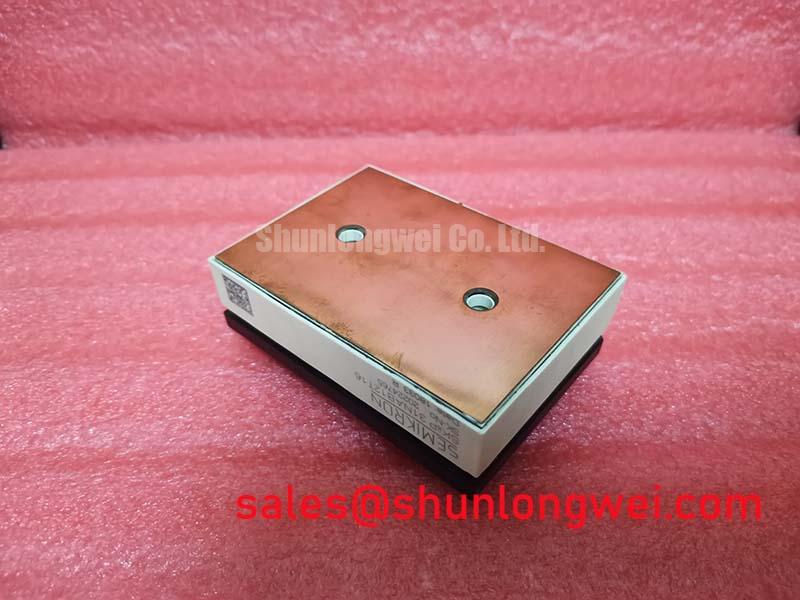
The defining feature of the SKiiP family, including the SKIIP31NAB12T16, is the use of Semikron SKiiP® Technology, which relies on pressure contacts instead of solder joints for the main electrical and thermal paths. This technology creates a direct, high-force connection between the DBC (Direct Bonded Copper) substrate and the heatsink. This design philosophy yields profound reliability benefits.
Think of a soldered connection like a rigid glue joint that can crack under the repeated stress of expansion and contraction. In contrast, the pressure contact system acts more like a high-tension spring assembly, maintaining a consistent, reliable connection even as materials expand and contract with temperature changes. By eliminating entire layers of thermal resistance and fatigue-prone solder, this design not only boosts the module's power cycling capability by orders of magnitude but also provides a more efficient and direct path for waste heat to escape the semiconductor junction. This results in lower operating temperatures and a significantly extended operational lifetime.
Frequently Asked Questions
Engineering Questions on Implementation and Reliability
How does the SKIIP31NAB12T16's pressure contact design directly improve the lifetime of a variable frequency drive (VFD)?
The pressure contact system eliminates solder fatigue, which is a common failure mechanism in VFDs that experience frequent start/stop cycles or fluctuating loads. By maintaining a reliable connection under thermal stress, it dramatically increases the module's power cycling capability, leading to a longer, more predictable service life for the entire drive.
What is the role of the integrated NTC thermistor, and how should it be used in a protective circuit?
The integrated NTC thermistor provides real-time temperature feedback from the module's baseplate. This data is critical for implementing over-temperature protection in the drive's control logic. It allows the system to reduce output current or shut down safely before the IGBTs reach a critical temperature, preventing catastrophic failure and enabling condition-based monitoring.
The datasheet specifies CAL diodes. What is the engineering benefit of this technology over standard freewheeling diodes?
CAL (Controlled Axial Lifetime) diodes are engineered for soft and fast recovery characteristics. This "soft" recovery reduces voltage overshoots and oscillations during turn-off, which significantly lowers electromagnetic interference (EMI). For the design engineer, this can lead to smaller and less expensive snubber circuits and EMI filters, saving board space and system cost.
With a nominal current of 50A, what are the primary considerations for heatsink selection to leverage the module's low thermal resistance?
To take full advantage of the module's excellent thermal interface, the heatsink should have a very flat and smooth mounting surface. It is crucial to use a recommended thermal interface material (TIM) and apply the correct mounting pressure as specified in the datasheet. This ensures a minimal Rth(c-h) (case-to-heatsink resistance), allowing the system to either operate at a lower junction temperature for higher reliability or to be designed for greater power density.
Strategic Advantage in System Design
Integrating a power solution like the SKIIP31NAB12T16 signifies a strategic shift from component-level specifications to system-level lifetime value. The adoption of its pressure contact technology is a design choice that prioritizes long-term operational reliability and reduces the total cost of ownership, particularly in applications where maintenance is difficult or downtime is exceptionally costly. As industrial automation and renewable energy systems demand ever-higher standards of durability, technologies that eliminate known failure mechanisms become a key competitive advantage. For more information on selecting the right power module, see our guide on the core principles of IGBT module selection.