Content last revised on October 16, 2026
Optimizing Power Conversion with the SKM75GB123D IGBT Module
An Engineering Review of a Versatile Power Component
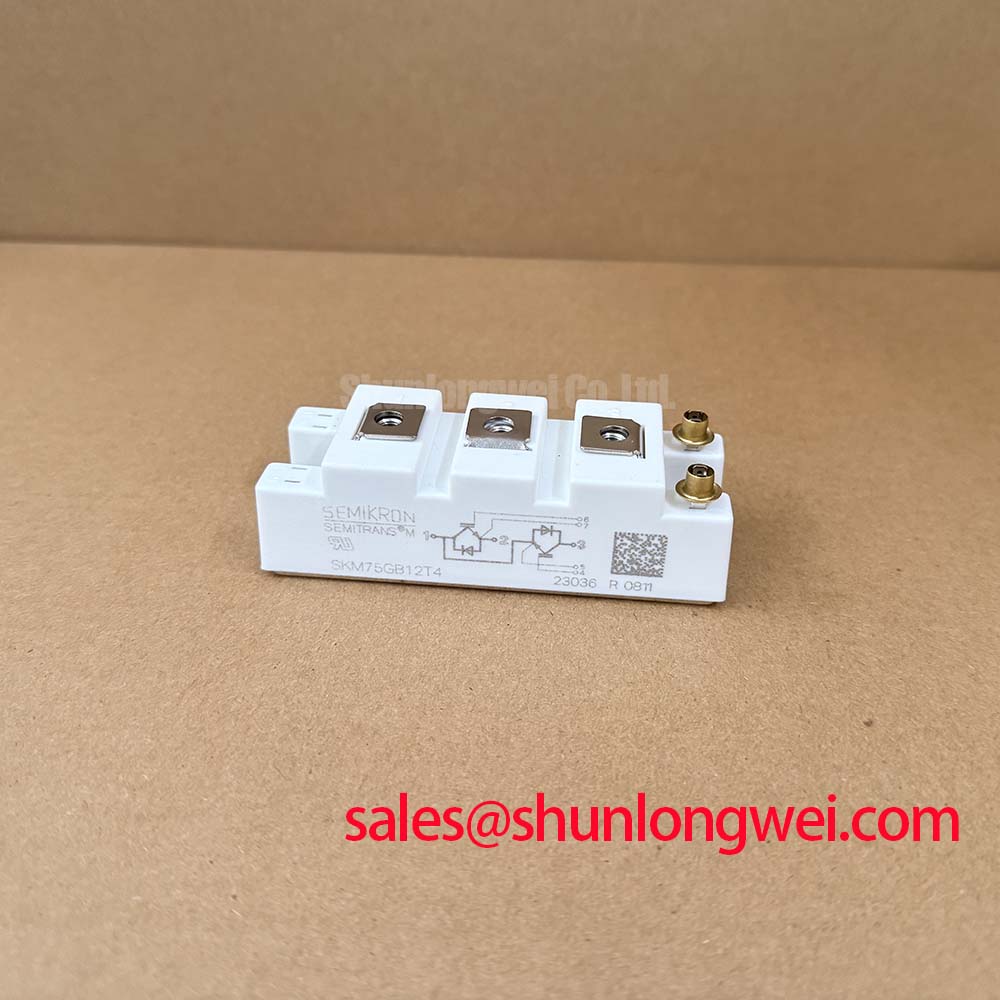
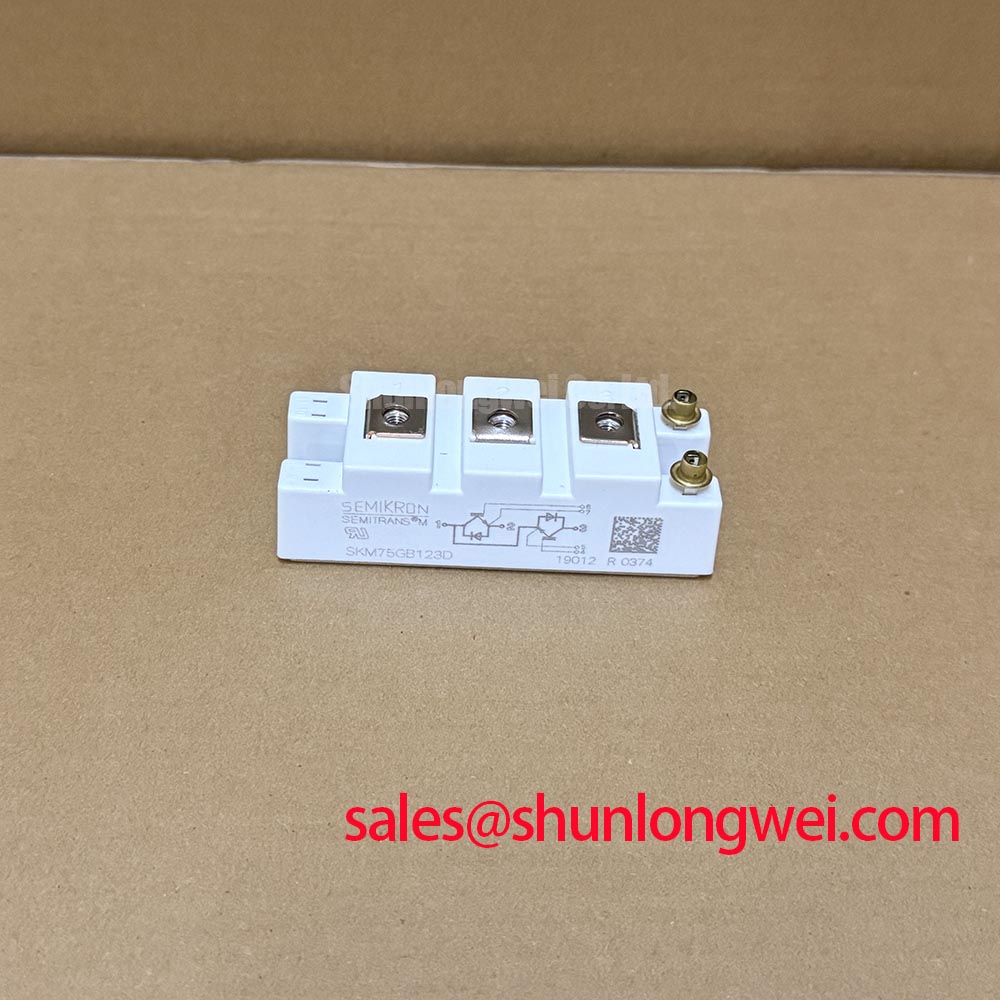
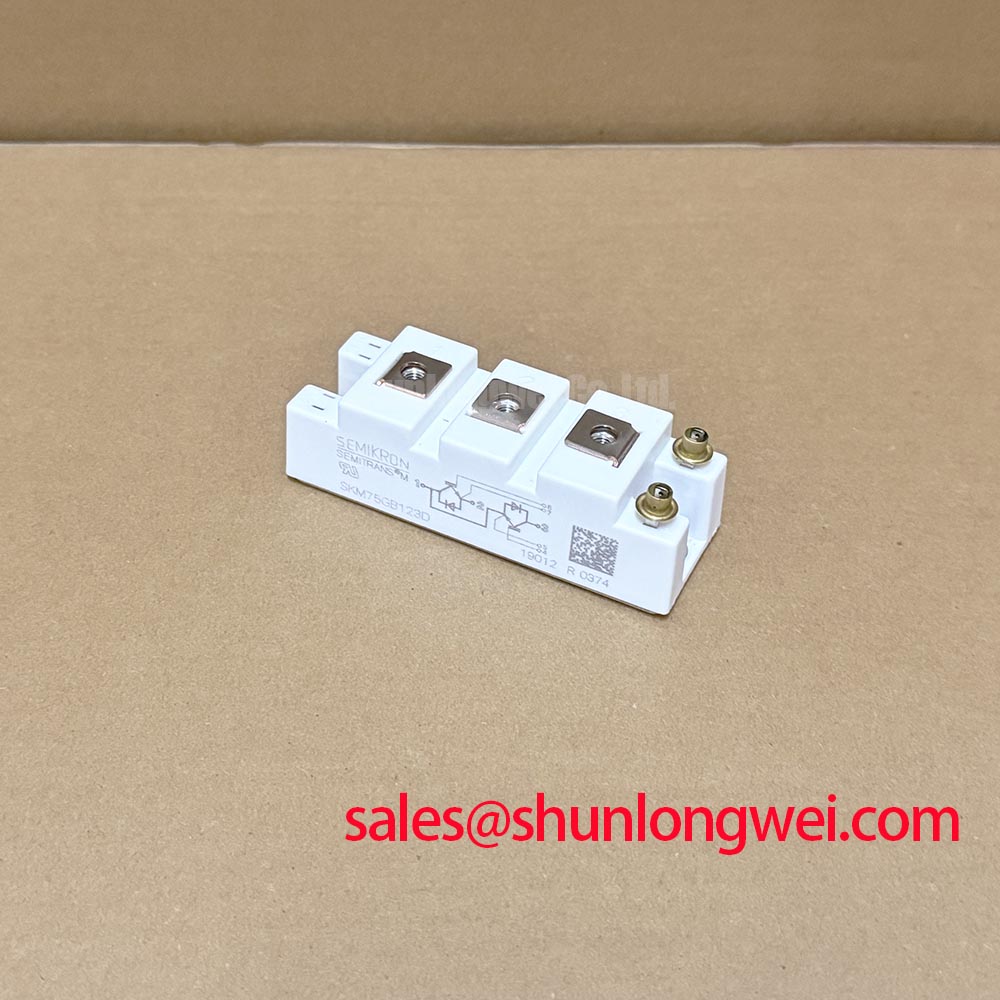
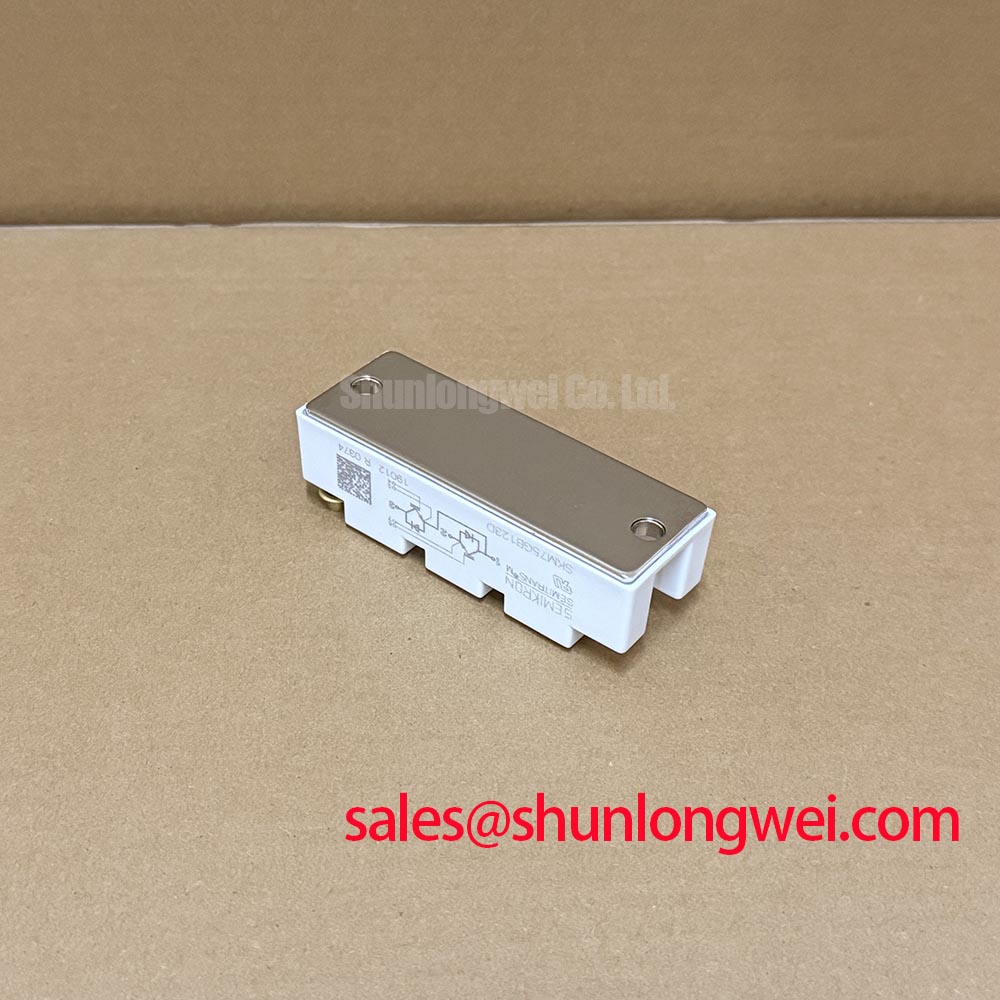
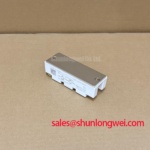
The SKM75GB123D is a 1200V | 75A | SEMITRANS 2 dual IGBT module from Semikron, engineered to provide a robust and efficient solution for power switching applications. It integrates a half-bridge configuration into a single, industry-proven package, delivering key benefits such as simplified inverter leg design and enhanced system reliability. By incorporating advanced diode technology, this module directly addresses the engineering challenge of managing switching transients in high-frequency designs. For systems demanding robust performance in standard industrial inverter and UPS applications, the SKM75GB123D provides a thermally efficient and electrically stable building block.
Application Scenarios & Value
Achieving System-Level Benefits in Motor Drives and UPS
For design engineers developing Variable Frequency Drives (VFDs) or three-phase AC motor control systems, the SKM75GB123D serves as a foundational component for an inverter leg. Its dual-IGBT, half-bridge topology streamlines the design process by replacing two discrete components with a single, thermally matched module. This integration not only reduces assembly complexity and saves valuable PCB space but also simplifies the gate drive layout. The module's robust SEMITRANS 2 package ensures reliable mounting and heat dissipation, which is critical for maintaining performance in demanding industrial environments.
A key engineering challenge in power conversion is mitigating voltage overshoots and electromagnetic interference (EMI) generated during switching events. The SKM75GB123D integrates fast and soft inverse CAL (Controlled Axial Lifetime) diodes specifically to address this. This feature provides a smoother recovery characteristic compared to standard diodes, effectively damping voltage spikes and reducing high-frequency noise. The result is improved system reliability, less stress on the IGBTs, and a reduced need for complex external snubber circuits or EMI filtering, ultimately helping systems meet stringent EMC standards. For applications requiring higher current handling within a similar voltage class, the related SKM150GB12V offers a 150A capability.
Key Parameter Overview
Decoding the Specs for Efficient and Reliable Power Design
The technical specifications of the SKM75GB123D are foundational to its performance in power systems. Each parameter offers insight into the module's capabilities and limitations, guiding thermal and electrical design decisions. A comprehensive understanding of these values is essential for optimizing system efficiency and ensuring long-term reliability.
| Parameter | Value | Engineering Value Interpretation |
|---|---|---|
| Collector-Emitter Voltage (Vces) | 1200V | Provides a sufficient voltage margin for operation on 400V and 575V AC lines, ensuring reliability against voltage transients common in industrial grids. |
| Continuous Collector Current (Ic) at Tc=80°C | 50A | Defines the module's capacity for sustained current under realistic operating temperatures, directly influencing the output power capability of an inverter. |
| Collector-Emitter Saturation Voltage (Vce(sat)) at Ic=75A | 3.2V | Directly impacts conduction losses. This value is a crucial input for thermal management calculations and heatsink selection. Think of Vce(sat) as the 'friction' the current experiences; a lower value means less energy is wasted as heat. |
| Total Power Dissipation (Ptot) at Tc=25°C | 400W | Represents the maximum amount of heat the module can dissipate, underscoring the importance of an effective thermal interface to the heatsink. |
| Maximum Junction Temperature (Tjmax) | 150°C | Sets the upper thermal operating limit. Designing to stay well below this temperature is key to extending the module's operational lifespan. |
| Package | SEMITRANS 2 | An industry-standard package known for its robustness, low internal inductance, and reliable screw-terminal connections, facilitating secure mechanical and electrical integration. |
Download the SKM75GB123D datasheet for detailed specifications and performance curves.
Technical Deep Dive
A Closer Look at CAL Diode and SEMITRANS Package Technology
The engineering value of the SKM75GB123D extends beyond its primary ratings, with its internal technology offering distinct system-level advantages. The integration of CAL (Controlled Axial Lifetime) diodes is a significant feature. Unlike standard freewheeling diodes that can exhibit abrupt "snappy" turn-off behavior, CAL diodes are engineered for soft recovery. This is critical for reducing diode-induced turn-on losses in the IGBT and minimizing voltage overshoot. To use an analogy, a standard diode turning off is like slamming a valve shut in a high-pressure pipe, causing a 'water hammer' effect (a voltage spike). A soft-recovery CAL diode is like closing that valve smoothly, preventing the damaging pressure spike and reducing the associated noise (EMI). This inherent softness simplifies the designer's task of EMI management and enhances overall system ruggedness.
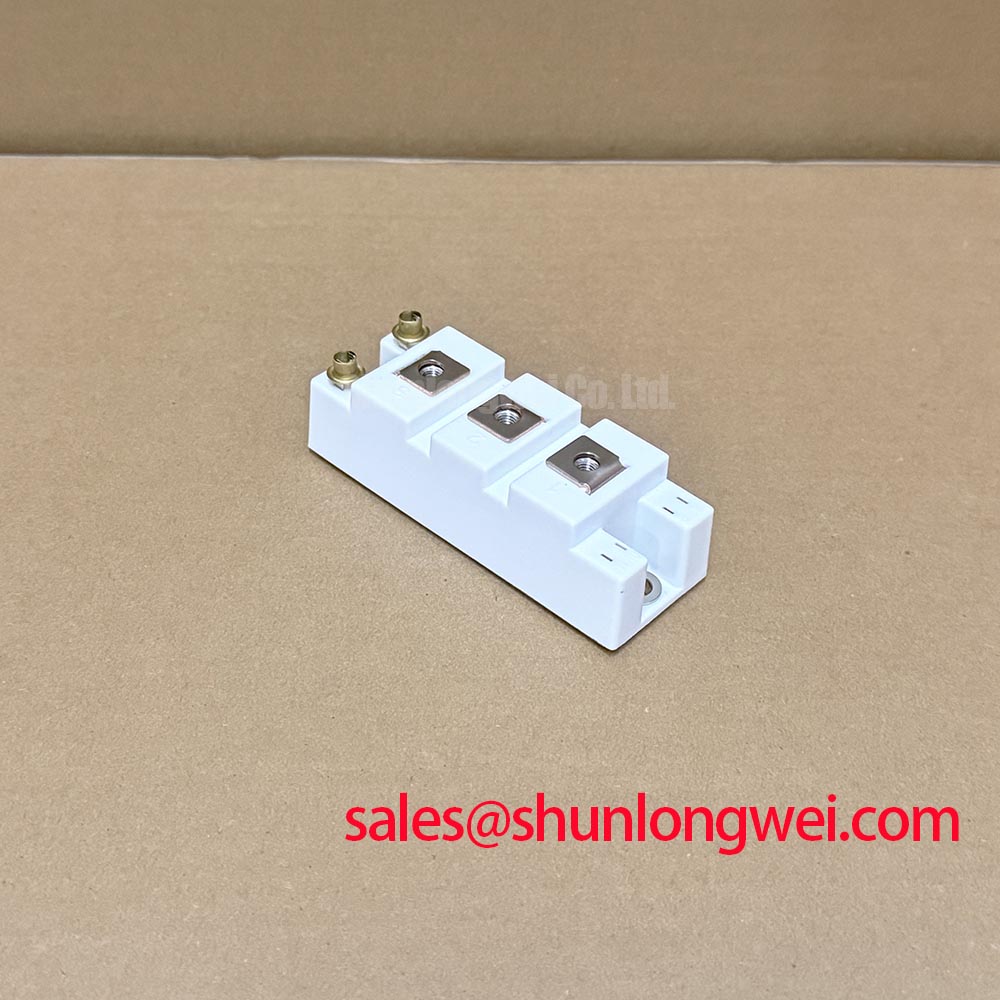
Furthermore, the module is housed in the SEMITRANS 2 package. This platform is built with an isolated copper baseplate using Direct Copper Bonding (DCB) technology, which provides excellent thermal conductivity and high electrical isolation. The screw-type terminals ensure a secure, low-resistance connection capable of handling high currents without significant voltage drop or heat generation at the contact point. This robust mechanical and thermal design is a cornerstone of the module's suitability for harsh industrial applications where reliability and longevity are non-negotiable.
Frequently Asked Questions (FAQ)
What is the primary benefit of the dual-IGBT configuration in the SKM75GB123D?
The dual, or half-bridge, configuration integrates a complete inverter leg into one module. This simplifies the power stage layout, reduces component count, minimizes stray inductance between switches, and ensures the two IGBTs are thermally matched, leading to more balanced performance.
How do the integrated CAL diodes in the SKM75GB123D benefit my design?
The CAL freewheeling diodes feature a "soft" recovery characteristic. This significantly reduces voltage overshoots during switching, lowers electromagnetic interference (EMI), and minimizes stress on the IGBTs. The result is higher system reliability and potentially simpler, lower-cost filtering circuits.
What does a Vce(sat) of 3.2V mean for my application?
The Collector-Emitter Saturation Voltage (VCE(sat)) is the on-state voltage drop across the IGBT. A value of 3.2V at the nominal current is a key parameter for calculating conduction losses (Power Loss = Vce(sat) * Ic). This data is critical for accurate thermal design and selecting an appropriate heatsink to keep the junction temperature within safe limits.
Is the SKM75GB123D suitable for high-frequency switching applications?
This module is designed for applications like motor drives and UPS, which typically operate in the range of a few kHz up to 20 kHz. While its Trench IGBT technology offers a good balance, its switching characteristics (turn-on/turn-off times) should be carefully evaluated against the specific frequency and load conditions of your design to manage switching losses effectively.
What are the advantages of the SEMITRANS 2 package?
The SEMITRANS 2 package offers excellent electrical isolation, a robust mechanical structure with a copper baseplate for efficient heat transfer, and secure screw-on terminals for power connections. This industry-standard housing is designed for reliability in industrial environments, simplifying both mechanical mounting and electrical layout.
An Engineer's Perspective on Application
From a design engineer's standpoint, the SKM75GB123D is a practical workhorse. It may not feature the absolute lowest Vce(sat) on the market, but its value lies in its balanced design and integrated reliability features. The combination of a proven package, a simple half-bridge configuration, and the inclusion of soft-recovery CAL diodes makes it a low-risk, dependable choice for mainstream industrial power conversion. It allows engineering teams to focus on system-level innovation rather than wrestling with fundamental component-level issues like EMI and transient voltage suppression, making it an efficient choice for projects with tight development schedules. For a deeper dive into IGBT selection, explore our guide on voltage, current, and thermal management.