

Content last revised on September 10, 2026
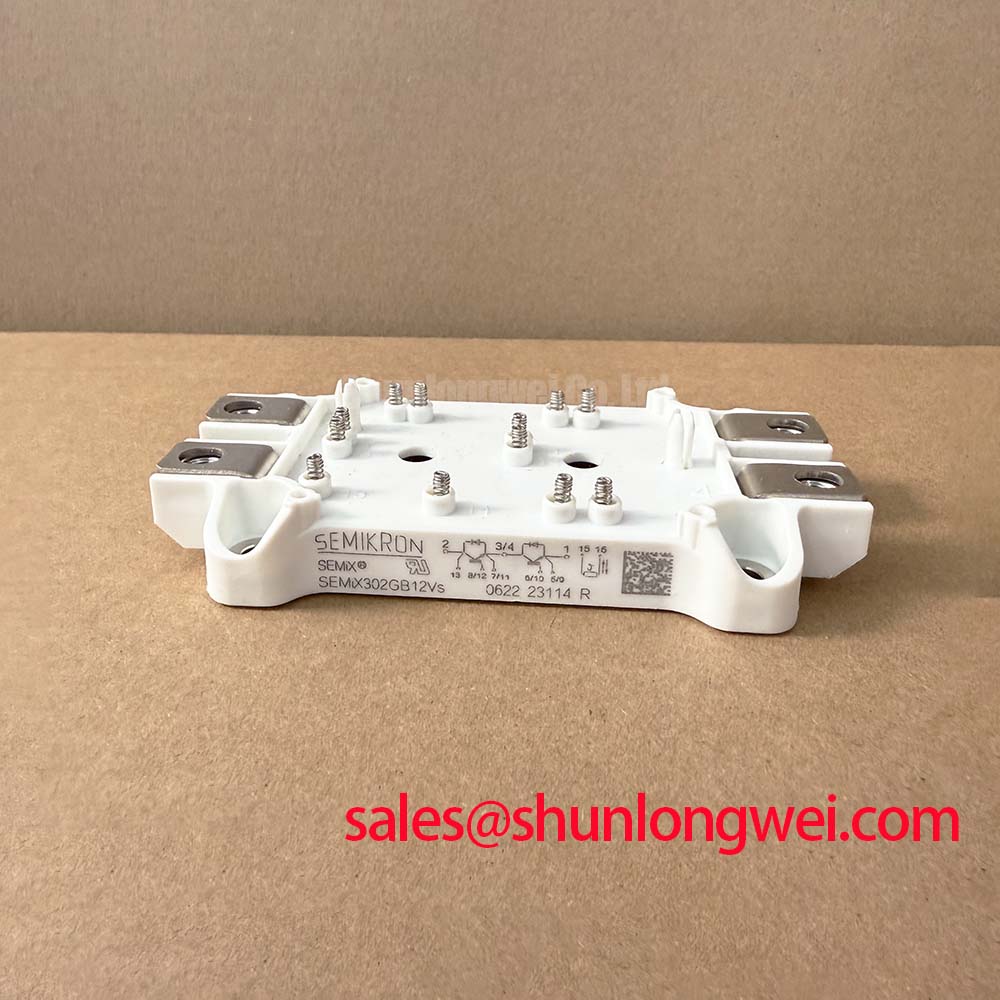
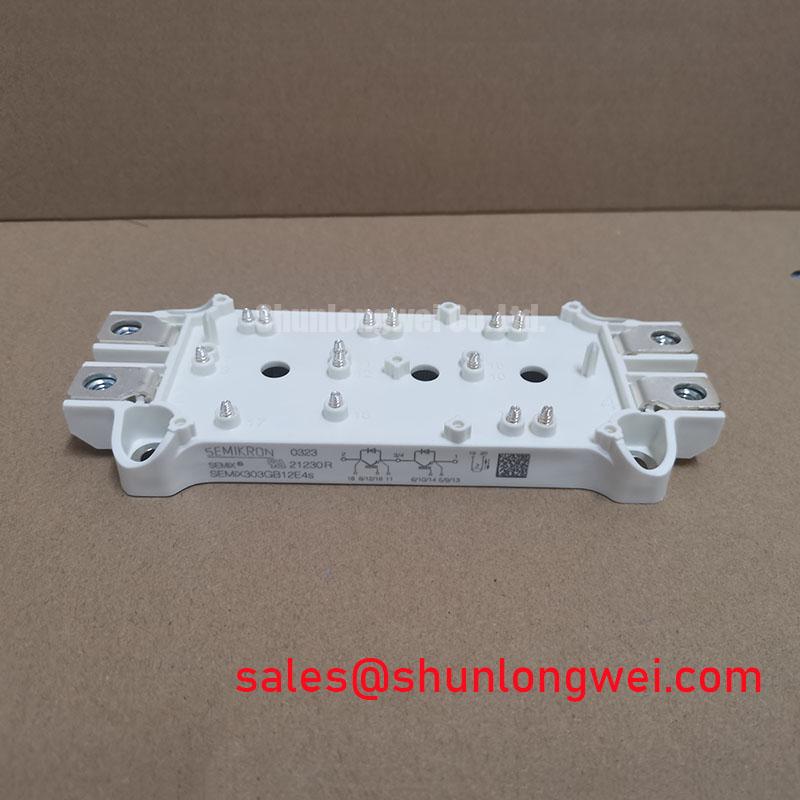
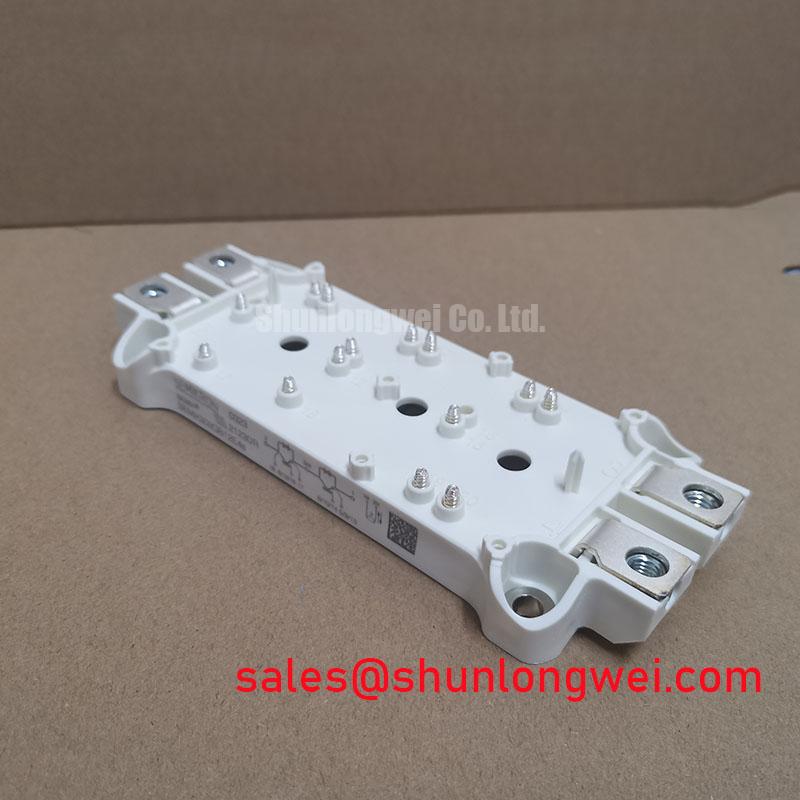
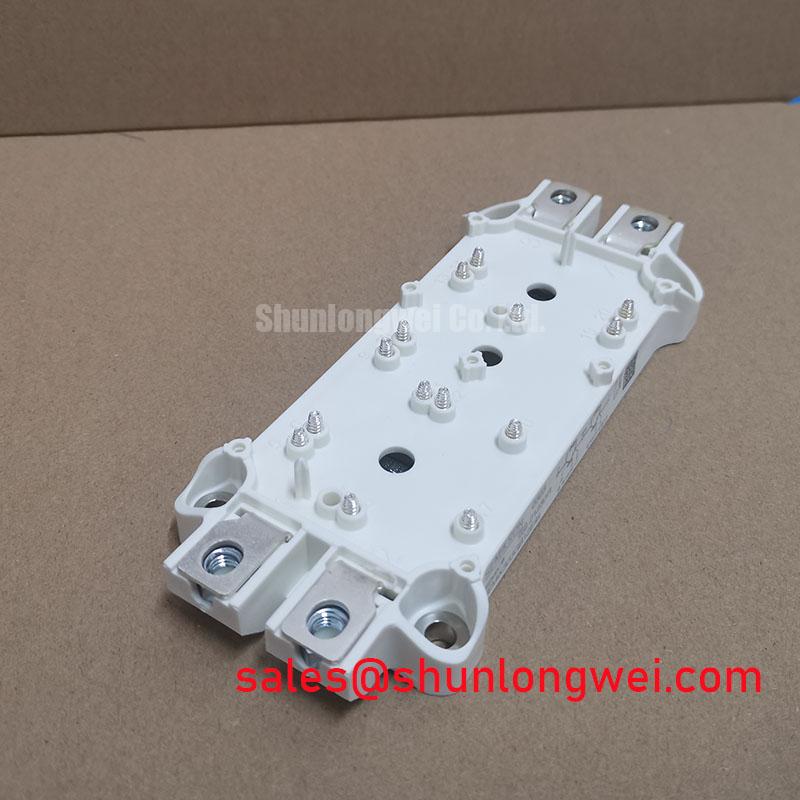
SEMIX303GB12E4S Semikron Danfoss 1200V 300A Half-Bridge IGBT Module
Product Overview & Core Value
Reliability-First Thermal Management for Heavy-Duty Industrial Switching
In high-power industrial designs, thermal cycling fatigue is the primary cause of power electronic failures. The SEMIX303GB12E4S is a half-bridge IGBT module developed by Semikron Danfoss that directly mitigates this degradation. Rated at 1200V and 300A, this module integrates advanced IGBT 4 (Trench) chip technology with a solder-free spring contact interface to maximize operational lifetime.
What is the primary benefit of its pressure-contact design? It delivers outstanding resilience against thermal cycling fatigue by eliminating solder joints.
For 1200V motor drives prioritizing maximum thermal safety margins under heavy continuous loads, this SEMIX303GB12E4S module is the optimal choice.
Key Parameter Overview
Functional Specs Grouped for Enhanced Thermal and Electrical Analysis
Below is a structured overview of the electrical, thermal, and mechanical specifications of the SEMIX303GB12E4S module, highlighting key performance indicators.
| Functional Group | Parameter / Spec | Value (Typical / Max) | Engineering Significance |
|---|---|---|---|
| Absolute Ratings | Collector-Emitter Voltage (Vces) | 1200 V | Provides necessary voltage headroom for 400V–480V AC industrial lines. |
| Absolute Ratings | Nominal Collector Current (Ic) | 300 A (466 A max at Tc=25°C) | Suited for mid-to-high power industrial inverter applications. |
| Electrical (IGBT) | Collector-Emitter Saturation Voltage (Vcesat) | 1.80 V (at Tj=25°C) / 2.20 V (at Tj=150°C) | Positive temperature coefficient enables safe parallel module configurations. |
| Electrical (Switching) | Turn-on / Turn-off Energy (Eon / Eoff) | 30 mJ / 41 mJ (at Tj=150°C) | Low switching losses optimize overall converter efficiency. |
| Thermal Management | IGBT Thermal Resistance (Rth(j-c)) | 0.095 K/W | Extremely low thermal path resistance to the heatsink. |
| Mechanical | Housing & Dimension | SEMiX 3s / 150x64x17 mm | Low-profile package with solder-free spring contact interface. |
Download the SEMIX303GB12E4S datasheet for detailed specifications and performance curves.
Application Scenarios & Value
Reliable Performance in High-Duty Cycles and Demanding Environments
The SEMIX303GB12E4S excels in environments where long-term uptime and minimal field failures are essential engineering requirements. It is widely implemented across several high-power setups.
- Variable Frequency Drives (VFD): Controlling heavy machinery in cement mills or steel processing facilities requires persistent start-stop operations. This subjects traditional soldered modules to severe thermal stress. By adopting the SEMIX303GB12E4S, system engineers eliminate the risk of solder delamination. For systems requiring higher current handling, the related SEMIX453GB12VS offers an alternative solution.
- Uninterruptible Power Supplies (UPS): Backup power architectures require immediate power delivery and stable thermal behavior. The positive temperature coefficient of the SEMIX303GB12E4S allows safe load sharing when paralleling modules to scale backup capacity.
- Electronic Welding Equipment: High-frequency, high-current pulses create severe thermal swings. The module's low junction thermal resistance ensures the IGBT stays safely within operating limits.
To gain a foundational understanding of these topologies, you can explore our ultimate guide to IGBT modules.
Technical Deep Dive
Analyzing Spring Contact Mechanics and Thermal Resistance Physics
Two design parameters dictate the thermal performance and longevity of the SEMIX303GB12E4S: its thermal resistance and its positive temperature coefficient of saturation voltage.
First, let's analyze the junction-to-case thermal resistance (Rth(j-c)), which is rated at 0.095 K/W. This parameter acts like a wide, multi-lane highway for thermal energy. Instead of heat getting backed up at bottleneck points inside the semiconductor housing, it flows with minimal impedance directly to the heatsink. This ultra-low resistance allows the module to dissipate heat rapidly and preserve crucial thermal margins during sudden peak overloads.
Second, the chip utilizes IGBT 4 trenchgate technology with a positive temperature coefficient of saturation voltage (VCE(sat)). This behavior acts like a self-balancing load distribution system on a busy bridge. If one of the parallel-operating IGBT chips heats up, its saturation voltage naturally increases, acting as a small resistive check. This automatically routes a portion of the current to cooler parallel devices, preventing thermal runaway and ensuring equal stress distribution.
System designers looking to prevent gate drive instability or parasitic turn-on under high dV/dt conditions can consult our technical note on robust gate drive design or review the deep dive into optimizing 1200V IGBT efficiency.
Frequently Asked Questions
Resolving Engineering Queries on Implementation and Reliability
How does the Rth(j-c) of 0.095 K/W impact heatsink selection for the SEMIX303GB12E4S?
An Rth(j-c) of 0.095 K/W means that for every watt of power dissipated, the junction temperature rises by only 0.095°C relative to the case. This low value allows system engineers to select smaller, more cost-effective heatsinks or operate with lower cooling fan speeds while maintaining a safe junction temperature well below the 150°C continuous operating limit.
What is the benefit of the positive temperature coefficient of VCE(sat) in this 1200V module?
The positive temperature coefficient ensures that as the junction temperature increases, the saturation voltage also rises (from 1.80 V typical at Tj=25°C to 2.20 V at Tj=150°C). This positive swing prevents current crowding during parallel operation, enabling the modules to naturally share current evenly without requiring tightly matched series resistors.
Is the SEMIX303GB12E4S suitable for high-frequency switching above 20 kHz?
While the SEMIX303GB12E4S features optimized IGBT 4 (Trench) technology with low turn-on (30 mJ) and turn-off (41 mJ) switching losses, it is ideally optimized for industrial switching frequencies between 4 kHz and 15 kHz. Operating above 20 kHz requires careful derating and an optimized gate drive design to manage additional thermal overhead.
For engineering support or detailed inquiries regarding direct procurement of this 1200V power module, please reach out to our technical sales team for pricing and availability details.