


Content last revised on September 10, 2026
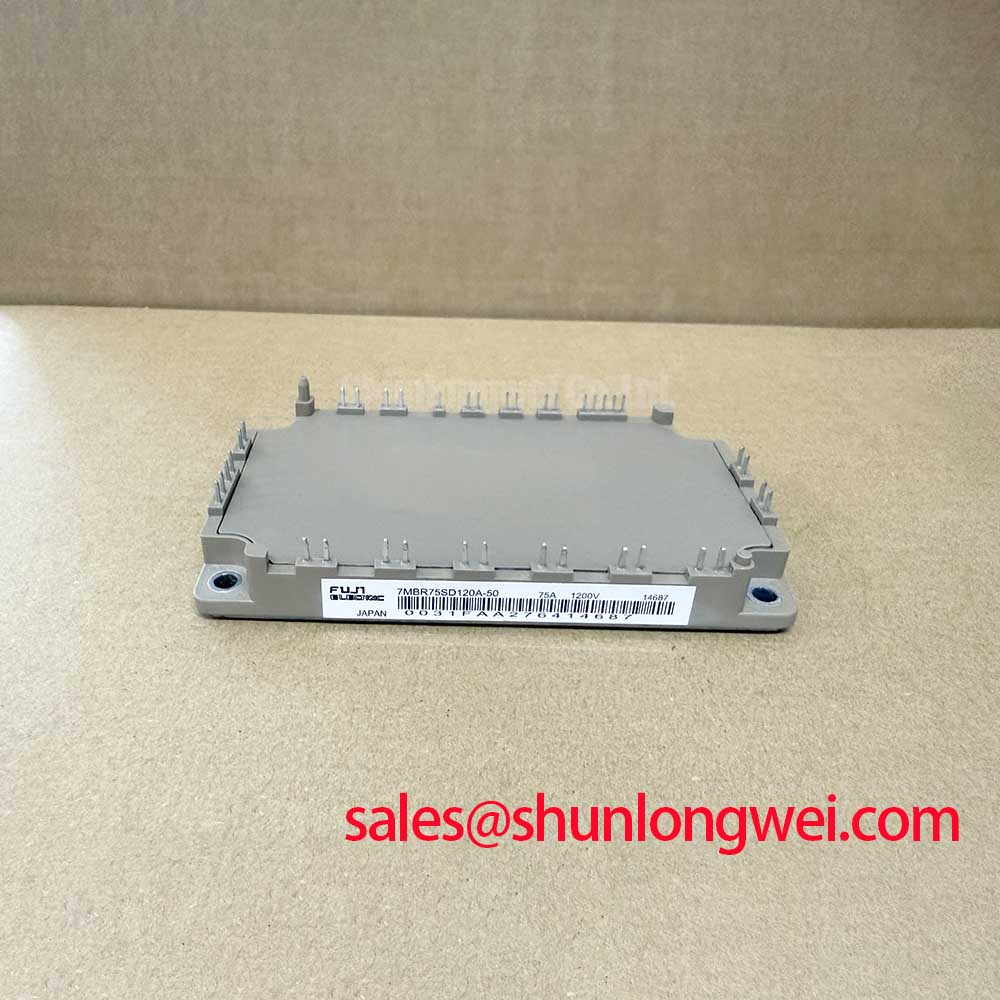
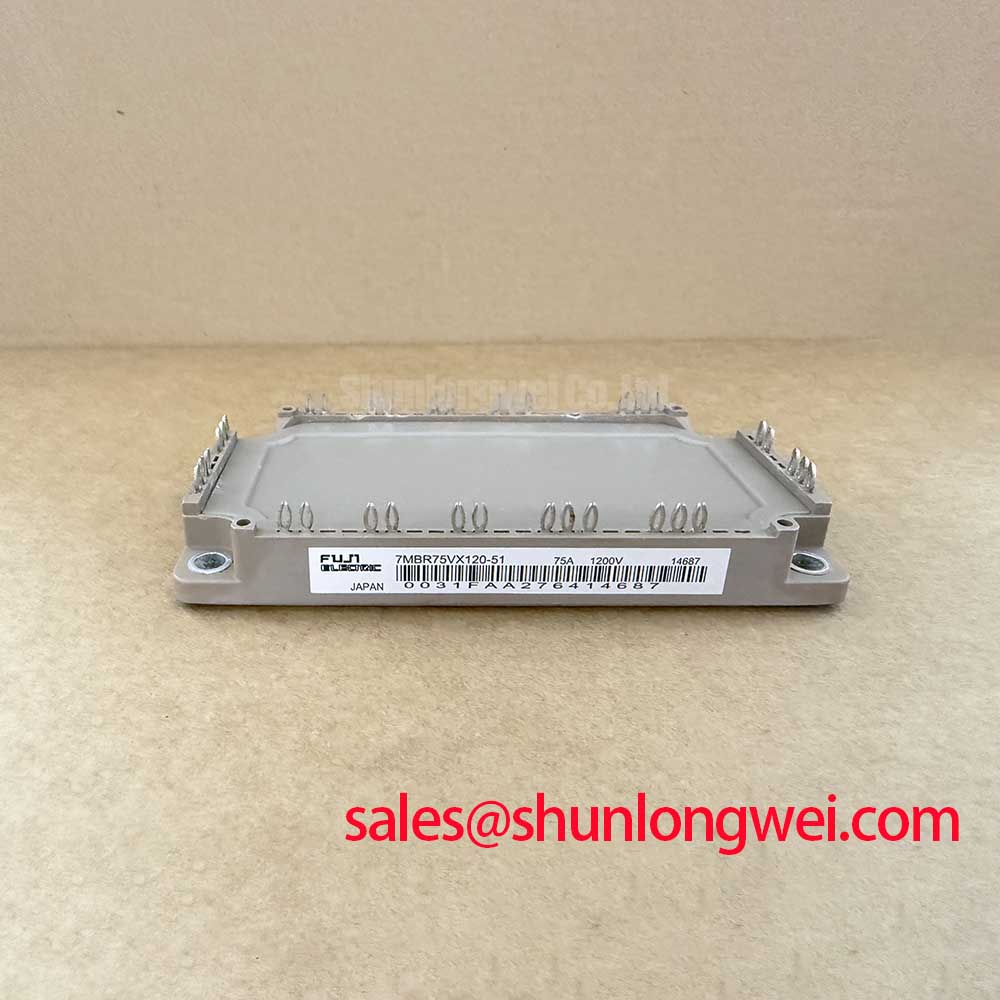
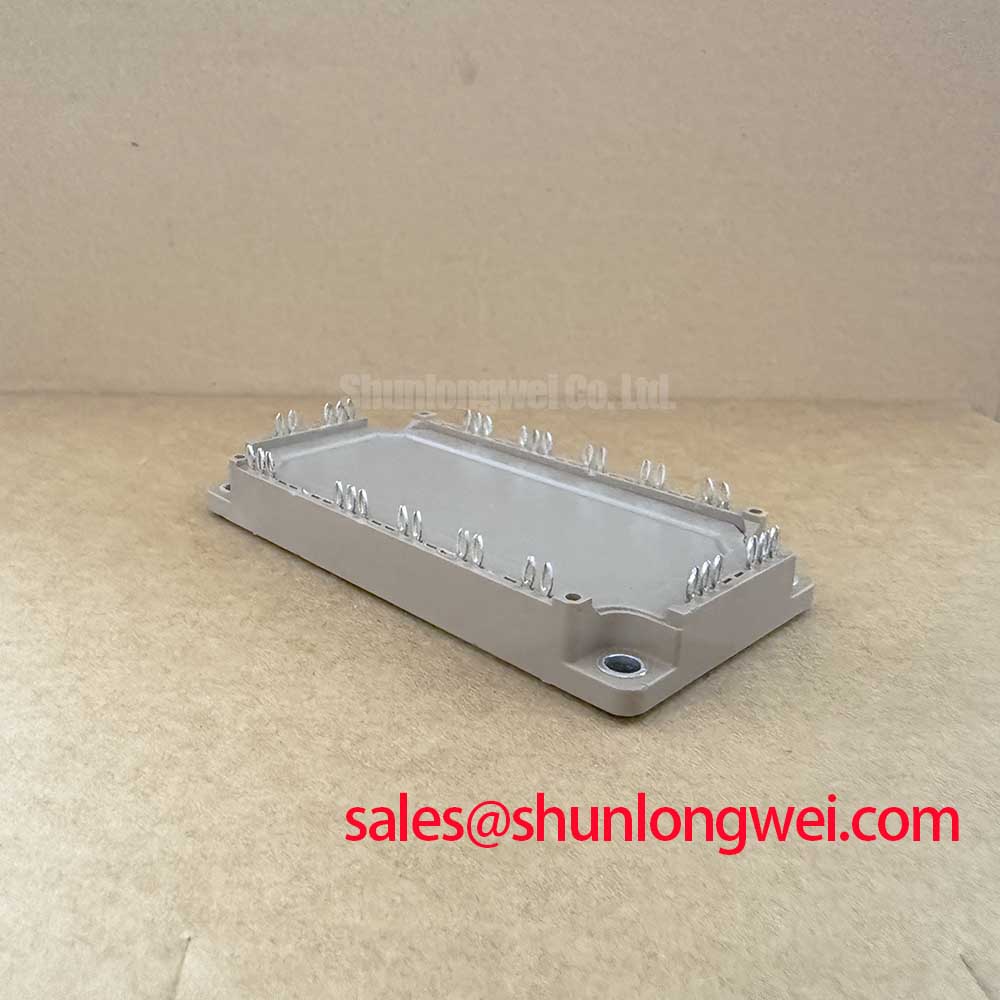
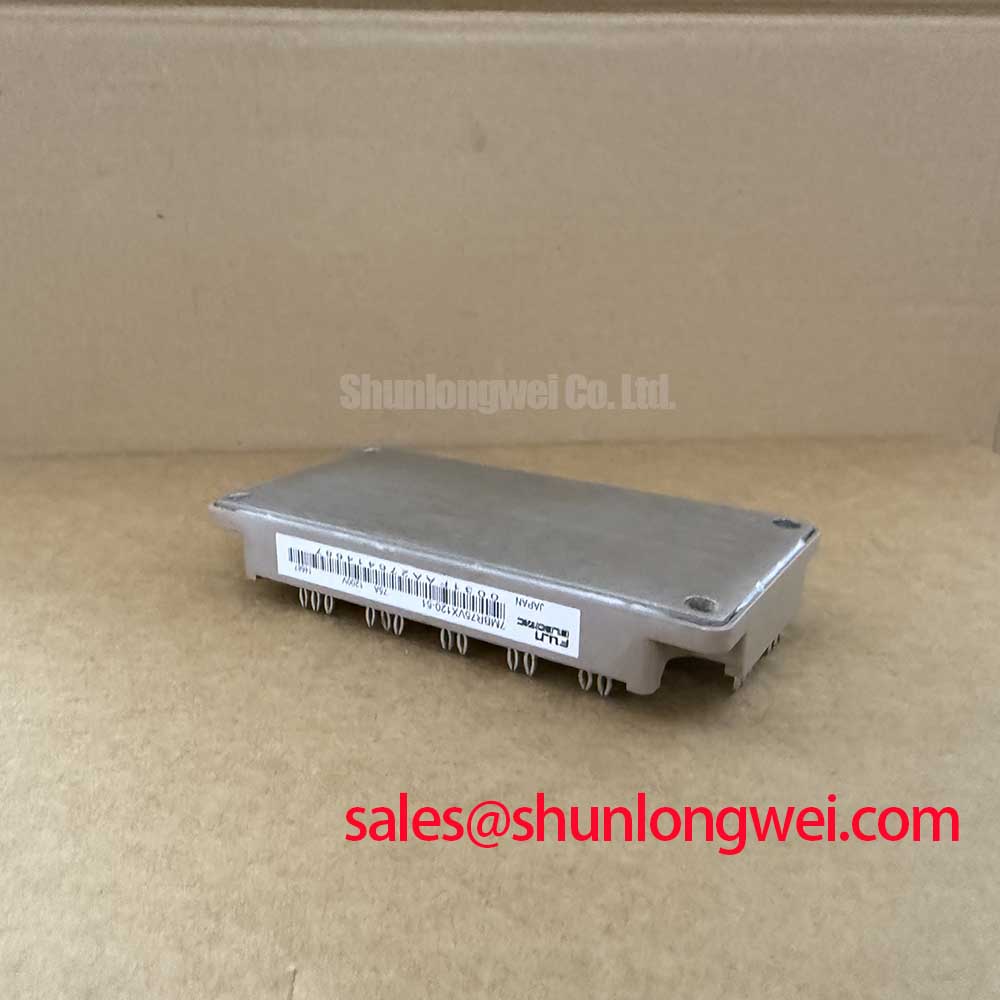
7MBR75VX120-51 Fuji Electric 1200V 75A V-Series IGBT PIM Power Module
The 7MBR75VX120-51 represents a highly integrated solution for industrial power conversion, leveraging Fuji Electric’s advanced V-Series trench technology to optimize the balance between conduction efficiency and thermal reliability. As a Power Integrated Module (PIM), it consolidates a three-phase inverter, a brake chopper, and a temperature-sensing NTC thermistor into a single, compact package, facilitating streamlined system architectures for demanding motor control environments. For 400V industrial Variable Frequency Drives (VFD) requiring integrated thermal monitoring and robust short-circuit withstand capabilities, this 1200V 75A module delivers the optimal balance of efficiency and structural compactness.
Key Parameter Overview
Decoding the Specifications for Enhanced Thermal Reliability
The following technical data is derived from the official manufacturer documentation to support engineering evaluation and system-level thermal design.
| Parameter Item | Technical Specification | Engineering Significance |
|---|---|---|
| Collector-Emitter Voltage (Vces) | 1200V | Provides essential safety margins for 400V/480V AC line inputs. |
| Continuous Collector Current (Ic) | 75A (at Tc=80°C) | Optimized for medium-power industrial automation and CNC machinery. |
| Saturation Voltage Vce(sat) | 1.70V (Typical at Tj=125°C) | Lower conduction losses, directly reducing heat sink volume requirements. |
| Short-Circuit Withstand Time | 10µs (at Vcc=800V) | Ensures sufficient time for protection circuits to trigger during fault conditions. |
| Integrated Components | Inverter + Brake + NTC | Reduces PCB footprint and simplifies the Gate Drive layout. |
Download the 7MBR75VX120-51 datasheet for detailed specifications and performance curves.
Application Scenarios & Value
Achieving System-Level Benefits in High-Frequency Power Conversion
Engineers often face the challenge of managing heat in space-constrained enclosures while maintaining the high reliability required for industrial Industrial Robotics and automation. The 7MBR75VX120-51 addresses this by utilizing a trench-gate structure that minimizes carrier injection losses. In a typical high-fidelity engineering scenario, such as a precision Servo Drive system, the integrated NTC thermistor allows the controller to monitor the substrate temperature in real-time. This feedback loop is critical for preventing catastrophic failures during peak torque demands where the junction temperature (Tj) might otherwise spike beyond safe limits.
This integration directly maps to a reduction in Total Cost of Ownership (TCO) by minimizing discrete component counts and assembly labor. While this 75A model is ideal for mid-range systems, for applications requiring higher current handling within the same technology family, the related 7MBR100VX120-51 offers an increased Vces capability of 100A. Furthermore, the 7MBR75VX120-51 is engineered to comply with IEC 61800-3 standards for electromagnetic compatibility, provided the Gate Drive is tuned to manage the switching speed (dv/dt) effectively.
Beyond motor control, this module serves as a reliable core for Uninterruptible Power Supplies (UPS) and regenerative braking stages. Its 10µs Short-Circuit Withstand Time provides a robust buffer for the system's Solid State Circuit Breakers to isolate faults, protecting the broader power grid. For engineers specializing in Renewable Energy, understanding the role of IGBTs in wind-to-grid conversion highlights the strategic importance of choosing modules with stable thermal characteristics.
Technical & Design Deep Dive
The Physics of Loss Suppression in Trench-Gate Architectures
The 7MBR75VX120-51 utilizes a Trench Field-Stop (T-FS) technology. To understand its value, consider the analogy of a high-speed elevator in a skyscraper versus a stairwell. Traditional planar IGBTs force current to travel through wider, less direct paths, much like taking the stairs, which increases resistance and energy loss. The "trench" structure acts like an elevator shaft, moving current vertically through the silicon with significantly less resistance. This direct path allows the Vce(sat) to remain as low as 1.70V, even under heavy loads.
From a Thermal Management perspective, the module's reliability is bolstered by its refined internal isolation. The Rth(j-c) (Thermal Resistance) is optimized to ensure that heat generated at the junction is efficiently transferred to the baseplate. In high-frequency designs, selecting the right parameters goes beyond simple voltage and current. Engineers must account for switching losses (Eon/Eoff); the V-Series is specifically designed to minimize the tail current during turn-off, which is a primary source of switching heat. For a deeper analysis of these trade-offs, engineers may refer to our guide on IGBT selection beyond Vce(sat).
Frequently Asked Questions
How does the integrated NTC thermistor directly impact heatsink selection and overall system power density?
The integrated NTC provides high-accuracy, real-time temperature data from the module's internal substrate. By having this localized data, engineers can design heatsinks based on actual operating conditions rather than conservative, worst-case estimates. This allows for smaller heatsink profiles and increased power density without sacrificing the safety margin of the 75A continuous current rating.
What is the significance of the 1200V Vces rating in standard 400V AC line industrial systems?
In a 400V AC system, the DC bus typically reaches approximately 560V to 650V. The 1200V rating provides a critical overhead to handle voltage spikes and inductive "kickback" during switching transitions. This Safe Operating Area (SOA) margin is essential for long-term reliability in environments with "dirty" power or high inductive loads like large industrial motors.
How can designers optimize the gate drive for the 7MBR75VX120-51 to minimize EMI while maintaining efficiency?
Optimization involves balancing the gate resistor (Rg) values to control the turn-on and turn-off speeds. A higher Rg reduces dv/dt, which lowers EMI but increases switching losses. Conversely, a lower Rg improves efficiency but can cause voltage ringing. Utilizing a robust gate drive design with active clamping or a Miller Clamp is recommended to prevent parasitic turn-on in the 7MBR75VX120-51.
As industrial systems pivot toward higher efficiency and smarter protection, the 7MBR75VX120-51 stands as a strategic component for those prioritizing thermal stability and integration. Its combination of V-Series performance and PIM convenience ensures that modern power converters can meet the rigorous demands of tomorrow's automated landscape. For further technical insights into the evolution of these modules, we encourage a review of global IGBT market trends and their impact on future power electronics design.