Content last revised on September 10, 2026
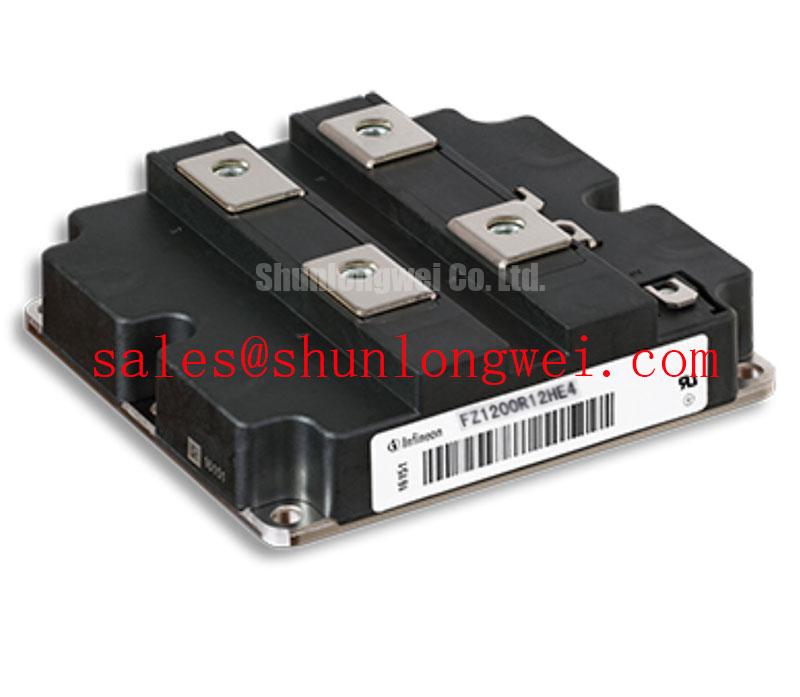
FZ1200R12HE4 Infineon 1200V 1200A IGBT Module
How do power electronics engineers maintain 1200A of continuous current without triggering catastrophic thermal runaway in high-density inverter cabinets? The answer often lies in the precision-engineered thermal path of the FZ1200R12HE4. This IHM-B high-power module is specifically designed to balance ultra-low switching losses with robust thermal management, ensuring that peak efficiency does not come at the cost of component lifespan.
UVP: High-efficiency 1200V switching optimized for massive current throughput and long-term thermal stability in demanding industrial environments.
- Core Specs: 1200V | 1200A | IHM-B Package
- Key Benefits: Enhanced thermal fatigue resistance and minimized conduction losses for TCO reduction.
- Problem Solved: Addresses the high-frequency switching heat dissipation challenges in megawatt-scale solar and wind inverters.
For high-power industrial drives prioritizing thermal margin over sheer speed, the FZ1200R12HE4 stands as the industry-standard benchmark for reliability and electrical ruggedness.
Frequently Asked Questions
Addressing Design Challenges and Thermal Performance
How does the Rth(j-c) of approximately 0.011 K/W in the FZ1200R12HE4 influence the selection of liquid-cooled vs. air-cooled heat sinks?
The exceptionally low thermal resistance from junction to case (Rthjc) of the FZ1200R12HE4 is a direct result of its IHM-B package architecture. For engineers, this value means the module can transfer heat to the baseplate more efficiently than standard modules. In 1200A applications, this often allows for more compact air-cooled designs where competitors might require liquid cooling, effectively reducing system weight and maintenance complexity.
What is the primary benefit of the TRENCHSTOP™ IGBT4 technology used in this module for renewable energy applications?
The IGBT4 technology provides a "soft" switching characteristic and a low saturation voltage (Vcesat). In a Solar Inverter or wind turbine converter, this translates to reduced electromagnetic interference (EMI) and lower total power dissipation, which directly increases the energy yield per footprint of the installation. For a deeper understanding of these internal architectures, refer to this deep dive into IGBT hybrid structures.
Key Parameter Overview
Decoding the Specs for Enhanced Thermal Reliability
The following table summarizes the absolute maximum ratings and typical characteristics of the FZ1200R12HE4, derived from the official Infineon technical documentation.
| Category | Parameter | Value (Typical/Max) |
|---|---|---|
| Voltage Ratings | Collector-Emitter Voltage (Vces) | 1200V |
| Current Capacity | Continuous DC Collector Current (Ic) | 1200A (at Tc=100°C) |
| Current Capacity | Repetitive Peak Collector Current (Icrm) | 2400A |
| Thermal Data | Operating Junction Temperature (Tvj op) | -40°C to +150°C |
| Mechanical | Module Weight | Approx. 800g |
Download the FZ1200R12HE4 datasheet for detailed specifications and performance curves.
Industry Insights & Strategic Advantage
Alignment with Global Decarbonization and Power Density Trends
As the global energy landscape shifts toward decentralized Renewable Energy, the demand for power modules that can handle high current densities without compromising on reliability has reached a peak. The FZ1200R12HE4 represents a strategic asset in this transition. By utilizing a 190mm footprint (IHM-B), it allows manufacturers to scale their designs from 500kW to multiple megawatts using a familiar mechanical platform.
Technically, the "HE4" designation signifies a high-efficiency variant of the IGBT4 generation. Think of this module as a wide-bore industrial valve; it is designed to move massive amounts of electrical "fluid" (current) with minimal resistance, which is critical for maintaining high efficiency in Variable Frequency Drive (VFD) systems and UPS units. This efficiency is a primary driver in meeting IEC 61800-3 EMC standards and achieving green building certifications for data center infrastructure. Furthermore, as engineers look toward even higher integration, comparing this with the FZ2400R12HP4 can help determine if a single-module or parallel-module approach is better for your specific heat-sink footprint.
Application Scenarios & Value
Achieving System-Level Benefits in High-Frequency Power Conversion
The FZ1200R12HE4 is frequently utilized in Traction Converters for rail systems and heavy machinery. Engineers often face the challenge of sudden torque demands which cause massive current surges. The 2400A repetitive peak current rating of this module provides the necessary "headroom" to handle these transients without triggering over-current protection or causing thermal fatigue.
In Wind Turbine converters, the environment is often characterized by thermal cycling. The robust internal wire-bonding of the FZ1200R12HE4 is designed to withstand the stress of constant power fluctuations. This durability reduces the total cost of ownership by extending the service intervals of the inverter stacks. For systems requiring even higher voltage overhead in the same physical footprint, the FZ1200R17HE4 offers a Vces of 1700V, while those needing a different technical approach might consider the FZ1200R12KF5 for legacy platform compatibility.
For more technical context on selecting the right module for thermal management, explore our guide on Rth and thermal efficiency.
As a specialized distributor, we provide high-quality electronic components to empower your engineering decisions. Our focus is on providing the technical clarity and data-driven insights you need for successful system integration. If you are currently evaluating the FZ1200R12HE4 for an upcoming high-power project, please contact our technical sales team to discuss your specific requirements or to confirm availability for your prototyping and production schedules.