Content last revised on September 10, 2026
High-Performance Current Management: Optimizing Toshiba MG200J2YS1 for High-Speed Switching Efficiency
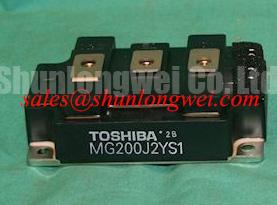
The Toshiba MG200J2YS1 is a high-power 2-pack IGBT module designed to deliver precision control in environments requiring rapid switching and significant current handling. By integrating two N-channel Insulated Gate Bipolar Transistors into a single isolated package, it provides engineers with a robust platform for bridge circuits and high-speed power conversion. For industrial motor drives prioritizing thermal margin, this 600V 200A module is the optimal choice.
What makes the MG200J2YS1 ideal for high-speed switching? Its optimized gate structure significantly minimizes switching losses while maintaining a low typical VCE(sat) of 2.1V. How does this impact long-term reliability? Reduced power dissipation during the transition phase prevents localized overheating, extending the lifespan of the module under heavy inductive loads.
Key Parameter Overview
Decoding the Specs for Enhanced Thermal Reliability
Technical specifications provide the baseline for engineering decisions. The MG200J2YS1 balances voltage headroom with current density, ensuring stability in 600V applications. To understand the VCE(sat) of 2.1V, imagine a high-pressure water valve; a lower "saturation" means the valve opens fully with minimal resistance, ensuring that energy flows to the load rather than being wasted as heat within the module itself.
| Critical Specification | Value (Standard Rating) | Engineering Interpretation & Value |
|---|---|---|
| Collector-Emitter Voltage (VCES) | 600V | Provides ample safety margin for 240V/480V AC line rectified systems. |
| Collector Current (IC) | 200A | High current density supports large-scale industrial motor startup and peak loads. |
| Collector-Emitter Saturation Voltage (VCE(sat)) | 2.1V (Typ.) | Low conduction losses translate to simplified heatsink requirements and higher efficiency. |
| Fall Time (tf) | 0.3µs (Typ.) | Fast turn-off characteristics enable higher carrier frequencies in inverter designs. |
| Isolation Voltage (Visol) | 2500V AC (1 min) | Ensures operator safety and signal integrity by decoupling high-power stages. |
Application Scenarios & Value
Achieving System-Level Benefits in High-Frequency Power Conversion
In modern Variable Frequency Drives (VFDs), the MG200J2YS1 acts as the critical interface between digital control and mechanical force. When a 200A surge occurs during the initial acceleration phase of a heavy-duty conveyor belt, the module’s robust Safe Operating Area (SOA) ensures the silicon can handle the transient stress without desaturation. For systems requiring even higher current handling, the CM300DY-24H offers a different voltage class, while applications needing lower footprints might consider the MG150Q2YS50.
Beyond motor control, this module is a staple in high-power UPS (Uninterruptible Power Supply) systems. Its high-speed switching capability allows for the generation of clean sine waves with minimal harmonic distortion. Engineers can leverage the fast 0.3µs fall time to implement sophisticated Pulse Width Modulation (PWM) strategies, reducing the size of output filters. For a deeper understanding of these technologies, consult the engineer's ultimate guide to IGBT modules.
Technical & Design Deep Dive
Minimizing Parasitic Effects in High-Speed Inverter Topologies
The internal layout of the MG200J2YS1 is engineered to minimize internal lead inductance, which is paramount when switching 200A at high speeds. High $di/dt$ rates can induce voltage spikes that exceed the 600V rating if the package is poorly designed. Toshiba’s electrode isolation technology ensures that the baseplate remains electrically neutral, allowing for the direct mounting of multiple modules onto a shared heatsink. This simplifies thermal management and reduces total assembly volume.
Another critical design element is the gate charge characteristics. A low gate-to-emitter threshold ensures compatibility with standard 15V gate drivers, but designers must implement a robust gate drive design to prevent Miller-effect induced turn-on. Using a negative gate bias during the "off" state is recommended to maintain a high level of noise immunity in high-EMI industrial environments.
Industry Insights & Strategic Advantage
Future-Proofing Industrial Power with Proven IGBT Architectures
As the industry moves toward Industry 4.0 and carbon neutrality, the efficiency of power conversion has become a strategic metric rather than just a technical one. The MG200J2YS1 contributes to this by reducing the Switching Loss per cycle. This is particularly relevant in renewable energy sectors, such as solar string inverters, where every fraction of a percent in efficiency translates to significantly higher energy yields over the system's 25-year lifespan.
While newer Silicon Carbide (SiC) technologies are emerging, the established reliability and cost-effectiveness of the Toshiba IGBT module series remain the standard for 400V-600V class industrial hardware. For procurement specialists, the modular 2-pack configuration of the MG200J2YS1 ensures a lower Total Cost of Ownership (TCO) through ease of maintenance and standardized mounting footprints. Learn more about semiconductor selection frameworks to better align technology with long-term project goals.
FAQ
Common Engineering Queries Regarding MG200J2YS1 Integration
- How does the Rth(j-c) rating of this module impact heatsink selection for a 200A continuous load?
The thermal resistance from junction to case is a bottleneck for heat dissipation. For the MG200J2YS1, maintaining a low junction temperature is critical to prevent thermal runaway. Designers must calculate the heatsink size based on the total power loss (conduction + switching) to ensure the junction does not exceed its rated limit under worst-case ambient conditions. - Can the MG200J2YS1 be used in 480V AC line applications?
With a VCES of 600V, this module is typically used in 240V AC systems where the DC bus remains around 340V. For 480V AC lines, where the DC bus can reach 680V, a 1200V rated module is generally required to provide sufficient safety overhead. - What is the primary benefit of the isolated baseplate in this Toshiba module?
It allows multiple modules to be mounted on a single grounded heatsink without additional insulating washers, which significantly improves thermal transfer efficiency and reduces mechanical complexity. - How do I prevent voltage spikes during high-speed turn-off?
Because of the 0.3µs fall time, $L cdot di/dt$ voltage spikes can be significant. It is essential to use low-inductance busbars and high-quality snubber capacitors placed physically close to the module terminals. - What gate voltage is recommended for optimal saturation?
A gate-emitter voltage ($V_{GE}$) of 15V is recommended. Driving the gate at a lower voltage may increase the VCE(sat), leading to higher conduction losses and potential thermal failure.
From an engineering perspective, the MG200J2YS1 represents a mature, high-reliability solution for high-speed power modulation. When integrating this module, focus on minimizing loop inductance in your PCB layout and ensuring a high-performance thermal interface to fully leverage the 200A capacity. As industrial demands for efficiency increase, the precision offered by Toshiba's IGBT architecture continues to provide a dependable foundation for mission-critical power electronics.