
Performance Comparison: 6MBI100S-120-52 vs. TT250N16KOF IGBT Modules for High-Power Industrial Applications
As industries continue to demand greater efficiency and reliability in their power electronic systems, selecting the right IGBT Module becomes a critical step for engineers and procurement managers. In this article, we provide a comprehensive comparison between the 6MBI100S-120-52 IGBT module from Fuji and the TT250N16KOF phase control thyristor module from Eupec. We focus on their technical features, application scenarios, and real-use value, ensuring your next selection meets the evolving demands in high-power conversion and industrial automation.

Technical Overview: Breaking Down the Key Specifications
6MBI100S-120-52 FUJI IGBT Module
- Collector-Emitter Voltage (VCES): 1200V
- Collector Current (IC): 100A
- Design: Compact and robust structure optimized for heat dissipation and high-density integration
- Applications: Ideal for inverters, motor drives, and power supplies requiring stable and efficient switching performance
TT250N16KOF Eupec Thyristor Module
- Collector-Emitter Voltage (Vces): 1600V
- Collector Current (Ic): 250A
- Power Dissipation (Pc): 1270W
- Design Features: Low VCE(sat), compact package, and suitable for PCB mounting
- Applications: Targeted at converters, dynamic brake circuits, motor drive inverters, and uninterruptible power supplies
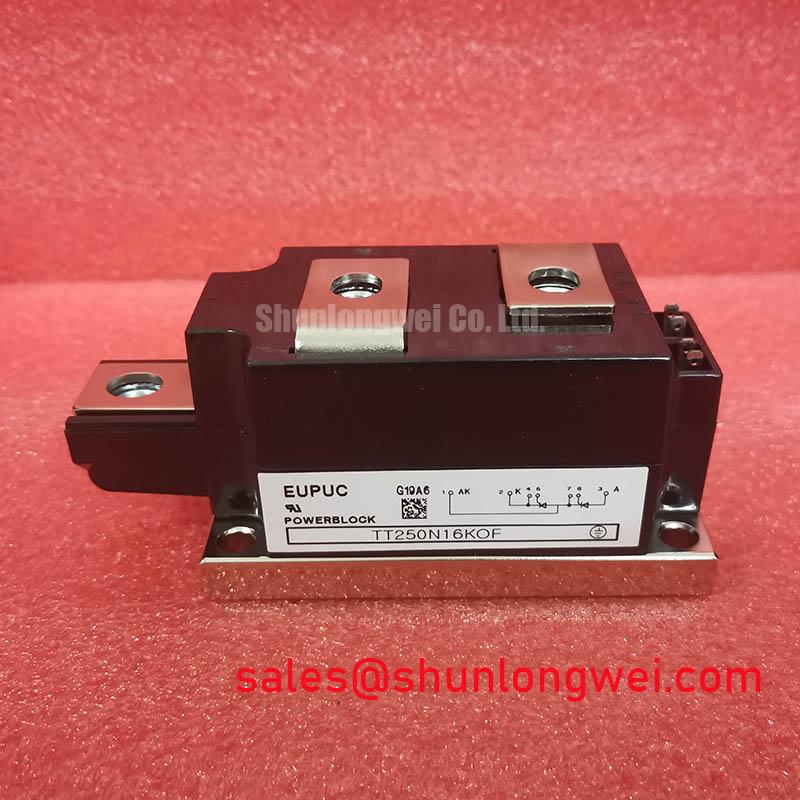
Both modules are designed to deliver high-performance power switching, but each brings unique strengths to specific industrial scenarios. The 6MBI100S-120-52 balances voltage endurance and current handling for efficient motor control, while the TT250N16KOF offers increased current capability and higher voltage ratings for more demanding environments.
In-Depth Performance Analysis: Making Sense of Specification Differences
Voltage and Current Endurance
The TT250N16KOF stands out with its 1600V voltage tolerance and 250A maximum collector current. This makes it well-suited for applications where transient voltage spikes and large load currents are common, such as heavy-duty inverters. On the other hand, the 6MBI100S-120-52, with its 1200V and 100A ratings, delivers excellent reliability in medium power ranges, ensuring reduced switching losses and stable operations in controlled environments.
Thermal Management and Package Design
Both modules utilize advanced packaging techniques to optimize thermal performance. The 6MBI100S-120-52 leverages compactness and robust internal structure for improved heat dissipation, making it suitable for high-density installations. In contrast, the TT250N16KOF allows for PCB mounting and features a low VCE(sat), making it advantageous in systems where footprint, thermal stability, and board-level integration are priorities.
Reliability and Application Suitability
Engineered to meet the harsh operational benchmarks of modern industry, both modules deliver high reliability and robust electrical performance. The 6MBI100S-120-52 excels in general-purpose and repetitive switching roles, while the TT250N16KOF is tailored for heavy-cycle uses and direct energy conversion, often found in uninterruptible power supplies and AC/DC servo drives.
Application Scenarios: How to Choose the Right Module
Choosing between an IGBT module such as the 6MBI100S-120-52 and a thyristor module like TT250N16KOF primarily depends on your application’s power requirements and operational environment. Here is a breakdown to help guide your selection:
- Motor Drives and General Inverters: The 6MBI100S-120-52 offers balanced efficiency and voltage tolerance, suitable for precise motor control and stable inverter operations.
- Heavy-Duty Power Conversion: For applications with high current peaks or challenging voltage environments, the TT250N16KOF provides additional headroom and durability.
- Uninterruptible Power Supply (UPS) Systems: Both solutions can be implemented; however, TT250N16KOF’s higher ratings and robust design can better manage frequent power cycles and surges.
For a detailed exploration of the implementation and benefits of IGBT modules in industrial systems, you may find the following article valuable:
How does a piezoelectric ceramic amplifier drive a piezoelectric transducer?
Summary Table: 6MBI100S-120-52 vs. TT250N16KOF Specs
| Specification | 6MBI100S-120-52 (Fuji) | TT250N16KOF (Eupec) |
|---|---|---|
| Max Collector-Emitter Voltage | 1200V | 1600V |
| Max Collector Current | 100A | 250A |
| Power Dissipation | N/A | 1270W |
| Application Focus | Motor Drives, Inverters | Converters, UPS, Servo Drives |
| Mounting | Module-based, compact | PCB Mountable, compact |
Conclusion: Tailoring Power Electronics to Your Needs
When optimizing your industrial systems for performance, reliability, and efficiency, an informed selection of the appropriate IGBT module is essential. While both the 6MBI100S-120-52 and TT250N16KOF offer strong capabilities, your specific requirements in terms of voltage, current, and system integration should guide your final choice. By matching the module’s technical strengths with your application scenario, you can ensure long-term operational success and increased system uptime.
For further reference and a deep dive into additional IGBT module options, visit our IGBT Module Collection and explore more industry insights.
Related Reading:
– 6MBI100S-120-52 Product Page
– TT250N16KOF Product Page
– More IGBT Modules