
Content last revised on September 10, 2026
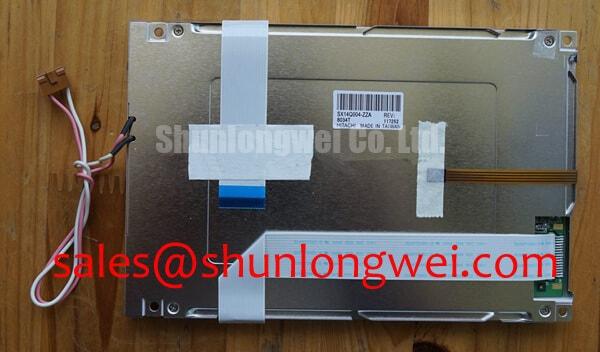
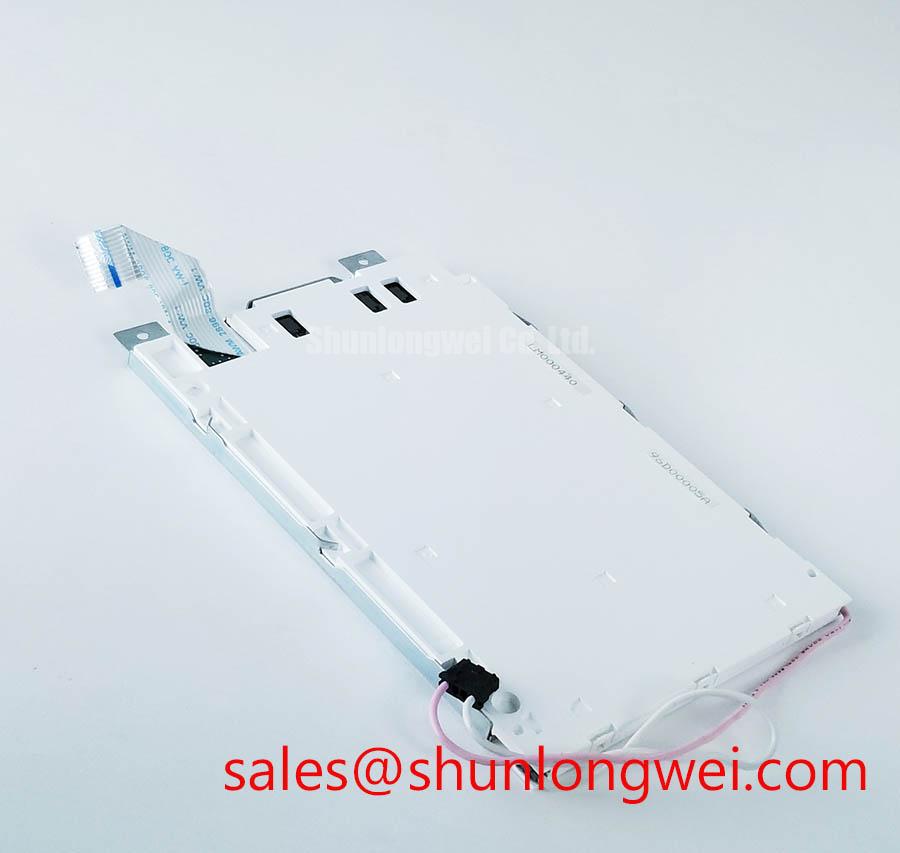
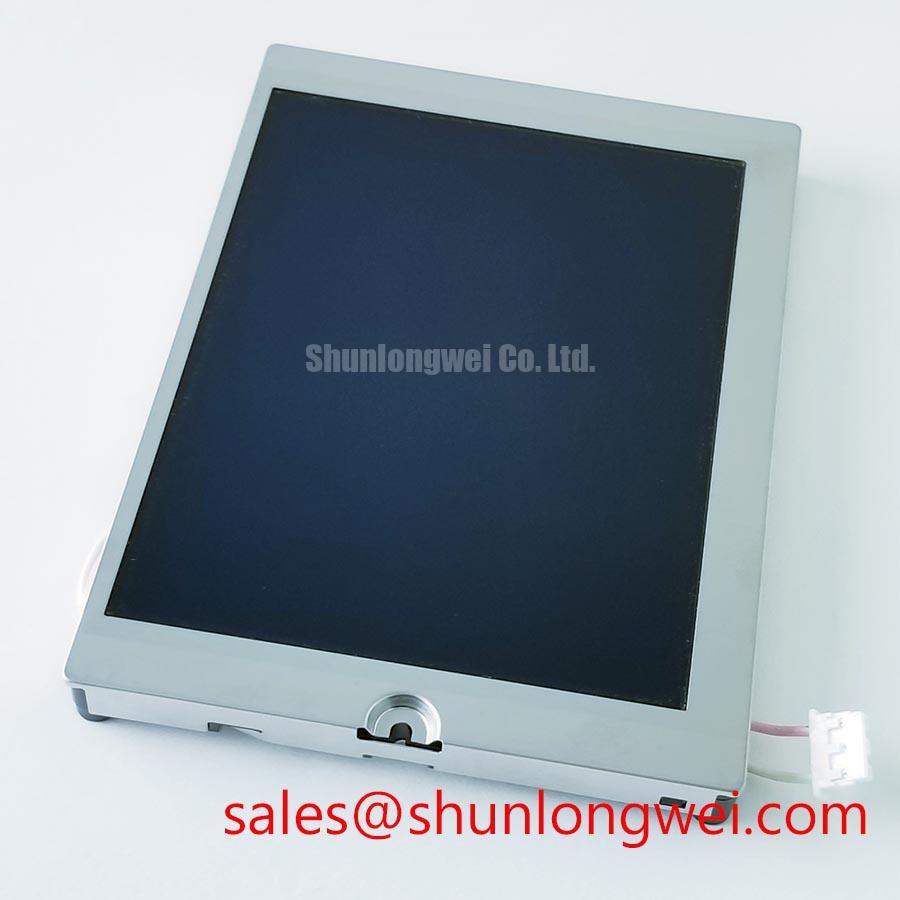
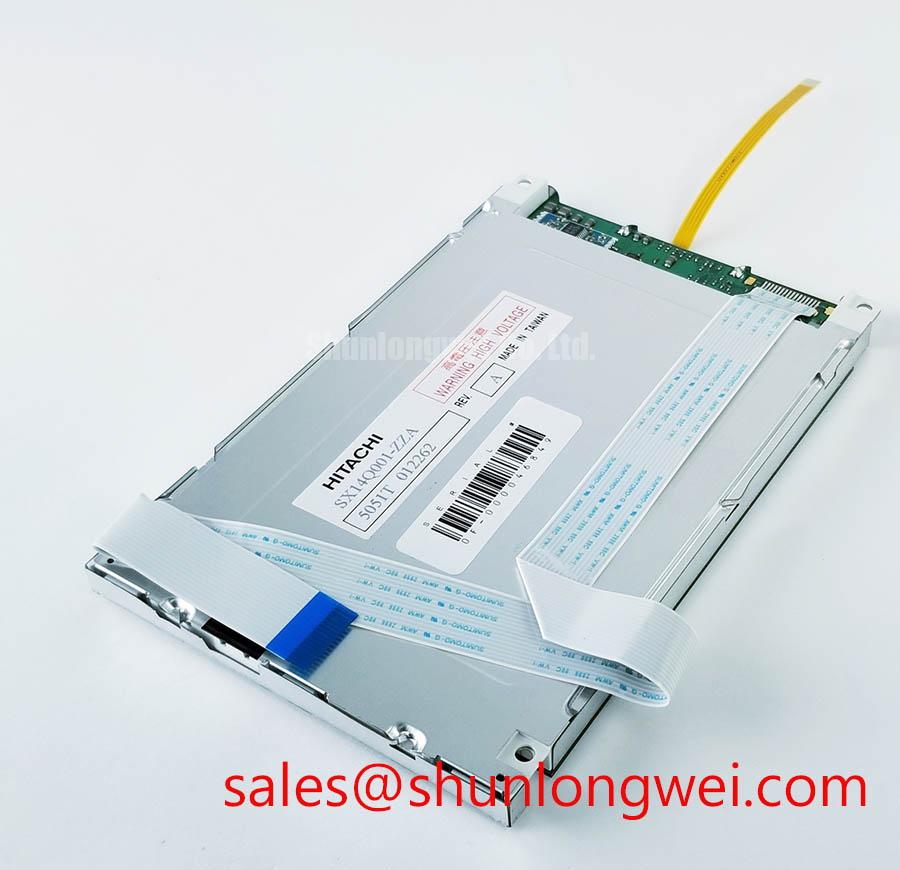
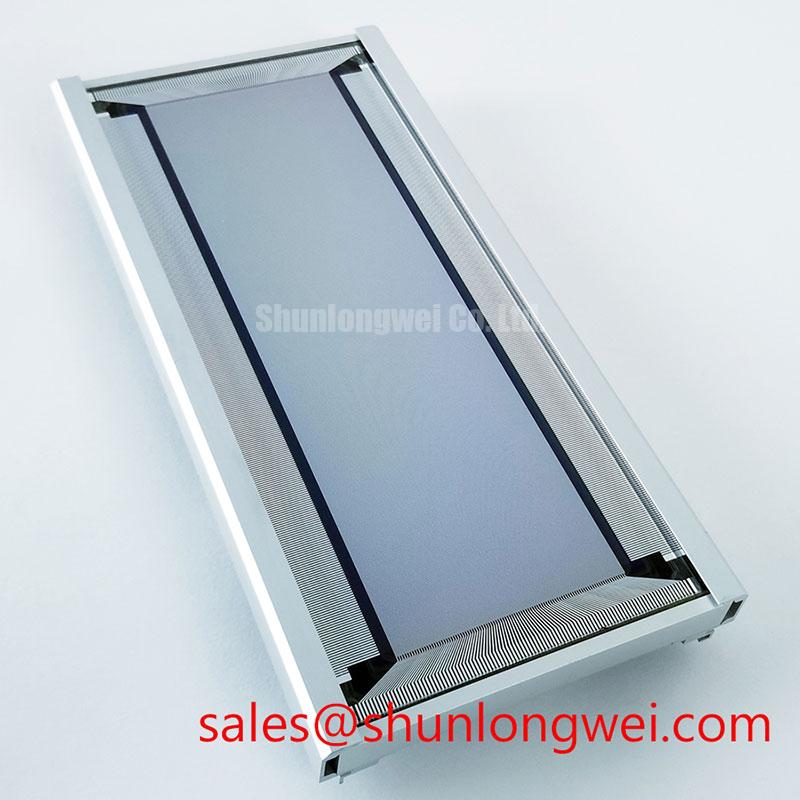
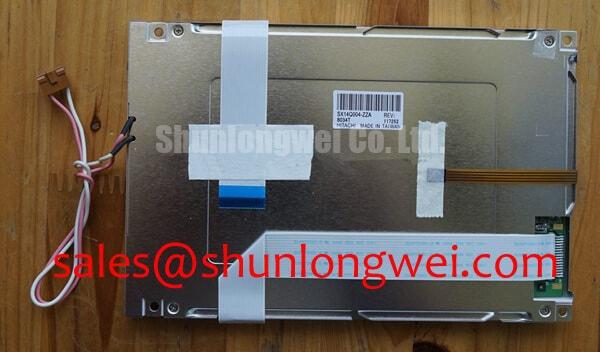
Hitachi SX14Q004 5.7-Inch QVGA Industrial CSTN LCD Display Panel
The Hitachi SX14Q004 provides reliable visual feedback for embedded industrial systems through its compact 5.7-inch QVGA passive-matrix color structure and low-power 3.3V logic interface.
Key Specifications: 3.3V Logic Supply | 5.7-inch Diagonal | 320x240 Resolution | 200 cd/m² Luminance
Key Benefits: Simplifies legacy microcontroller bus integration; lowers total display subsystem thermal output.
How does the display handle contrast variation during operation? Contrast stability is maintained across varying ambient temperatures using a dedicated 0.8V to 2.8V analog contrast adjustment pin (VCON). What is the primary benefit of the SX14Q004 parallel interface? Direct 8-bit bus integration for legacy industrial microcontrollers.
Application Scenarios & Value
Optimizing Control Interfaces in Legacy Industrial and Medical Equipment
Engineers often face severe retrofitting challenges when maintaining long-lifecycle equipment like injection molding control consoles, patient monitor terminals, and CNC operator panels. For 5.7-inch QVGA industrial HMIs requiring reliable CCFL illumination and 3.3V logic, the SX14Q004 is an optimal choice. Integrating a modern display into established 8-bit microcontroller architectures often requires complete redesigns of the system bus. The SX14Q004 eliminates this barrier by utilizing a 16-pin parallel interface, permitting direct connection to legacy display controllers without needing complex bridge chips or protocol conversion layer hardware.
In factory floor environments, ambient temperature swings can affect liquid crystal response time and visual clarity. The SX14Q004 addresses this with an integrated STN transmissive architecture rated for 0°C to +60°C operation. The typical 200 cd/m² luminance combined with a 40:1 contrast ratio ensures legible display performance in indoor control cabinets. Designing robust user interfaces requires understanding industrial display technologies to balance operational longevity against system maintenance costs.
For designs transitioning to active-matrix TFT technology with higher contrast or resolution, the related G057VN01 V2 offers a 640x480 resolution option, while the KCG057QV1DB-G000 provides a compatible 5.7-inch display footprint.
Technical & Design Deep Dive
Addressing Contrast Tuning and Thermal Drift in STN Display Architectures
Passive-matrix color STN LCD panels rely on precise electrical driving to maintain color depth and contrast across varying ambient temperatures. The liquid crystal fluid in an STN display changes viscosity as temperature fluctuates, altering light polarization properties. The SX14Q004 manages this effect by utilizing an adjustable contrast control pin (VCON) operating between 0.8V and 2.8V. System designers can implement temperature-compensated voltage dividers or DAC-controlled feedback circuits to dynamically adjust VCON, keeping display visibility stable as cabinet internal temperatures rise.
The display operates at a nominal frame frequency of 70Hz (selectable between 60Hz and 80Hz). Setting the driving frequency to the center value prevents frame flicker and visual rippling associated with STN response characteristics (typical Tr/Td of 250/200 ms). Think of the VCON voltage tuning like fine-tuning a radio receiver's analog dial: small, deliberate voltage adjustments keep the optical alignment centered exactly where light transmission yields peak legibility. Maintaining accurate drive timing and voltage level control preserves the display's Contrast Ratio throughout its extended service life.
The backlight subsystem incorporates a long-life CCFL tube rated for 50,000 hours of continuous operation. Operating on a low power logic footprint of typical 30mA at 3.3V (VDD), the panel consumes roughly 1.9W total power including the lamp, minimizing thermal dissipation within sealed enclosure assemblies.
Key Parameter Overview
Decoding Electrical and Optical Metrics for High-Reliability Integration
| Parameter | Specification Value | Engineering Significance |
|---|---|---|
| Model Number | SX14Q004 | Hitachi standard 5.7-inch color STN panel identifier |
| Screen Diagonal | 5.7-inch | Compact physical footprint for space-constrained panels |
| Display Resolution | 320(RGB)×240 (QVGA) | Standard pixel matrix for industrial character and graphic HMIs |
| Operating Voltage (VDD) | 3.3V (3.15V to 3.45V) | Low-power logic supply compatible with 3.3V microcontrollers |
| Contrast Voltage (VCON) | 0.8V to 2.8V (Typ. 2.0V) | Analog control input for optical contrast fine-tuning |
| Luminance | 200 cd/m² (Typical) | Adequate surface brightness for standard indoor industrial lighting |
| Contrast Ratio | 40:1 (Typical) | Sufficient background-to-pixel distinction for text and symbols |
| Backlight Type | Single CCFL (50k hr life) | Uniform backlight distribution across active screen area |
| Interface Type | 16-pin parallel interface | Direct bus interface for parallel display controllers |
| Active Area | 115.2 × 86.4 mm | 4:3 aspect ratio display region |
Download the SX14Q004 datasheet for detailed specifications and performance curves.
Frequently Asked Questions
Engineering Insights for Integration and System Reliability
What is the recommended power startup sequence for the VDD logic voltage and CCFL inverter?
Logic supply voltage 3.3V (VDD) must be stabilized before powering on the high-voltage CCFL inverter. Applying high-voltage backlight power before logic stability can cause latch-up conditions or erratic LCD pixel activation. Additionally, ensure logic power-on surge current (typically 1A peak for 1ms) is accounted for in your power supply design.
How should the VCON pin be connected for dynamic temperature compensation?
The VCON pin accepts an analog input range of 0.8V to 2.8V. To compensate for liquid crystal threshold shifts across the 0°C to +60°C operating range, engineers typically connect a thermistor-assisted voltage divider or a pulse-width modulated (PWM) signal passed through a low-pass filter to dynamically adjust VCON.
What considerations apply when driving the 16-pin parallel interface?
The 16-pin parallel interface requires stable data and control line signals (FLM, CL1, CL2, D0–D7). Signal routing trace lengths should be kept equal on the PCB to avoid timing skew, and line termination resistors may be added if trace lengths exceed 10 cm to prevent signal ringing.
Can the CCFL backlight inverter be replaced with an LED driver circuit?
The original SX14Q004 panel uses a high-voltage CCFL lamp driven by a dedicated AC inverter. If retrofitting with custom LED assemblies, engineers must ensure mechanical compatibility and provide a regulated DC driver circuit while removing the legacy CCFL high-voltage lines.
What frame frequency setting yields the best visual stability?
Setting the frame frequency (fFLM) to the central recommended value of 70Hz prevents frame flicker and motion artifacts. Operating below 60Hz can induce visible display scrolling or flickering due to STN liquid crystal refresh limits.