Scan Part Number

Tap the focus box or CAPTURE to scan the part number.

Pinch screen or tap 1.4x button to zoom.

Recognizing Part Number...

Other Components

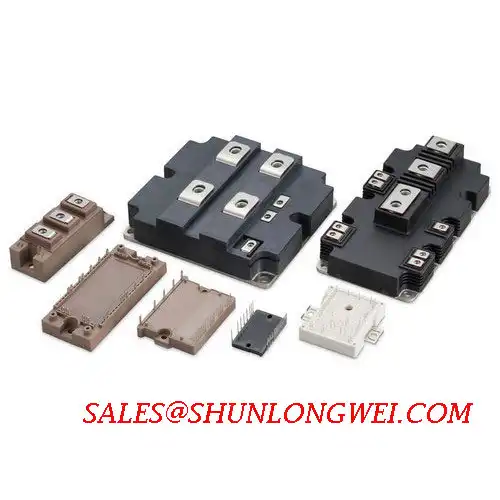
Technical resources for essential power components and discrete semiconductors. Explore application insights, selection guides, and deep dives on Diodes, Rectifier Bridges (including Three-Phase), MOSFETs, and other complementary devices.

Bellows compensator

Bellows compensator

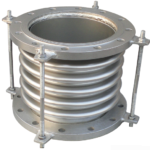
What Bellows Compensators Are and Their Engineering Significance A bellows compensator, universally classified in mechanical and fluid process engineering as a corrugated expansion joint, is an engineered flexible piping component designed to absorb dimensional variations in pressurized conduits. Fluid transmission networks, industrial heat exchangers, and closed-circuit cooling systems are subjected to constant thermal gradients, mechanical […]
Hydraulic motor

Hydraulic motor

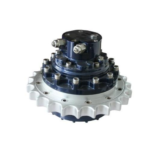
What Is a Hydraulic Motor and Its Engineering Significance A hydraulic motor is a rotary mechanical actuator that converts fluid pressure energy into continuous rotational mechanical energy, producing output torque and angular displacement at its drive shaft. In fluid power engineering, hydraulic motors operate as executive elements alongside linear hydraulic cylinders. While cylinders generate reciprocating […]
Wavelength Division Multiplexer

Wavelength Division Multiplexer

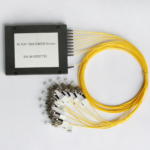
1. What is a wavelength division multiplexer WDM (Wavelength Division Multiplexing) combines two or more optical carrier signals of different wavelengths (carrying various information) at the transmitting end through a multiplexer (also known as a multiplexer), and The technology of transmitting in the same optical fiber coupled to the optical line; at the receiving end, […]
Integrated operational amplifier

Integrated operational amplifier

What an Integrated Operational Amplifier Is and Its Industry Significance An integrated operational amplifier (commonly referred to as an op-amp) is a high-gain, direct-coupled voltage amplifying circuit integrated onto a single semiconductor die. Originally developed using discrete vacuum tubes to perform analog mathematical operations—such as addition, subtraction, integration, and differentiation in analog computers—the modern monolithic […]
Pulse capacitor

Pulse capacitor

Two conductors close to each other, with a non-conductive insulating medium in between, constitute a capacitor. When a voltage is applied between the two plates of a capacitor, the capacitor will store charge. The capacitance of a capacitor is numerically equal to the ratio of the amount of charge on one conductive plate to the […]
DC circuit breaker

DC circuit breaker

What This Component Is and Its Industry Significance A direct current (DC) circuit breaker is an automatic electrical switching and protective apparatus engineered specifically to interrupt sustained current flow, overloads, and high-magnitude short circuits in DC electrical systems. Unlike passive safety elements such as fuses that sacrifice their physical conductors to isolate an overload, a […]
DC contactor

DC contactor

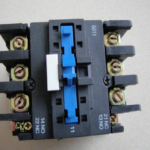
What DC Contactors Are and Their Critical Role in Power Engineering A DC contactor is an electromechanical switching device specifically engineered to establish, carry, and interrupt direct current (DC) electrical circuits under both normal operational conditions and overload fault states. Unlike low-power signal relays, DC contactors handle substantial power levels, ranging from tens of amperes […]
High frequency welding

High frequency welding

What High-Frequency Welding Is and Its Industry Significance High-frequency welding (HFW) is an advanced solid-state joining process that utilizes high-frequency alternating electrical current—typically ranging from 50 kHz to 400 kHz—to heat and fuse metal components. Primarily utilized in the automated manufacturing of electric resistance welded (ERW) pipes, structural tubes, and continuous metallic profiles, high-frequency welding […]
Thin client

Thin client

What Is a Thin Client and Its Role in Modern Computing Infrastructure A thin client is a specialized, compact computing terminal engineered to operate within a centralized, client-server network architecture. Unlike conventional personal computers (often termed “fat clients” or “thick clients”) that execute applications, process complex logic, and store user data locally on high-capacity internal […]
Turbine governor

Turbine governor

What a Turbine Governor Is and Its Industrial Significance A turbine governor is the primary automatic regulation and control apparatus deployed in hydroelectric, steam, and gas turbine power generation systems. Its fundamental purpose is to continuously monitor, adjust, and stabilize the rotational speed (frequency) and mechanical power output of the turbine-generator set under fluctuating electrical […]